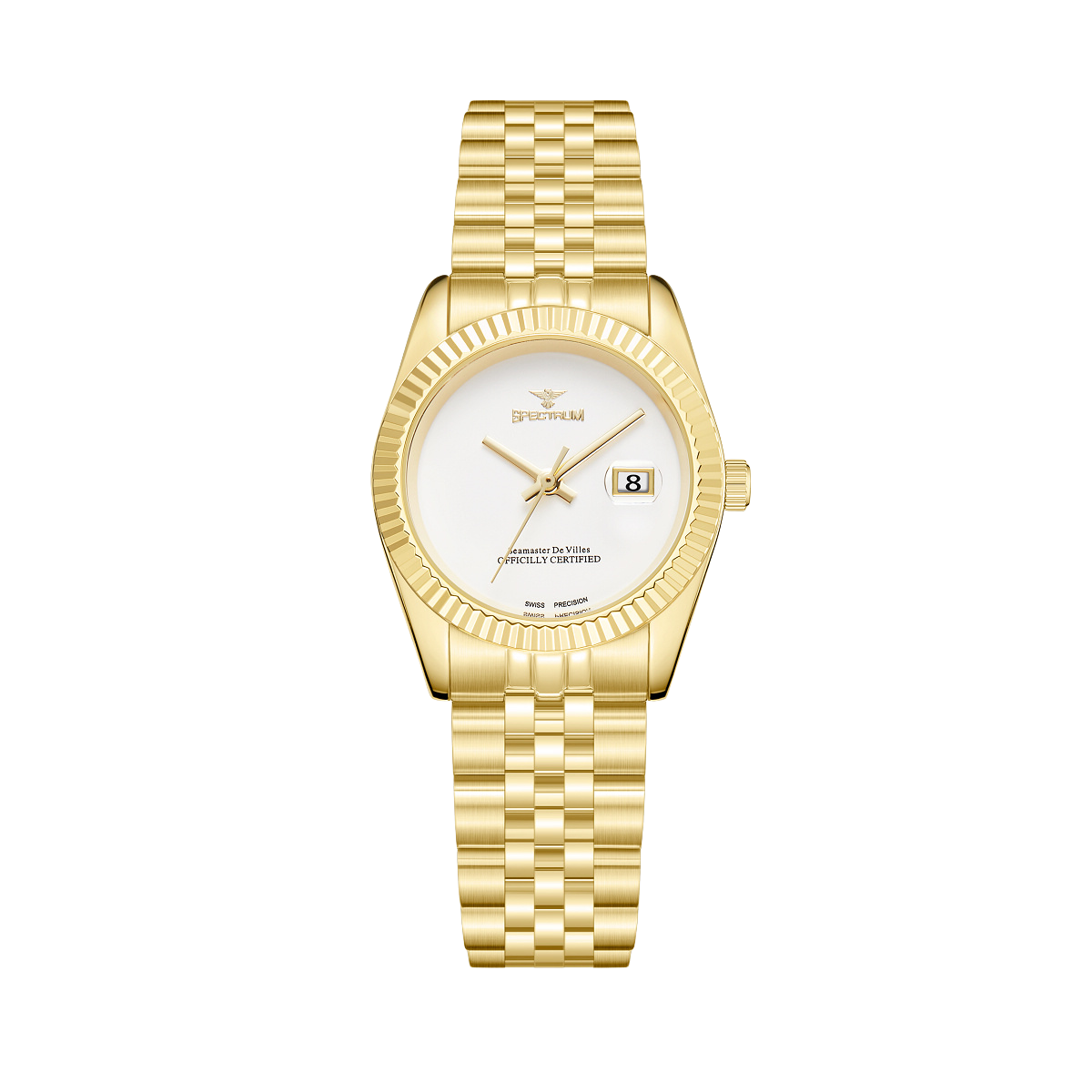
Why Cartier Painted Time
In 1904, an aviator complained that he couldn't check his pocket watch mid-flight. The answer wasn't a better pocket. It was an entirely new thing.
Spectrum Editorial · 5 min read · 41 views

The story has been told often, but it's worth telling again, because it's a story about how a creative answer changes the shape of a whole century.
In 1904, the Brazilian aviator Alberto Santos-Dumont was complaining to his friend Louis Cartier that he couldn't check his pocket watch in the cockpit. Both hands were busy. Pulling a watch out of a waistcoat at three thousand feet over Paris was, he said, "frankly stupid".
Cartier could have done what most jewellers would have done. He could have made a smaller pocket watch. A lighter chain. A nicer case.
Instead, he did something almost no one had done before: he strapped a watch to a piece of leather and tied it to Santos-Dumont's wrist.
The leap, and what it cost to make it
Wristwatches existed before 1904. They were, however, almost exclusively women's jewellery — small decorative pieces, often gem-set, considered far too delicate (and frankly too feminine) for serious men. To put a watch on a man's wrist was, in the social code of 1904 Paris, slightly absurd.
Cartier did it anyway, because the problem demanded it. And once Santos-Dumont started wearing the Santos in public, an entire category of object came into existence. The military adopted it for the trenches a decade later. By 1930, the pocket watch was on its way out.
One creative leap — strap a watch to a wrist — reorganised the way humans relate to time.
What the Creative is doing
Cartier wasn't solving a watchmaking problem. He was solving an aviator problem with the materials he happened to have. That is what the Creative does, in every studio, every kitchen, every workshop, every page.
You take the constraint someone has handed you, you turn it ninety degrees, and you make the thing nobody asked for but everybody needed. Sometimes it gets a name. Sometimes it doesn't. Either way, it changes the shape of the room.
Cartier painted time onto the wrist. The whole century followed him there.
About the author
Spectrum Editorial
The Spectrum Watches editorial desk
The Spectrum editorial desk — fact-checked, persona-mapped, and written for people who measure life in moments.
Wear the story