
Dust and Dial: A Gravel Traverse in the Hajar Mountains
A self-supported bikepacking traverse of Oman's Hajar Mountains demands ruthless gear choices. Here’s how we planned, packed, and pushed through.
Spectrum Editorial · 7 min read · 54 views
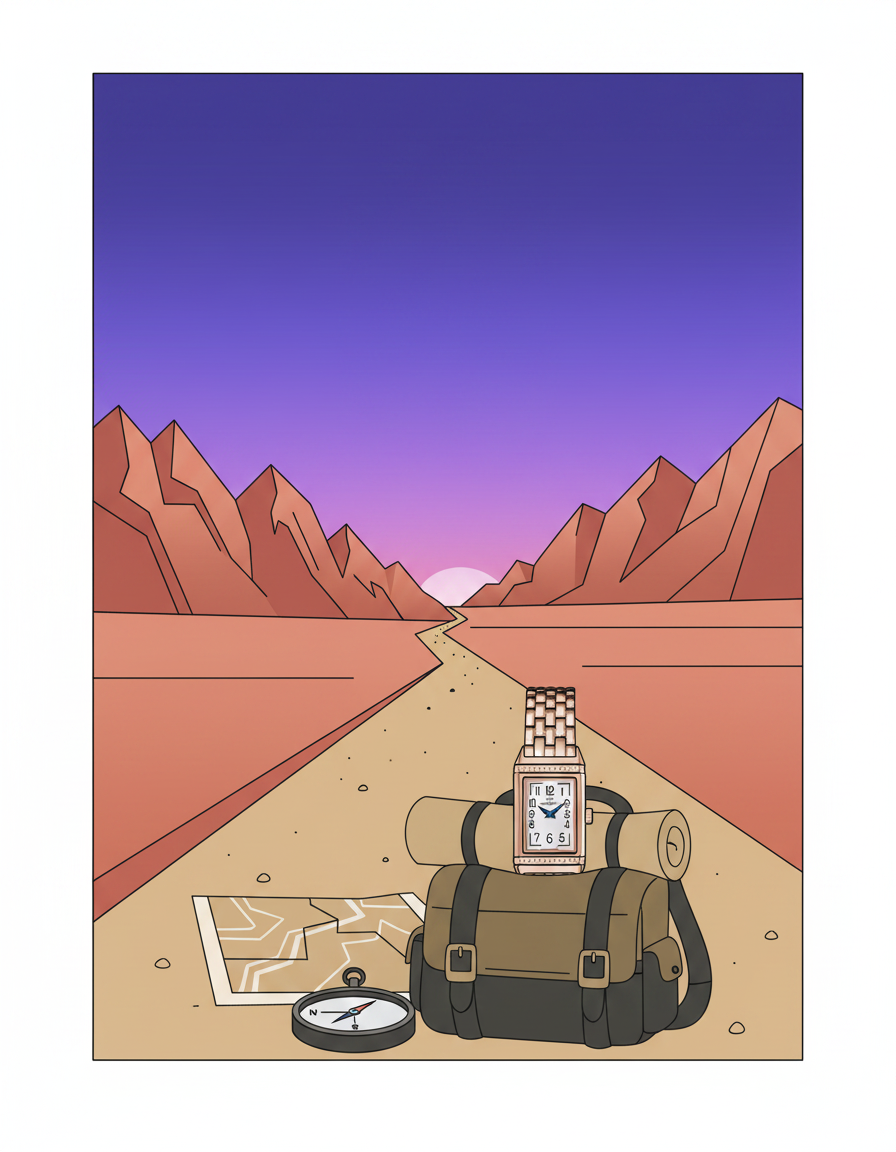
The plan was simple, but not easy. Ride a 250-kilometer self-supported route through Oman’s Hajar Mountains. No support cars, no organised camps. Just a bike, the gear that fits on it, and the will to keep the pedals turning. This isn't a vacation. It's a deliberate reset, a conscious choice to trade comfort for capability. It’s an act of choosing who to be for a few specific, intense days. This is the territory of The Multi-Dimensional, the one who knows life isn’t lived in a single mode.
This kind of objective requires a different mindset. It's a project in logistics and self-reliance disguised as a bike ride. The reward isn't a medal, but a hardened sense of perspective. It’s about proving to yourself that the person who navigates boardrooms and deadlines can also navigate ridgelines and dehydration. The phone gets switched off. The noise of daily life fades. What’s left is the mission.
The Route and The Rig
Our route traced a line from the high-altitude plateau near Jebel Shams, following a network of graded gravel roads and ancient goat tracks down towards the Batinah coast. This is not Tour de France territory. The surfaces are unpredictable, shifting from smooth, hard-packed dirt to bone-rattling loose rock and steep, sandy washes. The gradients can exceed 15%, forcing long, grinding climbs under a relentless sun.
Choosing the right equipment is a game of calculated trade-offs. We opted for steel-frame gravel bikes over lighter carbon models or heavier mountain bikes. Steel offers a compliant ride that absorbs road chatter, and more importantly, it's field-reparable in a way carbon is not. Weight is a penalty, but catastrophic frame failure is a bigger one. The bike is the single most critical piece of gear. It has to endure.
This thinking extended to every component. Wide, 45mm tubeless tires provided the necessary grip and pinch-flat protection. A wide-range cassette with a forgiving climbing gear was non-negotiable for the ascents. Bags were minimal: a frame pack for heavy items like water and tools, a seat pack for clothes and shelter, and a small handlebar bag for navigation and snacks. Every item had to justify its weight and volume. There is no room for ‘just in case’ luxuries, only for 'what if' essentials.
Packing for Extremes: Water, Weight, and What-Ifs
Out here, logistics are survival. The primary concern is water. In the dry mountain air, you can dehydrate without even feeling thirsty. The rule is to carry more than you think you need. Our calculus was five liters per person, per day, as the absolute minimum. This was carried in a 3-liter bladder inside the frame bag to keep the center of gravity low, supplemented by two 1-liter bottles in cages for easy access and tracking consumption. A featherlight pump filter served as a critical backup for the rare moments we might encounter a mountain spring or village well.
Food strategy is about maximum caloric density for minimum weight. Forget fresh anything. The menu consisted of dense energy bars, sachets of nut butter, electrolyte powders, and dehydrated meals for the evening. An evening meal isn't just about refueling; it's a ritual that signals the end of the day's work. It’s a moment of calculated recovery before the next push.
The entire setup, from shelter to sustenance, is an exercise in minimalism. Every choice is weighed, literally and figuratively. What makes the cut is what serves a direct, undeniable purpose. Your world shrinks to a few key inputs and outputs required to move yourself across a landscape. The essential gear list is short and unforgiving.
- Navigation: A dedicated GPS cycling computer for the primary track, with a smartphone running offline maps as a redundant backup.
- Repair Kit: Tire plugs, a spare inner tube, a reliable multi-tool, spare chain links, and tire levers. Knowing how to use them is not optional.
- First Aid: A compact kit with antiseptics, bandages, blister treatment, and pain relief. Small problems become big problems when you're hours from help.
- Shelter: An ultralight bivvy bag and a lightweight insulated mat. A tent is too bulky; this provides just enough protection from wind and dew.
- Timekeeping: A rugged, reliable analog watch. When all screens are off to conserve power, it’s the only tool for managing time.
The Mental Game of Pace and Presence
With logistics dialed in, the challenge becomes internal. It’s a mental game played out over long hours of repetitive motion. The primary screen is the GPS, used only for navigation checks, not for metrics. The phone stays off, its battery guarded for a true emergency. In this self-imposed digital blackout, your sense of time recalibrates. It becomes elemental, marked by the angle of the sun and the slow creep of shadows across the valley floor. Your watch is the only constant, the only anchor to structured time.
This is where [[product: Women's Silver Watch S17081L|this rugged two-tone timepiece]] earns its place. It feels like an indulgence, a piece of city life carried into the wild. Yet its function is pure. It needs no charging cable, no satellite signal. Its stainless steel case and bracelet are impervious to the dust, sweat, and inevitable knocks against rock. It’s a tool for pacing: ride for fifty minutes, rest for ten. It’s for timing a ten-minute boil for pasta, or setting a pre-dawn alarm to pack up camp before the heat builds.
The rose-gold accents catch the morning light, a small reminder of a world beyond the gravel track. But its purpose here is fundamental. It provides reliable information at a glance. It's a testament to the idea that functional tools can also be beautiful, that durability doesn't require sacrificing design. It's the one piece of personal expression that serves a real, mechanical purpose on the journey.
Descent and Decompression
The final day is almost entirely downhill. The gradient finally relents, and the bike rolls freely towards the coast. The air changes, growing thicker and tasting of salt. The sound of tires on gravel gives way to the distant sound of waves. The first sight of the Gulf of Oman is a profound moment of arrival, the definitive end of the traverse. The mission is complete.
Pulling into a small coastal town feels like entering another dimension. The simple act of buying a cold drink is a luxury. The journey re-calibrates your definition of need versus want. Washing the dust and dried sweat from your skin in a wadi pool feels like a baptism. You are the same person who started, but your perspective is altered, sharpened by the effort.
The transition back to urban life is jarring. The phone feels unnervingly loud, the pace of everything frantic. But some things from the trail endure. The watch on your wrist looks the same, whether caked in dust or clean under a cuff. It bridges the worlds. Back in Dubai, it might sit next to [[product: Women's Two Tone Gold Watch S17065L|a more polished two-tone design]], each a tool for a different context, a different self. The traverse proved that you are defined not by one environment, but by your ability to move between them.
About the author
Spectrum Editorial
The Spectrum Watches editorial desk
The Spectrum editorial desk — fact-checked, persona-mapped, and written for people who measure life in moments.
Wear the story