Five Thousand Years of Measuring Time
From a shadow on Egyptian sand to a quartz tine vibrating 32,768 times a second — a Spectrum field guide to how humanity learned to keep time, and why the wristwatch you wear is the heir to all of it.
Spectrum Editorial · 9 min read · 84 views
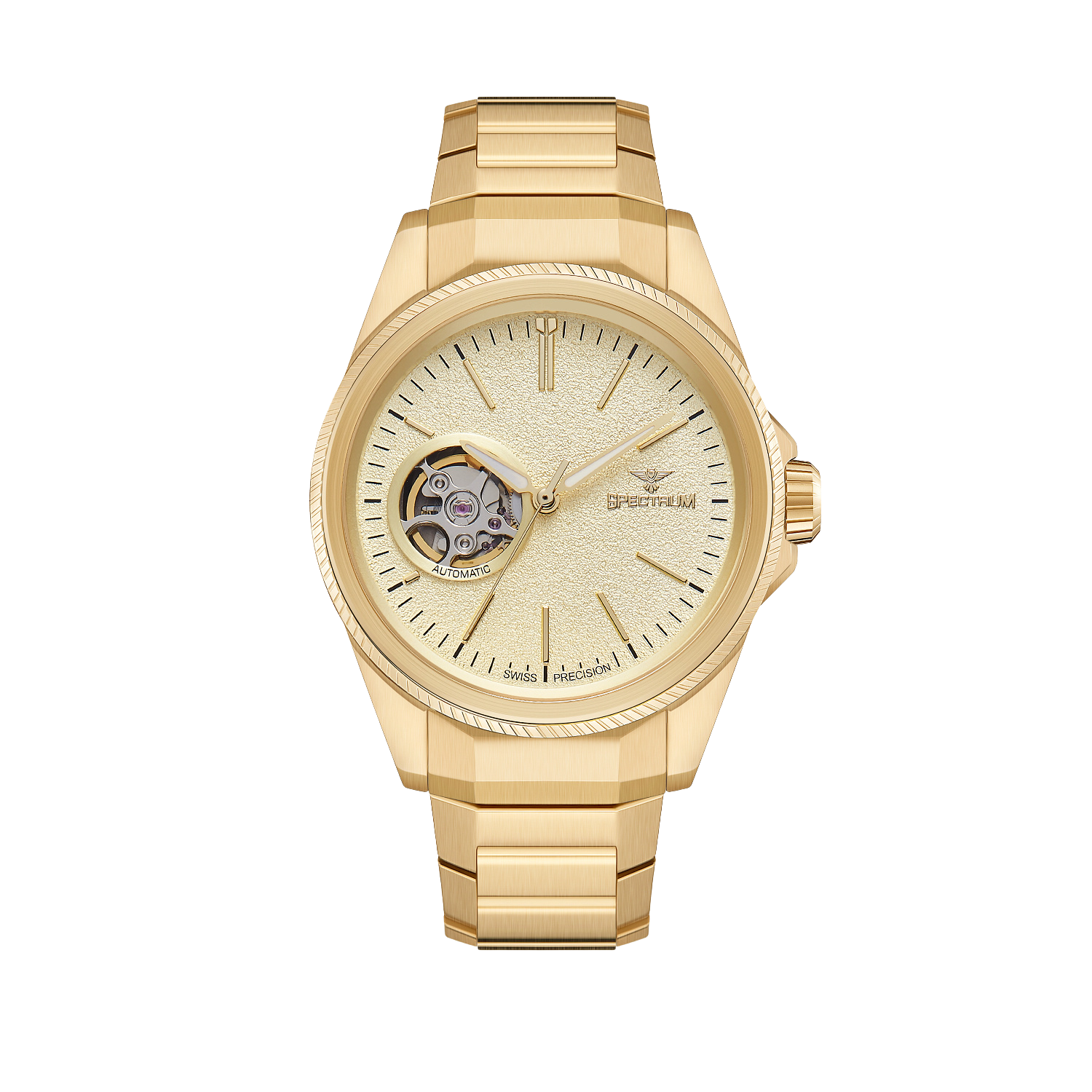
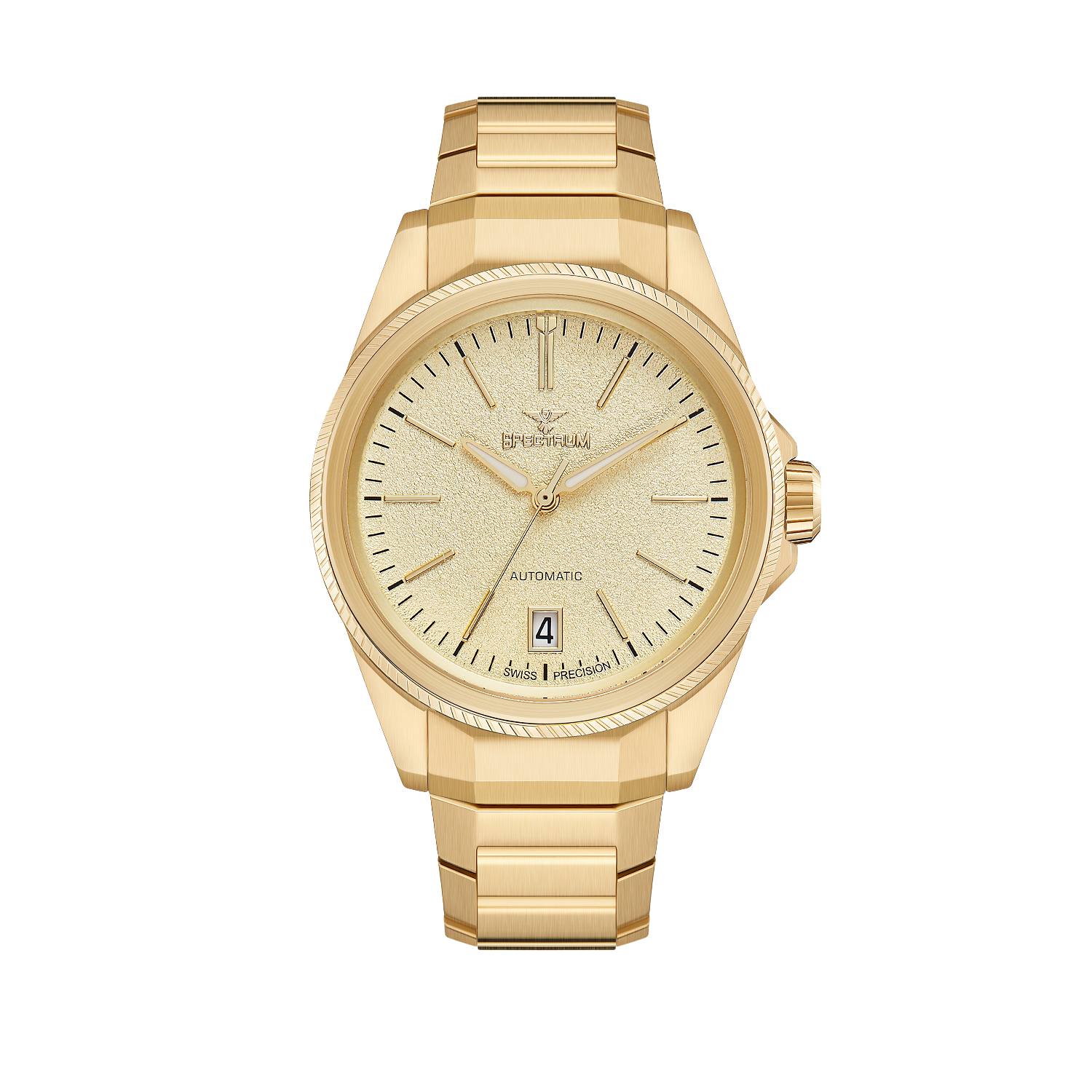
Time is the only thing we cannot make more of, and yet for most of human history we had no real way to measure it. The story of how that changed is the story of every watch on every wrist alive today — including the one Spectrum is making now in Dubai.
This is a walk through the moments that mattered.
c. 3500 BCE — Time becomes a concept worth tracking. Sumerian and Egyptian civilisations begin organising daily life around the sun and the seasons. Time stops being weather and starts being a coordinate.
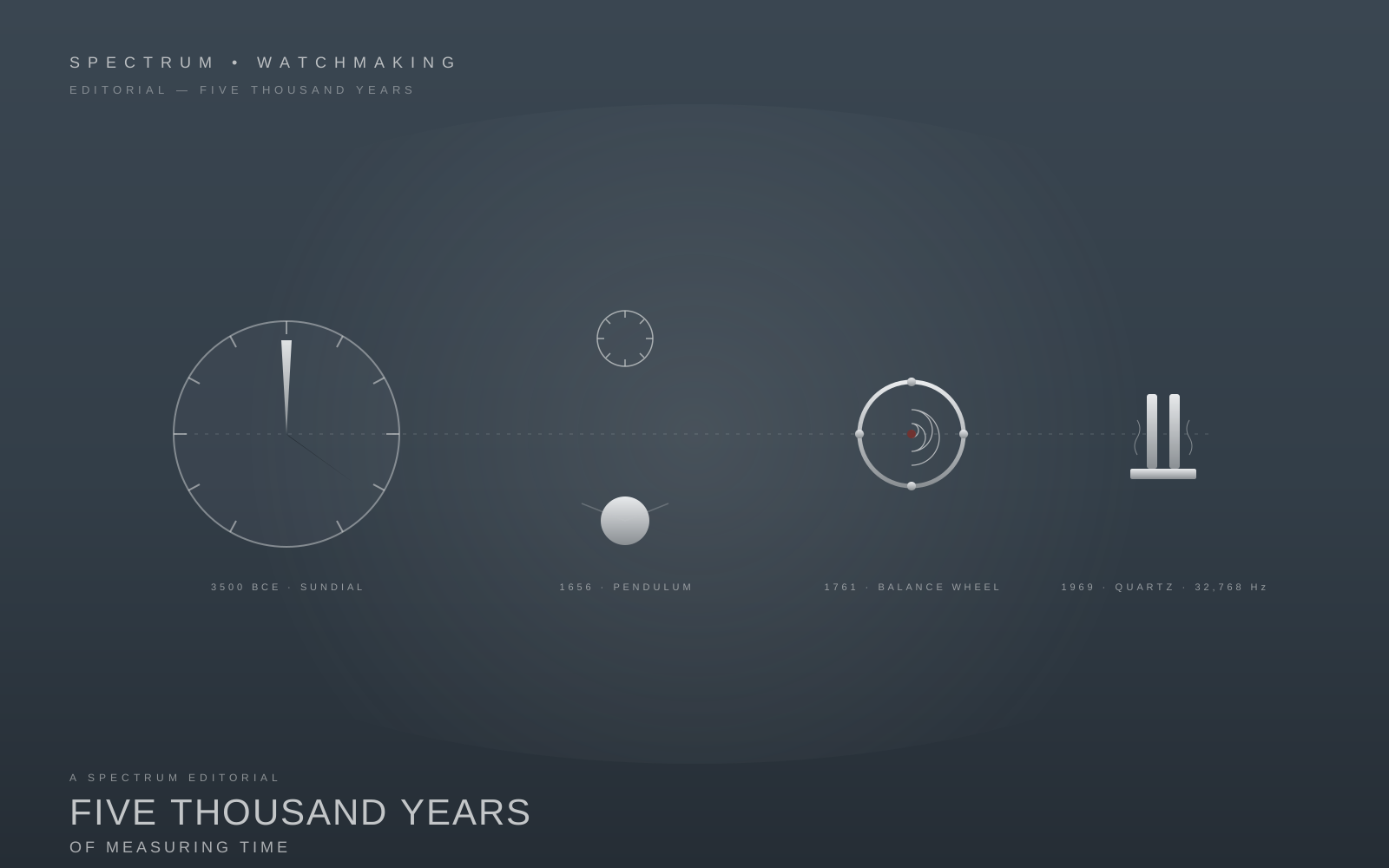
c. 1500 BCE — The first sundials. Egyptian shadow clocks divide the daylight into ten parts plus twilight. It is the first deliberate attempt to slice the day into equal pieces — the conceptual ancestor of the dial face.
c. 1400 BCE — Water clocks. The Babylonians, Egyptians and later the Greeks build clepsydra: vessels that drip water at a known rate. For the first time, time can be measured at night, indoors, and through cloud.
c. 150 BCE — The 24-hour day. Hellenistic astronomers split the day into 24 equal hours. Until then, "hours" stretched and shrank with the seasons. This is the moment the hour becomes a fixed unit — the unit your watch still keeps today.
c. 1275 — The verge escapement. Somewhere in a European monastery, a clockmaker invents the escapement: the mechanism that lets a falling weight release its energy in tiny, regular pulses. Mechanical timekeeping is born. Every analogue watch built since — Spectrum's included — is a descendant of that single idea.
c. 1335 — Public clock towers. The first weight-driven tower clocks appear in European cities. Civic life starts running on shared, audible time. Markets open by the bell. Workers are paid by the hour. The day becomes scheduled.
c. 1510 — The mainspring. Peter Henlein and his contemporaries replace falling weights with a coiled spring. Clocks become portable. The wristwatch is still four centuries away, but the idea of carrying time on your person begins here.
1583 — Galileo and the pendulum. Watching a chandelier swing in Pisa Cathedral, Galileo realises a pendulum keeps near-perfect time regardless of how wide it swings. He sketches a clock but never builds it.
1656 — Huygens builds the pendulum clock. Christiaan Huygens turns Galileo's sketch into reality. Accuracy jumps from about fifteen minutes a day to fifteen seconds. It is the largest single leap in timekeeping precision in human history.
1675 — The balance spring. Huygens — and, separately, Robert Hooke — add a hairspring to the balance wheel. Pocket watches become accurate to the minute. Open the back of a mechanical Spectrum today and you will still see a balance wheel and hairspring doing exactly the same job.
1761 — Harrison's marine chronometer. John Harrison spends forty years building a clock accurate enough to determine longitude at sea. It loses less than five seconds on a six-week voyage to Jamaica. Empires rearrange themselves around it. The age of global navigation begins.
1801 — Breguet's tourbillon. Abraham-Louis Breguet patents the tourbillon: a rotating cage that averages out the effect of gravity on the escapement. It is more art than necessity, and watchmakers have been chasing it ever since.
1914 — The wristwatch enters daily life. Originally made for women as jewellery, the wristwatch is adopted by soldiers in the First World War for hands-free timekeeping in the trenches. It becomes the dominant form of personal timekeeping for the next hundred years.
1967 — The atomic standard. The second is officially redefined as 9,192,631,770 oscillations of a caesium atom. Time stops being something we measure with springs and pendulums and starts being something we count.
1969 — The quartz revolution. Seiko ships the Astron — the first quartz wristwatch. A vibrating quartz tine, 32,768 oscillations per second, makes it a hundred times more accurate than the best mechanical watch ever built. The Swiss industry nearly collapses.
1974 — Casio's digital quartz. The Casiotron is the first fully digital wristwatch with an automatic calendar. Time becomes information you read, not a position you interpret.
2015 — The smartwatch era. Apple ships the Apple Watch. For the first time in centuries, the most-worn timekeeping device on Earth is no longer mechanical, no longer analogue, and no longer designed primarily to keep time.
So why does an analogue watch still matter?
Because every story above is a story about humans choosing to measure something they could not control. A sundial does not save you time. A pendulum does not give you more of it. A balance wheel does not stop the day from ending.
What they all do is the same thing your wristwatch does now: they make time visible. They turn an invisible current into something you can hold, glance at, and decide what to do with.
That is what Spectrum is for. We have spent thirty-five years in Dubai building analogue watches in a notification age — quietly, deliberately, on a wrist that is not buzzing. Five thousand years of human craft compressed into a 40mm circle of steel and sapphire.
Every Spectrum is a small descendant of every moment above. And the only question we ever really ask the people who wear one is the same one this entire timeline is asking:
How will you spend your time?
→ See the full timeline on the Moments scroll.
About the author
Spectrum Editorial
The Spectrum Watches editorial desk
The Spectrum editorial desk — fact-checked, persona-mapped, and written for people who measure life in moments.