How a Spring Replaced a Cathedral
For three hundred years, the only way to know the time was to walk to the town square. Then a German locksmith coiled a piece of metal — and time became personal.
Spectrum Editorial · 5 min read · 98 views

For most of European history, knowing the time meant walking outside.
From the 1300s onwards, the great clock towers of Salisbury, Strasbourg, Prague, Wells — vast iron mechanisms the size of small rooms — kept the hours for entire cities. They were powered by falling weights that needed thirty feet of headroom to drop. You could no more carry one of these clocks than you could carry the cathedral it sat inside.
Then around 1510, a locksmith in Nuremberg named Peter Henlein did something quiet and revolutionary. He coiled a thin strip of hardened steel into a tight spiral, fixed one end to a barrel, and used its slow uncoiling to drive a tiny set of gears.
He had replaced gravity with tension. The cathedral was now in his pocket.
The first portable hour
Henlein's "Nuremberg eggs" were, by modern standards, terrible. They lost a quarter-hour a day. They had only one hand. They were less accurate than the sundial in the garden.
But that wasn't the point. The point was that for the first time, time travelled with the person. A merchant could carry it on horseback. A captain could take it to sea (badly, at first — but the door was open). A doctor could check a pulse against a number, not a guess.
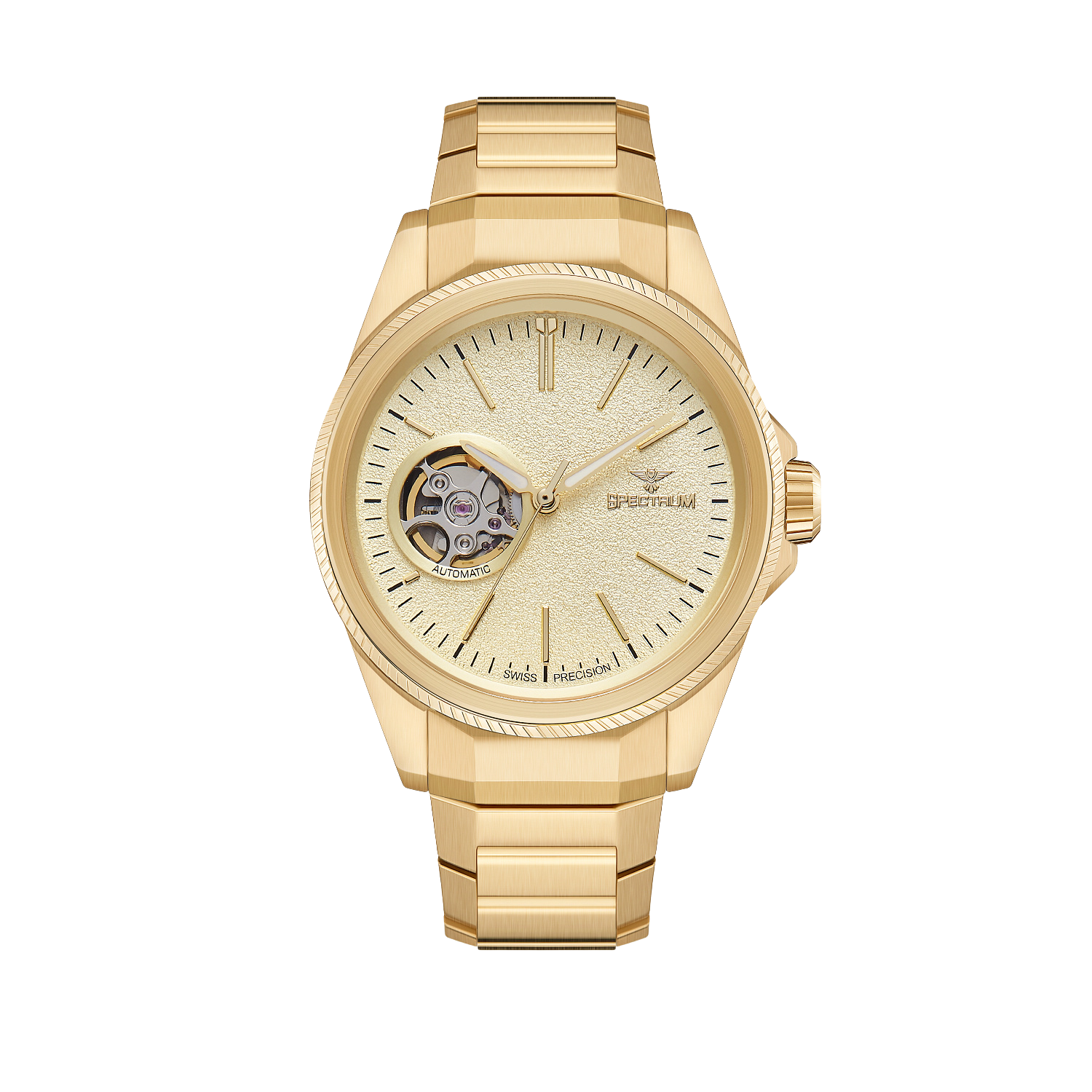
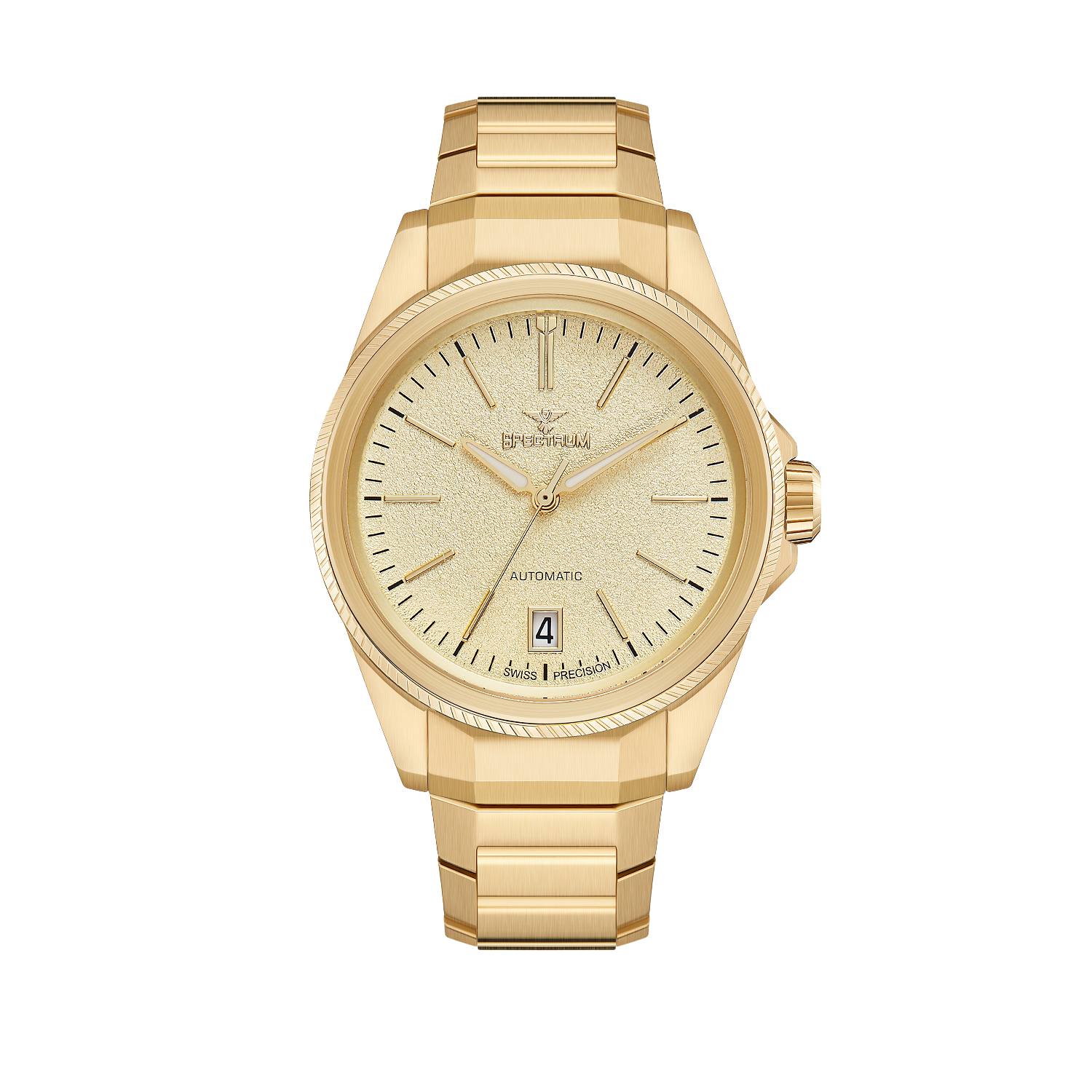
Every wristwatch ever made is a descendant of Henlein's spring. Quartz didn't kill it. Smartwatches haven't killed it. The mainspring is still the heart of a mechanical watch in 2026, beating in tight little circles under sapphire glass.
The Inventor's lesson
The thing you carry is downstream of someone who said: this should be smaller. this should be portable. this should belong to the person who needs it, not the institution that owns it.
That is the work, in every century. Find the cathedral. Coil the spring.
About the author
Spectrum Editorial
The Spectrum Watches editorial desk
The Spectrum editorial desk — fact-checked, persona-mapped, and written for people who measure life in moments.