Determination Builds. Succession Continues.
A brand starts as one person's refusal to quit. It survives as a plan for who carries it next. Two perspectives on the same clock.
Spectrum Editorial · 6 min read · 32 views

Every brand begins the same way: somebody, somewhere, decides not to stop.
There is no investor deck for that moment. No market research, no five-year plan. Just a person looking at the gap between what exists and what should exist, and choosing — usually after months of being told it cannot be done — to fill it themselves.
That is the first watch on the clock. We call it determination. It is loud, lonely, and almost always uncomfortable. It runs on personal credit, missed weekends, and a stubbornness the founder rarely talks about publicly because, in the moment, it just feels like the only option.
Spectrum started this way in 1990, in a market that had no interest in a Middle Eastern watch brand. The world's wrist belonged to Switzerland, to Japan, to the houses of Paris and Geneva. The idea that Dubai would design its own watches, on its own terms, sounded — to almost everyone outside the room — like a category error. The brand was built, piece by piece, against that assumption. Determination was the only fuel available.
The second hand on the clock
But here is the part most founder stories quietly skip: determination is not a strategy. It is a starting condition.
A brand built only on one person's will lives exactly as long as that person's will does. When the founder slows down, gets sick, gets tired, or simply gets older, the whole thing slows down with them. The market is full of beautiful brands that did not survive their first generation — not because they ran out of customers, but because they ran out of continuity.
The second watch on the clock is succession.
Succession is not a retirement plan. It is the deliberate, often unglamorous work of making a brand outlive the energy that started it. It is writing down what was, until then, only in someone's head. It is teaching the next set of hands how to make the same decision the founder would have made, in a room the founder is no longer in. It is hiring people who will eventually be better at parts of the job than the person who hired them — and being relieved, not threatened, when that happens.
Succession is, in short, the moment a brand stops being a person and starts being an institution.
Time, from two perspectives
There is a useful way to look at this on a watch dial.
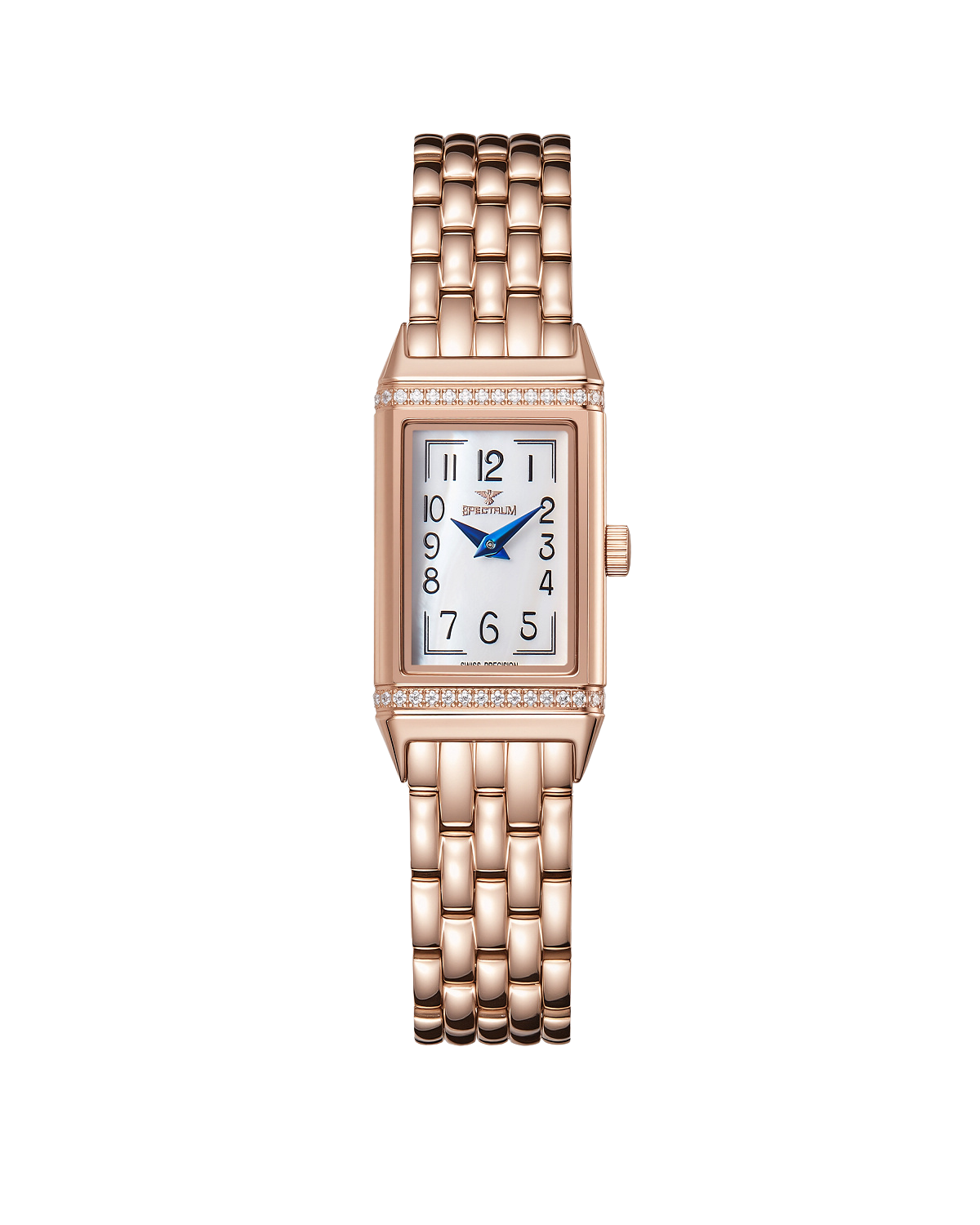
The hour hand is the founder's hand. It moves slowly, decisively, and rarely. It marks the big moves: the first product, the first store, the first decade. It is the hand of determination — the one that says this is the direction, and we are not turning back.
The minute hand is the operator's hand. It moves visibly. It is the work of the second generation: the systems, the suppliers, the standards, the people who turn one founder's decision into a thousand repeatable actions. Without it, the hour hand is just a gesture.
And the second hand — the one most people stop noticing — is succession itself. Quiet, constant, almost invisible in any given moment, but the only reason the other two hands keep moving at all. Stop the second hand and within a generation the watch is a souvenir, not an instrument.
A brand that wants to last needs all three hands working at once. Most don't. Most are still trying to do the whole thing with the hour hand.
What the Multi-Dimensional understands
The Multi-Dimensional rarely thinks in single careers anymore. They think in chapters. They have already been three different versions of themselves professionally, and they expect to be a few more before they are done. They know, instinctively, that the things worth building are the things that can be handed over without breaking.
That is why, when they look at a watch, they are not really looking at minutes. They are looking at the question underneath every wristwatch ever made: what survives the person wearing it?
The honest answer, for a brand and for a life, is the same. Determination starts it. Succession keeps it. The clock does the rest.
Spectrum was built in 1990 by people who refused to accept that the answer was no. It is being carried forward by people whose job is to make sure that refusal becomes a habit, then a system, then a standard — long after the original founders are no longer the ones in the room.
That is the whole story, and it is also, quietly, the only story that matters. Time spent. Time continued. Two hands, one wrist, and a second hand you only notice when it stops.
About the author
Spectrum Editorial
The Spectrum Watches editorial desk
The Spectrum editorial desk — fact-checked, persona-mapped, and written for people who measure life in moments.
Wear the story