
What is a chronograph and do I need one?
A chronograph is a watch that combines a standard time display with a stopwatch function, allowing you to measure elapsed time independently.
Spectrum Editorial · 7 min read · 75 views
A chronograph is a watch that combines a standard time display with a stopwatch function, allowing you to measure elapsed time independently.
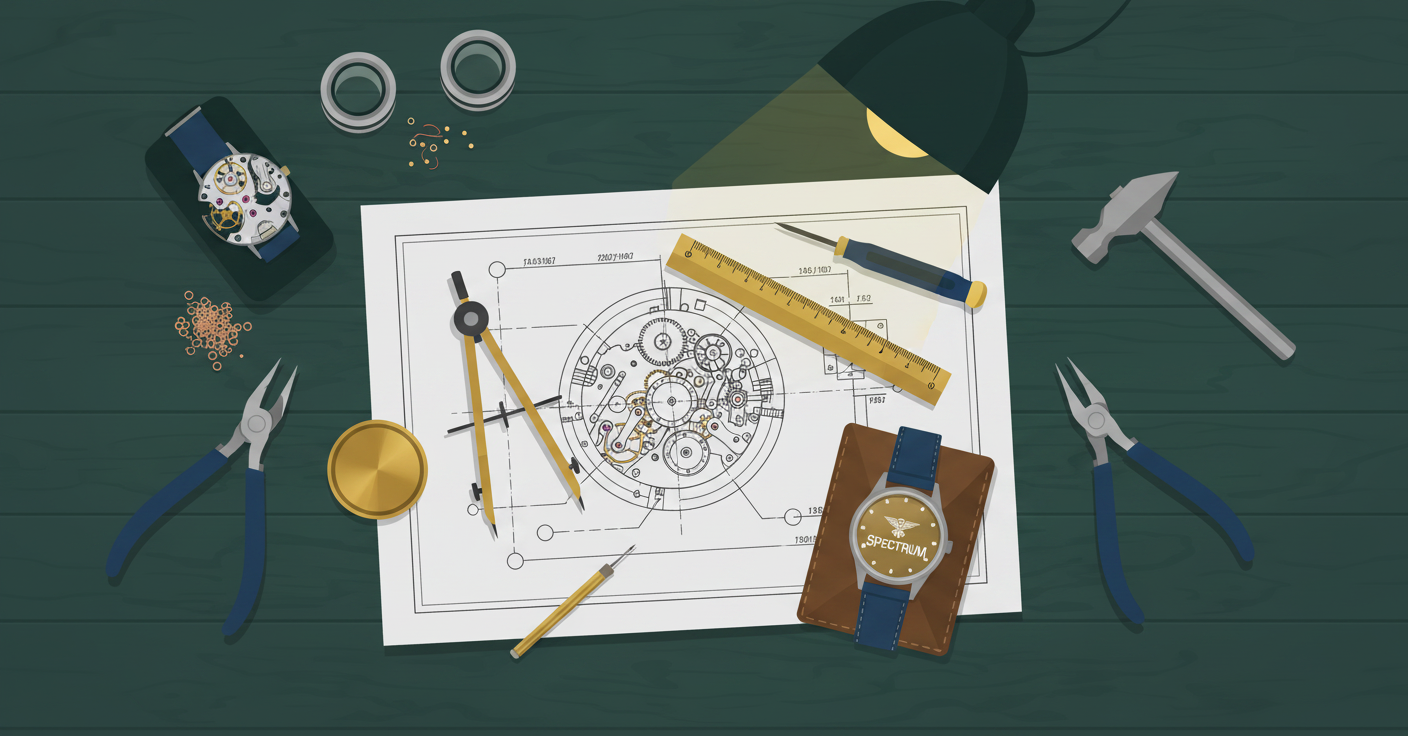
That familiar surge of adrenaline as a new idea takes hold. The workshop hums, a half-finished prototype catching the light. It's not about the destination, but the relentless iteration, the precise calibration, the hours of focused work that turn a concept into a tangible reality. When every second counts towards bringing a vision to life, the tools you choose are not merely accessories; they are extensions of your intent, instruments of your progress. This isn't about tracking, it's about making. And for the maker, precision matters.
Unpacking the Chronograph: Beyond the Surface
Many see a chronograph and perceive complexity: multiple subdials, extra pushers, a busy dial. For the uninitiated, it can appear purely aesthetic—an exercise in design rather than function. But for those who value utility and mechanical ingenuity, a chronograph is an elegant solution to a specific set of problems. It offers a distinct advantage over a standard watch: the ability to measure duration. Imagine timing a critical phase in a manufacturing process, or the curing time of a new composite material. These are not tasks for your phone, which distracts with notifications. These are tasks for a dedicated instrument designed to isolate the act of measurement.
At its core, a chronograph is two mechanisms housed within one watch: a this piece movement and a separate stopwatch movement. The this piece section operates continuously, displaying hours, minutes, and seconds. The stopwatch component, however, is controlled by pushers—typically at 2 o'clock and 4 o'clock. The upper pusher starts and stops the timing function, while the lower pusher resets it, returning the chronograph hands precisely to zero. This independent operation means you can time events without interfering with the watch's primary function of telling you the current time. It’s a testament to micro-engineering, a practical tool executed with mechanical grace.
The Three Jobs of a Chronograph
Beyond simply starting and stopping time, a chronograph excels in three key operational scenarios that resonate with the precise demands of a maker's life. These aren't abstract functions; they are real-world applications that add tangible value.
1. Precise Interval Timing: From calculating the exact exposure time for a photographic print to monitoring the duration of an experimental weld, a chronograph allows for repeatable, focused measurement. This is invaluable when consistency is paramount. You need to know that this process took 45 seconds, not "around a minute." The clear, sweep second hand of a chronograph provides an immediate visual readout that modern digital interfaces sometimes obscure with their pixelated displays and layered menus. It's about being present with the measurement.
2. Comparative Analysis: Running multiple tests or iterations? A chronograph lets you time each one, then compare the results this piece. Did the new algorithm compile faster? Is this prototype assembling quicker than the last? Without a dedicated timing mechanism, these comparative measurements quickly become subjective. With a watch like [[product: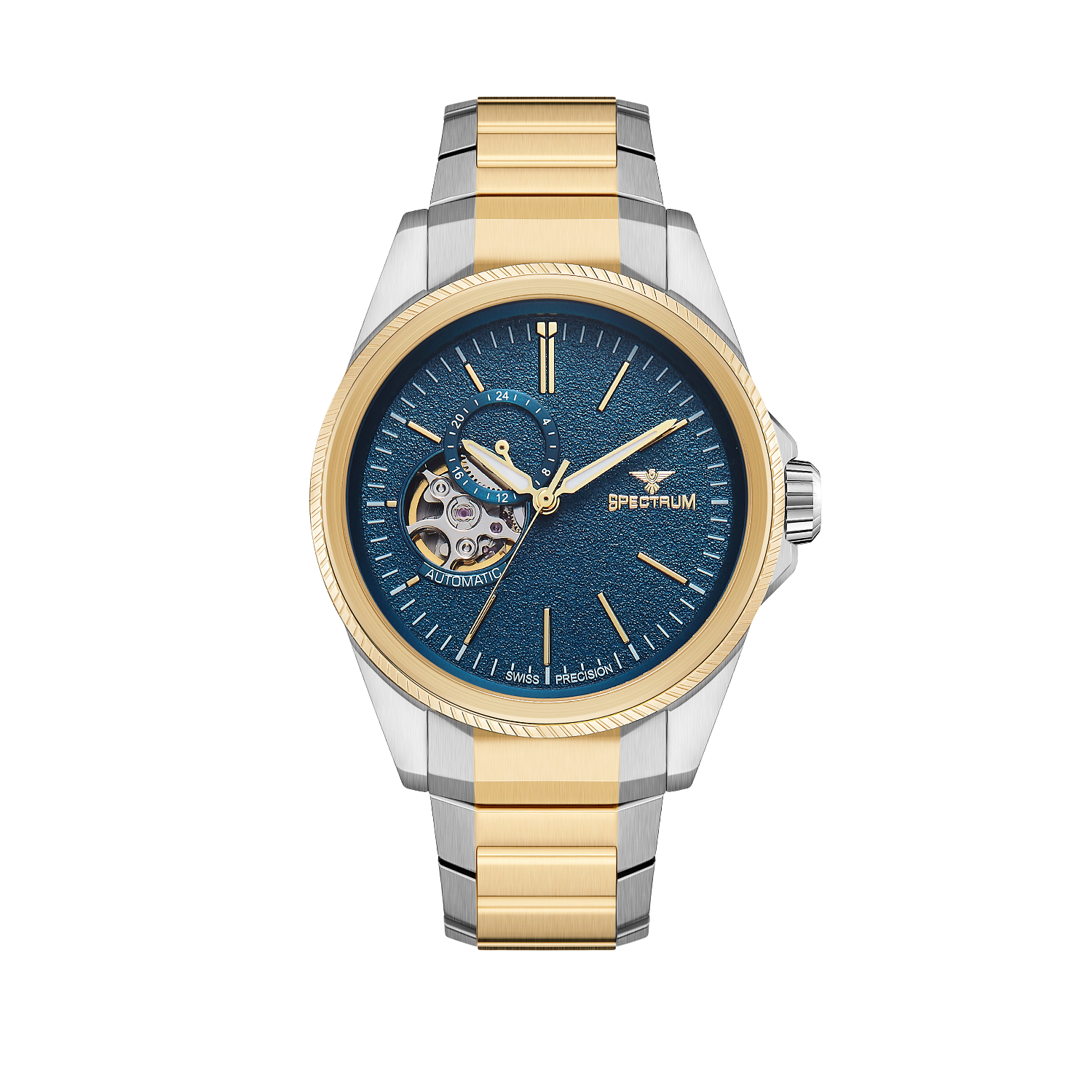 Men's Two Tone Gold Watch S17086M-|this two-tone chronograph]], you get clear, actionable data, right there on your wrist, without reaching for a separate device. This direct, unfettered data collection is a hallmark of truly disciplined work.
3. Process Optimization: For any complex sequence, identifying bottlenecks or inefficiencies requires accurate timing of each stage. A chronograph facilitates this. Break down a task into its individual components—mixing, setting, curing, assembly—and time each step. The data gathered provides insight for refinement and improvement, allowing you to iterate towards a more efficient and effective process. This is the essence of what it means to build thoughtfully: measuring, analyzing, and improving.
Men's Two Tone Gold Watch S17086M-|this two-tone chronograph]], you get clear, actionable data, right there on your wrist, without reaching for a separate device. This direct, unfettered data collection is a hallmark of truly disciplined work.
3. Process Optimization: For any complex sequence, identifying bottlenecks or inefficiencies requires accurate timing of each stage. A chronograph facilitates this. Break down a task into its individual components—mixing, setting, curing, assembly—and time each step. The data gathered provides insight for refinement and improvement, allowing you to iterate towards a more efficient and effective process. This is the essence of what it means to build thoughtfully: measuring, analyzing, and improving.
The Digital Divide: Why Analog Matters for Makers
In an era saturated with "smart" devices, the question often arises: why choose an analog chronograph over a digital stopwatch or a smartwatch? The answer lies in focus and intent. A smartwatch, while versatile, is a hub of notifications, distractions, and data streams. It pulls your attention in multiple directions. For the maker, deep work demands singular focus. The act of engaging a mechanical pusher, observing the subtle sweep of the chronograph second hand, and reading the elapsed time directly from the dial fosters a different kind of engagement—one that is deliberate, immersive, and free from digital noise. There are no software updates, no battery anxieties beyond its primary function, no temptation to check email.
What [[product: Men's Silver Watch S17064M|this analog chronograph]] offers is a tool. A specialized instrument purpose-built for timing, stripped of superfluous features that would detract from its primary mission. It is a commitment to the task at hand, a quiet companion to sustained concentration. It understands that some problems require a singular, focused approach, not another screen vying for your attention. This ethos permeates everything we build at Spectrum Watches, reflecting our dedication to functional excellence and purposeful design. For the inventor, the entrepreneur, the tinkerer—the Inventor—it’s about having tools that empower, not distract.
The Choice: Do You Need a Chronograph?
Consider your daily routines, your projects, the problems you solve. Are there instances where precise, unassisted timing would enhance your work, streamline a process, or simply satisfy a curiosity for measurement? If your days involve:
- Timing product development cycles.
- Measuring intervals during a challenging workout.
- Recording lap times on a track, whether for a car, a drone, or a model.
- Monitoring the precise duration of a chemical reaction or a cooking process.
- Breaking down complex tasks into measurable components for optimization.
Then a chronograph is more than a luxury; it is a practical addition to your toolkit. It is a statement of intent, a commitment to precision and efficiency. It serves those who understand that details matter, and that mastering those details is how innovation happens. The decision isn't about needing another device, but about desiring a better instrument for specific, critical tasks. It's for those who demand tools that work as hard and as smart as they do. For someone who builds, a chronograph isn't merely a watch; it's a constant, reliable partner in the pursuit of perfection. Every tick is a reminder of time invested, time optimized, and time conquered. It’s an investment in your own capability, a silent vow to make every moment count.
And for those moments when you prefer a less intricate dial but still value robust timekeeping and distinctive design, consider a minimalist aesthetic from our comprehensive collection. It showcases the same commitment to precision and reliability without the chronograph functionality, proving that intentional design transcends specific features. The right watch enhances your focus and aligns with your ambition, without demanding your constant attention.
The Mechanism: A Look Under the Dial
While the external functions of a chronograph are apparent—pushers, subdials—the internal mechanics are where the true artistry lies. Whether powered by a precise quartz movement or a intricate mechanical caliber, the coordination of springs, levers, and gears is a marvel. In mechanical chronographs, tiny clutches engage and disengage the timing train, allowing the central seconds hand and subdial accumulators to operate independently. The reset function is particularly impressive, with hammers snapping the hands back to their zero positions with remarkable accuracy.
This complexity is part of the appeal for many makers. It’s a micro-machine, a miniature engine, designed for a specific purpose. Understanding how these components interact fosters a deeper appreciation for the precision tool on your wrist. It’s a tangible connection to the principles of engineering and design that you apply in your own work. And for those who prefer the rugged simplicity and accuracy of quartz, the efficient, battery-powered heart ensures reliable performance without the need for periodic winding. Both approaches deliver the core function reliably, allowing you to choose based on your personal preference for mechanical craft or maintenance-free accuracy.
About the author
Spectrum Editorial
The Spectrum Watches editorial desk
The Spectrum editorial desk — fact-checked, persona-mapped, and written for people who measure life in moments.
Wear the story