
Why a Mechanical Watch Is the Ultimate Mindfulness Tool
Discover how the simple, analog ritual of winding a mechanical watch can ground your morning and replace digital anxiety with focused intention.
Spectrum Editorial · 7 min read · 5 views
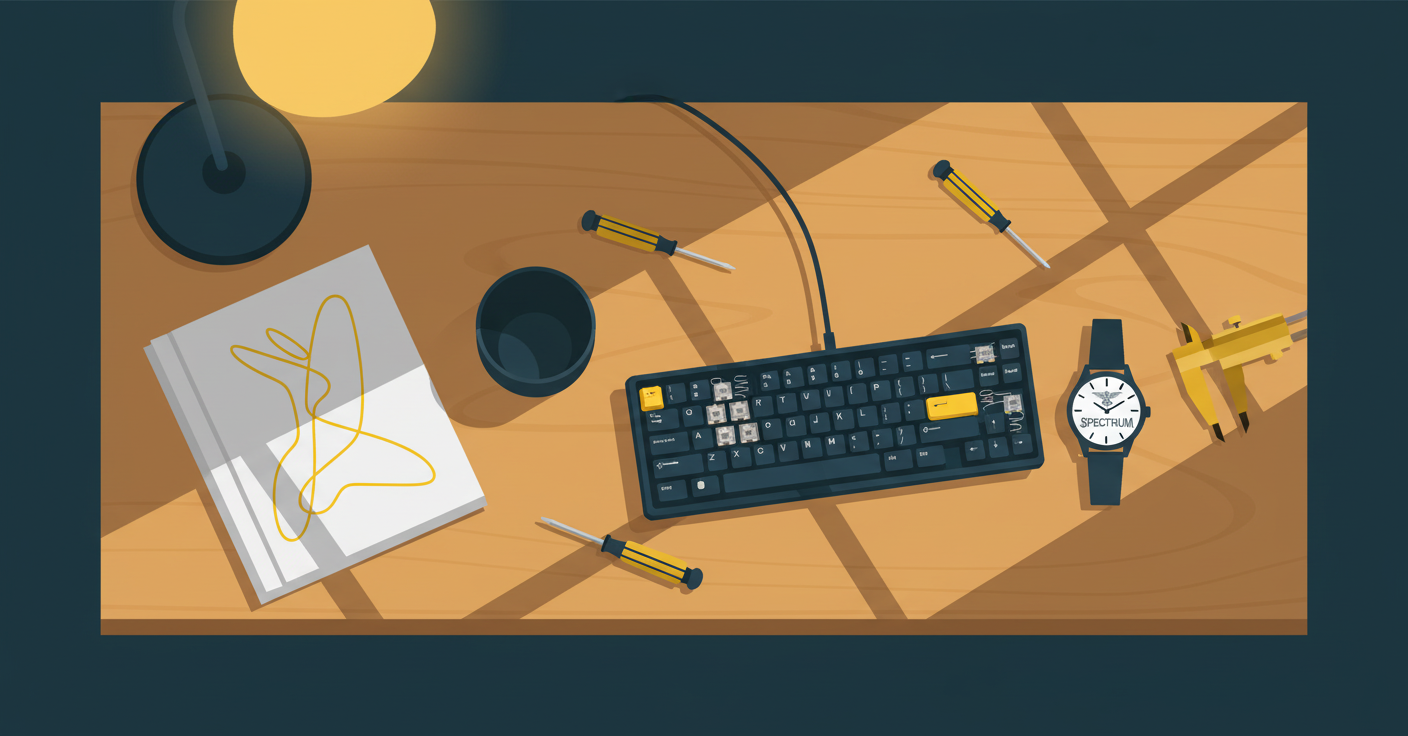
It’s 6 AM on a Tuesday. The coffee is brewing, casting a rich, dark scent across the workshop. Outside, the world is still grey and quiet. At your desk, under the focused pool of a single lamp, two objects sit waiting: your phone and your watch. One is a gateway to a thousand demands, a chorus of emails, alerts, and news feeds. The other is a machine. A simple, elegant machine built for one purpose.
This is the first decision of the day. Do you let the world rush in, or do you take a minute for yourself? You pick up the watch. It’s cool in your hand. You turn the crown, and the silence is broken by a series of quiet, satisfying clicks. It’s the sound of a spring tightening, of potential energy being stored. You’re not just starting a device; you’re engaging with a mechanism. For the next ninety seconds, this is your entire world. This is the first act of intention in a day that will demand thousands.
Using a Mechanical Watch as a Mindfulness Tool
The idea of a mechanical watch as a mindfulness tool isn't about rejecting technology. It's about choosing the right tool for the job. Your phone is a supercomputer, a communication hub, a navigator. It is designed for multiplicity. A mechanical watch, by contrast, is a master of simplicity. It tells the time. That’s it. There is no hidden menu, no firmware update, no battery percentage to manage.
This deliberate limitation is its greatest strength. In a world of endless digital noise, the mechanical watch is a quiet anchor. Its function is pure, its operation transparent. For the tinkerer, the engineer, the maker, this is a familiar language. It’s a system you can understand just by looking at it. The gears, the springs, the escapement—they are not abstractions in the cloud. They are physical components working in concert, a testament to human ingenuity. [[product: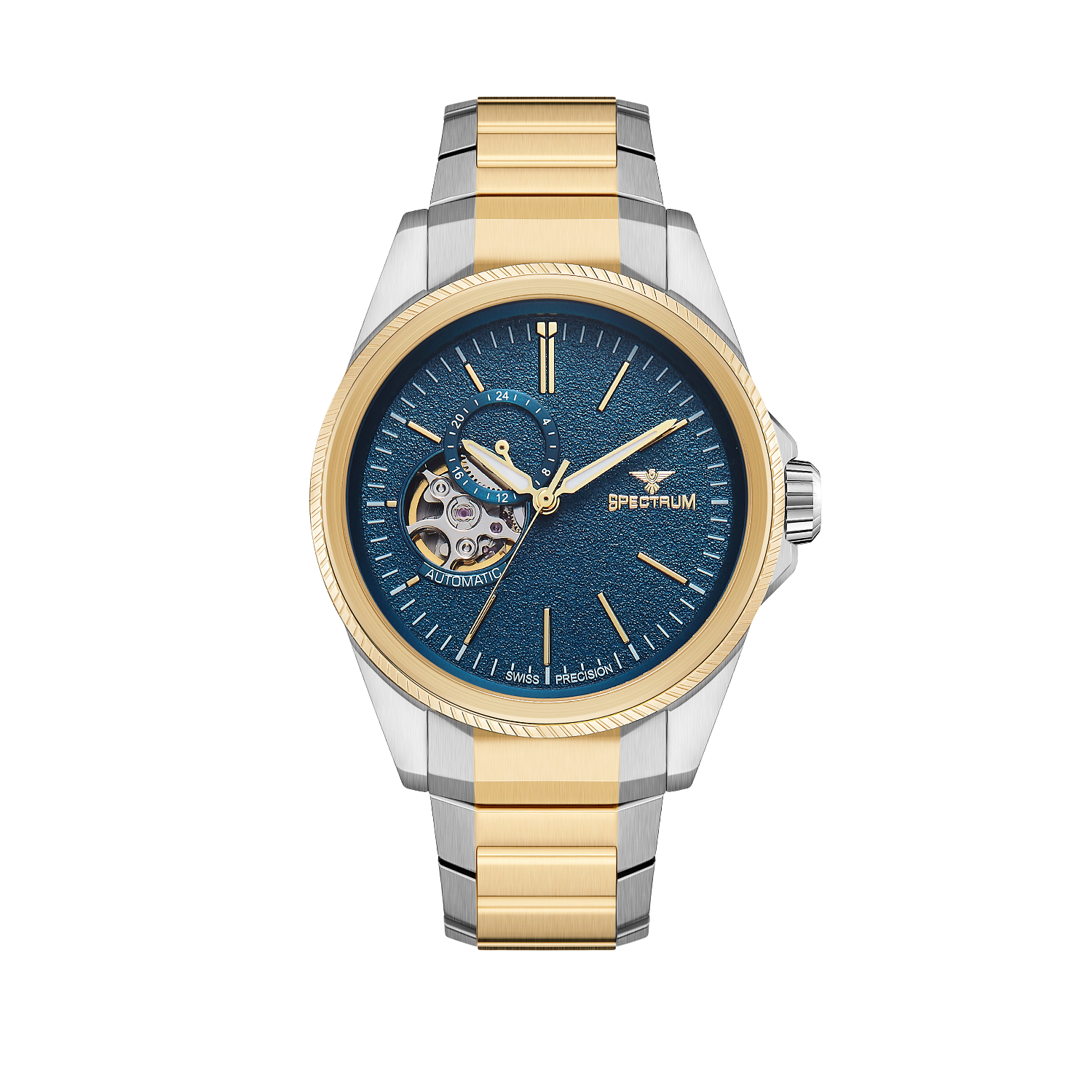 Men's Two Tone Gold Watch S17086M-|This two-tone automatic]] is a prime example of that principle, with its exhibition caseback revealing the intricate dance of the movement inside.
The daily ritual of winding—or simply setting—your watch becomes a moment of grounding. It’s a brief, tactile meditation. It forces you to pause and connect with a physical object, to appreciate its craftsmanship before you dive into the digital ether. This small act carves out a space for focus before the day’s chaos can take hold. It's a statement of purpose: you are in control of your time, not the other way around.
The Metronome on Your Wrist
Observe the seconds hand on a mechanical watch. It doesn't stutter from one second to the next like a standard quartz. It sweeps. This smooth, continuous motion is a visual representation of time's ceaseless flow. It’s calming, almost hypnotic. It’s a far cry from the blinking cursors and urgent notification badges that dominate our digital lives.
Then there is the sound. Hold the watch to your ear. That faint, rapid ticking is the heartbeat of the machine. It’s the sound of the escapement's pallet fork locking and unlocking the escape wheel, hundreds of times a minute. It is a constant, steady rhythm—a personal metronome that accompanies you through your day. It’s a subtle reminder of the present moment, a background hum of pure function.
Contrast this with the jarring vibration of a smartwatch. A notification is a demand. It’s an external priority inserting itself into your consciousness, pulling you away from what you’re doing. The gentle tick of a mechanical watch does the opposite. It draws you inward, connecting you to your own sense of pace and progress. It doesn't interrupt your flow; it becomes part of it. It’s the least connected, yet most connecting, device you can own.
From Grail Watches to Daily Drivers
If you're a maker or engineer, you've likely spent time on the forums. You've read the deep dives on Worn & Wound or Hodinkee. You know the icons: the Omega Speedmaster that went to the moon, the Rolex Submariner that defined the dive watch, the Patek Philippe that commands auction-house prices. These are the grail watches, the pinnacle of horological art and history.
But the joy of mechanical timekeeping isn't reserved for bank vaults. The core principles of a tiny, wrist-worn engine are accessible to everyone. The same spirit of robust, functional design that made the Seiko SKX007 a legend or the Hamilton Khaki Field a go-to for enthusiasts is alive and well. The focus isn't on the price tag; it's on the integrity of the machine.
Our philosophy at Spectrum is built on this idea. A watch is a tool, an expression of who you are and what you're doing today. It’s about having the right piece of hardware for your mission, whether that’s debugging code, machining a prototype, or simply blocking out an hour to think. It’s a mindset perfectly suited for The Inventor. You don’t need a six-figure grail to experience the focus of an analog tool. You just need a well-made machine, like a robust black-dial field watch built for clarity and resilience.
Building Your Analog Toolkit
Embracing a mechanical watch is often the first step toward building a broader analog toolkit for focus and deep work. This is about deliberately choosing physical tools that excel at a single task, creating an environment free from digital distraction. The watch is the cornerstone, the piece that governs the most valuable resource: your time.
Think about how you can integrate its simple function into your workflow. It's more than just an accessory; it's an active part of your process. Consider these practices:
- The Morning Wind: Start your day with the 90-second ritual of winding and setting your watch. No screens, no emails. Just you and the machine.
- The Analog Time-Block: Use the bezel or simply note the minute hand's position to start a 25- or 50-minute work sprint. It’s a Pomodoro Technique without the distracting app.
- The Screen-Free Glance: When you need to know the time, look at your wrist. You get the data you need without the risk of seeing a notification that pulls you into a rabbit hole.
- The Precise Measurement: For tasks that require short-burst timing, a mechanical chronograph offers a tactile and satisfying way to measure elapsed seconds and minutes without touching a screen. Using a precise navy chronograph feels like operating a scientific instrument, not an app.
This entire approach is about intentionality. It's a perspective that also makes for one of the most thoughtful gifts for makers you can find—a tool that supports their focus rather than competing for it.
Ultimately, a mechanical watch does not just tell you the time. It gives you a new way to experience it. It’s a declaration that you value focus over distraction, depth over breadth, and craftsmanship over convenience. In an age of endless alerts and algorithmic demands, the simple, honest function of a ticking machine on your wrist is a quiet act of rebellion. The digital world can wait. Your work can’t.
About the author
Spectrum Editorial
The Spectrum Watches editorial desk
The Spectrum editorial desk — fact-checked, persona-mapped, and written for people who measure life in moments.
Wear the story
