Unique Gifts for Husband: Beyond the Expected
The cup arrives late, almost at closing, when the café has stopped pretending to be busy. Someone folds a chair onto a table near the window. Outside, Sheikh Zayed Road keeps moving in ribbons of w…
Spectrum Editorial · 14 min read · 50 views

The cup arrives late, almost at closing, when the café has stopped pretending to be busy. Someone folds a chair onto a table near the window. Outside, Sheikh Zayed Road keeps moving in ribbons of white and red, and the towers hold their own light like they have done all evening. A man at the next table turns his wrist to check the time, not with urgency, only habit. The gesture is so small it nearly disappears.
There is a point in the night when a city becomes more honest. Jackets are draped over the backs of chairs. Phone screens go face down. Receipts stay tucked beneath saucers. The things people carry all day begin to look less like possessions and more like companions. A wallet gone soft at the corners. A pen with a bite mark on the cap. A watch that has learned the angle of its wearer’s arm.
When people look for gifts for husband, they often begin with the loud things. The noticeable thing. The thing that arrives wrapped in surprise and fades into the room a week later. We keep noticing a different kind of choice in these quieter hours. It is less about novelty, more about what stays once the evening has passed.
The Gift of a Quiet Moment
At the back of the room, the grinder falls silent.
The waiter wipes the same section of counter twice, looking out between motions at the skyline, as if waiting for the city to lower its voice. Through the glass, the Burj Khalifa is distant and exact. Inside, the tables carry small evidence of the day. A laptop left half-open. A shopping bag tucked beneath a chair. A paper sleeve from a pastry no one finished.

We have always liked these in-between hours. They remind us that most meaningful decisions are not made in a burst. They arrive slowly, while coffee cools, while traffic hums below, while someone replays a conversation from earlier and realises what mattered in it. On nights like this, the thought of giving takes on a different shape. Less spectacle. More memory.
A story from our archive, kept in this reflection on time and habit, lingers around that feeling. Not the grand moment, but the repeated one. The hand reaching for the cup. The cuff settling at the wrist. The familiar object returning to view before disappearing again into the movement of an ordinary evening.
Choosing Gifts for a Husband Who Values Continuity
On a Thursday evening in Dubai, a man stops at the entry table before heading out again.
His wallet goes into the left pocket. Phone in the right. He reaches for the same pen he has carried for years, then pauses over two objects set beside the keys. One is new enough to still feel separate from the room. The other already looks settled there, as if it has always belonged to the pattern of his day. The choice is made in a second, but it was shaped much earlier, in all the small preferences that repeat without announcement.
Some husbands live that way. They return to the same shirt block in a different shade, order the same coffee without reading the menu, keep one dependable bag long after the corners have softened. Continuity is not resistance to taste. It is taste refined by repetition.
That is why gifts for a husband like this are rarely chosen by chasing novelty. They are chosen by watching what he has already made room for.
A browse through Gifts For Husband shows how many directions a present can take. Some are playful. Some are sentimental. Some answer an immediate need. The gifts that remain closest to him usually share a quieter quality. They do not ask him to become a different version of himself for the sake of the occasion.
We have seen this in familiar domestic scenes. A jacket folded over the same dining chair each night. A ring turned once at the knuckle during a phone call. A husband who dresses with restraint through the week, then chooses one sharply cut piece for Eid dinner or a family wedding, revealing that his eye was always precise, only reserved.
The question is not what will surprise him most. The better question is what will still feel natural in his hand six months from now.
Objects reveal their future slowly. In bright shops, many things hold attention for a minute. At home, under ordinary light, their character becomes clearer. Some stay boxed. Some burn brightly for a season and then disappear into drawers. A few join the daily arrangement of life, the same way a chair takes its place by a window or a cup returns to the same shelf after washing.
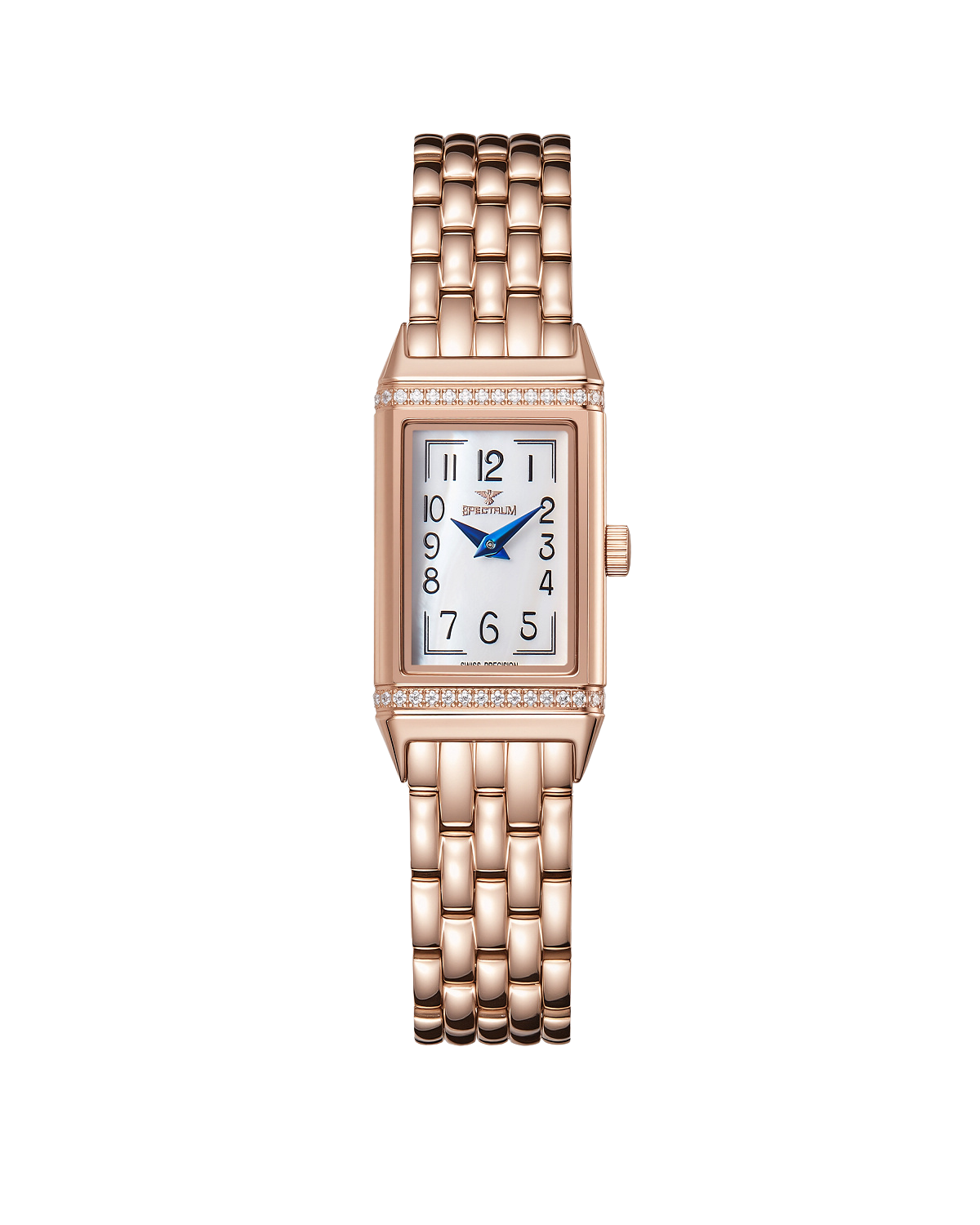
A considered watch often belongs to that last category. A page of watch gifts chosen for lasting wear speaks to that kind of giving. The appeal is not spectacle. It is the possibility that the gift will be present on work mornings, late dinners, airport pickups, weekend lunches, and all the hours that rarely make it into photographs.
A simple comparison makes the difference easier to see.
| Gift type | What it often brings | What it leaves behind | | --- | --- | --- | | Seasonal clothing | Immediate usefulness | A shorter memory of the occasion | | Novel gadgets | Brief excitement | Faster datedness | | Kept objects | Slow familiarity | A longer personal story |
Clothing remains a common choice because it answers a clear need and fits easily into a routine. Yet there are moments when the giver is searching for a longer thread. Something useful, worn often, and less tied to one season or one joke or one burst of excitement.
For the husband who values continuity, the strongest gift enters his life the way a well-designed object enters a room, unobtrusively, then permanently.
The Narrative of a Well-Worn Watch
The first days with a watch are usually the most formal.
It is set down carefully at night. The clasp is opened with attention. The crystal catches light in a way the wearer notices every time he turns his wrist. Then the weeks pass. The formality softens. He reaches for it without looking. It begins to belong.
When an object stops feeling new
We have seen this happen in increments.
A man leaves for work before the flat has fully woken. His keys are in one hand, coffee in the other, and the watch goes on by muscle memory at the door. Months later, the same watch appears in other scenes. Against a steering wheel in late traffic. Next to a plate at a lunch that ran long. Resting on a bedside table after midnight, beside receipts, cufflinks, and a charger he keeps meaning to replace.
Nothing dramatic is happening, which is the point.
The object gathers meaning because it is present for what life looks like. Not the staged version. The version with delayed trains, crumpled sleeves, changed dinner plans, family calls taken in stairwells, and all the other ordinary turns that make up a year. A watch witnesses these things without announcing itself.
The marks no one minds
There is a kind of wear that cheapens an object, and another kind that settles it into a life.
The softened leather edge. The tiny surface mark only visible in morning sun. The bracelet adjusted once and then never again because the fit is now exactly right. These details do not ruin the story. They write it. The watch stops being an item and becomes evidence. He wore this here. He wore it through that season. He kept it through that move.
A piece from our journal, Rome’s Timeless Whisper, Hours Invested, Moments Lived, circles this same idea. Certain objects do not remain frozen at the moment they are received. They mature with the person who wears them.
> The value of a gift is not always in how new it looks. Sometimes it is in how naturally it learns a life.
Why this matters in gifts for husband
A watch can carry the weight of different life stages without becoming theatrical about it.
It works when he is younger and dressing with experimentation. It works later, when his wardrobe narrows into what suits him and what does not. It can sit beneath a shirt cuff in one decade and outside a knit sleeve in another. That kind of continuity is difficult to imitate with gifts built around novelty.
For that reason, the most memorable gifts for husband often feel less like a surprise and more like recognition. The object says, in its own way, I know how you move through the day. I know what you reach for. I know what you keep.
Pairing Timepieces with Everyday Outfits and Occasions
In the morning, the city divides itself by fabric.
In DIFC, the lifts fill with pressed cotton, polished shoes, and the mild scent of perfume that never quite leaves a corridor. Near the beach later, linen takes over, collars soften, sleeves are rolled with less precision. By evening, in another part of town, a family hall glows with embroidery, cufflinks, and the low rustle of formal clothes being adjusted before photographs.
A watch moves through all of it if it has been chosen well.

Office light and weekend light
With a pale blue shirt in an office tower, a steel bracelet looks exact without trying too hard. It catches the cold interior light, then disappears beneath the cuff during meetings. Later that week, the same case sits against a linen shirt on a Jumeirah walk, less formal now, carrying salt in the air and a bit of sun along the wrist.
We like that shift. Not because the watch transforms itself, but because it does not need to.
For men who keep their wardrobes edited, a single piece often does more than a drawer full of occasion-specific accessories. You can see that idea play out across our men’s collection, where the watch is not separated from the outfit so much as absorbed into it.
With sherwani, kurta, and the clothes that hold family memory
This is the pairing many gift guides pass over too quickly.
In the UAE, a significant portion of the population are expatriates, including a large South Asian community, and a 2025 UAE Fashion Report noted a 25% rise in fusion wear sales (Parade). Yet most mainstream roundups still drift toward gadgets and universal accessories, leaving very little room for the question of what sits well with a sherwani, or what belongs beside a kurta sleeve without pulling the whole look out of balance.
A stainless steel watch solves this almost invisibly. A green dial beside deep ivory. A blue one against charcoal. Brown details picking up the warmth in the fabric rather than competing with it. On wedding evenings and Eid gatherings, these combinations do not ask for attention. They look settled.
A short film catches some of that mood better than explanation can.
YouTube
Three recurring scenes
- Weekday formality A pressed shirt, dark trousers, a card holder in one pocket. The watch stays almost hidden until he reaches for a glass of water under meeting-room light.
- Weekend looseness Trainers by the door, café receipt in his jacket, sleeves pushed back. The same watch looks less polished now, more lived with.
- Family occasion A kurta cuff, polished shoes, voices from another room, someone asking if he is ready. The watch sits there as if it always belonged to that outfit.
The object matters, but so does its restraint. It should know how to stay in the picture without becoming the whole picture.
A Quiet Companion for Life's Rhythms
There are brands that design for the first impression. We have always been more interested in the fifth year.
That is where a watch either remains convincing or falls away. By then it has met weather, travel, wardrobe changes, table edges, drawer interiors, and all the other frictions of ordinary use. If it is still there, still wanted, it has earned its place.

Built for the climate we know
In the AE region’s humidity, material matters in a practical way. Spectrum’s 316L stainless steel watches show 95% corrosion resistance in salt spray tests, a result tied to the material’s passive chromium oxide layer ( Treehut). We think about that not as a boast, but as a form of calm. A watch should not ask its wearer to worry about the air around him.
That interest in longevity shapes the broader philosophy too. Rotation over accumulation. Repair over casual replacement. A watch can live with different moods and still remain itself. It can sit with tailoring one day and a simple T-shirt the next without requiring the owner to perform a different version of himself.
The quieter design decision
The more we work around everyday timepieces, the more we return to a simple thought. A good gift does not need to dominate a life to matter inside it.
That is why a restrained watch often carries more emotional weight than something louder. It is there during the walk from the car park. There at the desk. There when he rolls his sleeves after dinner to help clear the table. It becomes part of the choreography. He no longer puts it on for effect. He puts it on because the day feels unfinished without it.
> Some objects ask for admiration. Others ask only to remain useful and present. The second kind often lasts longer in memory.
When we say a watch is a companion, we do not mean it sentimentally. We mean it. It accompanies. It stays near the pulse of a person’s routine and, over time, takes on some of that rhythm itself.
Considering the Details from Personalisation to Care
The gift is not only the object. It is the handling of it before it arrives in his life.
A box on a table in the late afternoon. Tissue folded back and then refolded because the first version looked too stiff. A card left blank for longer than expected because the right line does not come quickly. These moments rarely make it into photographs, but they are part of the meaning. The giver is deciding how the object will enter the story.

The private language of engraving
A short phrase inside a gift changes its temperature.
Not because it makes the object louder, but because it places a second layer beneath the visible one. The public face remains clean. The private one belongs to two people only. We have read thoughtful pieces on the power of personalization, and what stays with us is not extravagance. It is specificity. A date. A line repeated at home. A name no one else uses.
Some people know exactly what to engrave. Others pause for days, wanting the words to land softly enough to be worn for years. Both gestures have their own intimacy.
Choosing care as part of the gift
In the UAE, 68% of women surveyed by Dubai Retail Forum selected watches for anniversaries, and that preference was linked to 85% perceived longevity value ( Men’s Health). The numbers say something people already seem to understand instinctively. A watch suits an occasion because it extends beyond the occasion.
That also changes what care means. Repair is no longer an afterthought. It becomes part of the original act of giving. A service page such as watch repair belongs to the same story as the ribbon and the note. So do gift cards, which leave room for his own preferences, and subscription-based care, which acknowledges that keeping an object in use is its own kind of affection.
The details people remember
- The inscription A few words, often smaller than expected, carrying more of the relationship than a long letter could.
- The timing Not always the party or dinner. Sometimes the gift is given in the quieter hour before guests arrive, when there is still time to sit together.
- The aftercare A cloth in the drawer, the habit of setting it down properly, the decision to maintain rather than discard.
These rituals are modest, but they remain. The wrapping is removed in minutes. The thought behind it can continue for years.
Tomorrow Continues The Gift Is a Beginning
At 7:12 the next morning, he fastens the strap while the coffee cools beside him.
The room is ordinary again. Delivery scooters pass below the window. A pressed shirt hangs from the back of a chair. On the table, the folded card from last night has already been set aside with the receipt and the ribbon, while the gift itself has entered the day without announcement. He checks the time once, reaches for his keys, and leaves.
That is how some gifts begin to matter. They settle into use before anyone speaks about them again.
Clothing is often chosen because it answers an immediate need, as noted earlier. A watch belongs to a different rhythm. It meets the day in the same practical way, then stays after the season changes, after the dinner is forgotten, after the photograph slips down the camera roll. In a city like Dubai, where wardrobes move between offices, late reservations, airport terminals, and family visits in a single week, that continuity has its own appeal.
The object continues the gesture.
Months later, the signs are small. A faint mark near the clasp. The habit of setting it beside the wallet each evening. The familiar motion of turning the wrist in the lift, in the car park, at the café counter before another meeting begins. The gift no longer looks new, which is often the point. It has joined his life rather than remaining outside it.
If this world feels familiar, Spectrum keeps a steady archive of everyday watches, care, and gift options shaped around objects that stay in use.
About the author
Spectrum Editorial
The Spectrum Watches editorial desk
The Spectrum editorial desk — fact-checked, persona-mapped, and written for people who measure life in moments.
Wear the story