
The Ultimate Chronograph Watch Buying Guide for Makers
A deep dive into how chronographs work and what to look for. From pushers and registers to the movements that drive them, here is your definitive guide.
Spectrum Editorial · 7 min read · 35 views
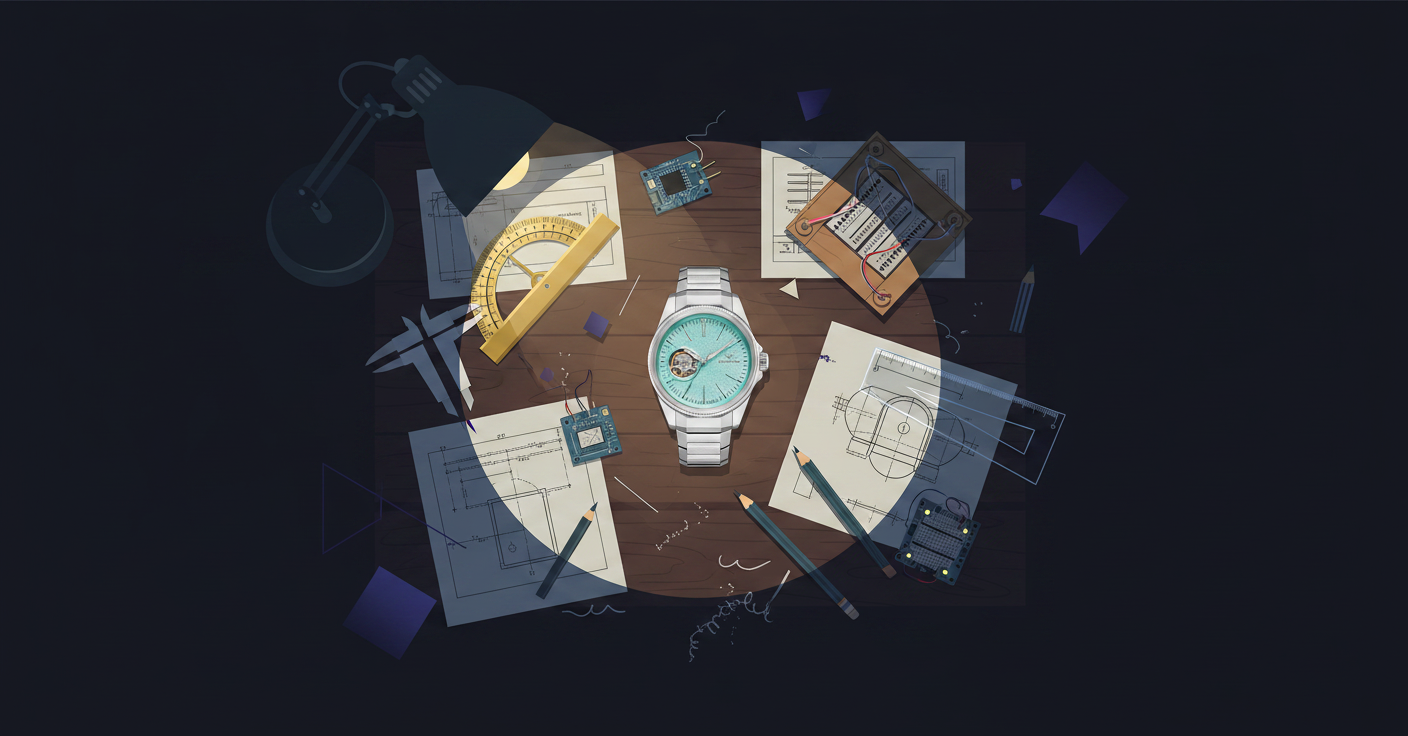
It’s 10 PM on a Tuesday. The initial prototype is on the bench. Wires, sketches, and half-empty coffee mugs cover every surface. You have a five-minute window to run a diagnostic sequence. Your phone is a portal to distraction, buzzing with notifications that pull you out of the zone. You need a simple, dedicated tool. A device for measuring a slice of time, nothing more. You glance at your wrist, click the top pusher, and the sweep hand begins its journey. The sequence is running.
This is the world of the chronograph. Not a gadget, but an instrument. For the person who builds, tinkers, and refines, a chronograph is more than a watch that tells time. It’s a silent partner in the process of creation. It quantifies effort, marks progress, and bears witness to the focused hours you pour into your work. It's a tool for the doer, the engineer, the creator. It’s for you, Inventor persona.
A Practical Chronograph Watch Buying Guide
A chronograph is, at its core, a stopwatch integrated into a watch. While a standard timepiece indicates the current time, a chronograph can also measure and display elapsed time. This is accomplished via a central chronograph hand (which remains stationary at 12 until activated), one or more sub-dials (often called registers) to track elapsed minutes and hours, and at least one pusher to start, stop, and reset the function.
This complication transforms a passive time-teller into an active tool. It’s a function born from necessity—timing horse races, calculating artillery distances, and tracking laps in motor racing. For the modern maker, its applications are endless: timing a chemical reaction, tracking a software build, measuring a 3D print layer, or perfecting a pour-over coffee. It’s about intentional measurement in an analog format, free from the digital noise that defines so much of modern life.
Anatomy of a Chronograph: Pushers, Registers, and Scales
Understanding the components is the first step to choosing the right chronograph. The jargon can seem intimidating, but the principles are straightforward and mechanical.
Most chronographs you encounter will feature a two-pusher system. The top pusher, typically at 2 o’clock, starts and stops the chronograph function. The bottom pusher, at 4 o’clock, resets the hands back to zero. This intuitive layout has been the standard for nearly a century. Some vintage-inspired or high-end pieces may feature a “monopusher” integrated into the crown, which cycles through start, stop, and reset with successive presses. While elegant, the two-pusher design is arguably more functional, as you can’t restart the timer from a stopped position without first resetting on a monopusher.
The registers are the small sub-dials on the watch face. Their configuration tells you what the chronograph can measure. A common layout, or “tri-compax,” includes three registers: one for the running seconds of the regular time, one for elapsed minutes (usually up to 30), and one for elapsed hours (often up to 12). Other designs may feature just two registers, often omitting the hour counter for a cleaner look, which is perfectly suitable for timing shorter events. The key is to check the specifications. Know what you need to measure.
Finally, many chronographs feature a scale on the bezel or the outer edge of the dial, most commonly a tachymeter. This scale allows you to compute speed based on travel time or measure distance based on speed. For example, if you time how long it takes to travel one mile or one kilometer, the chronograph hand will point to your average speed on the tachymeter scale when you stop it. For a maker, it can also calculate units per hour. If it takes 45 seconds to assemble one unit, the hand will point to 80 on the scale, meaning you can produce 80 units per hour at that pace.
The Movement: Quartz vs. Mechanical Chronographs
The engine that drives the chronograph is its movement, and this is where personal preference and budget play the largest roles. There is no single “best” choice, only the best choice for your specific needs.
Quartz chronographs are powered by a battery. They are exceptionally accurate, durable, and affordable. A high-quality quartz movement is a robust, reliable tool that requires little more than a battery change every few years. For someone working in a garage or lab, the shock resistance of a quartz watch is a significant advantage. If you want a this piece timer that will always be ready, quartz is an unimpeachable choice. Some of the most iconic chronographs have quartz counterparts for this very reason.
Mechanical chronographs are powered by a complex system of springs, gears, and levers, either hand-wound by the user or automatically wound by the motion of their wrist. These are marvels of micro-engineering. Watching the crisp, mechanical snap of a column-wheel chronograph or the firm engagement of a cam-actuated system is a joy for anyone who appreciates a well-made machine. These movements are often visible through a display case back, offering a window into a world of incredible complexity. They represent a commitment to craft, much like a hand-built piece of furniture or a meticulously restored engine. While classic integrated movements like the one in an Omega Speedmaster are legendary, modern cam-actuated workhorses like the Valjoux 7750 family have proven their reliability for decades across countless brands.
Servicing is a consideration. A mechanical chronograph is a complex machine and requires periodic maintenance by a skilled watchmaker, an investment of time and money similar to tuning a classic car. A quartz movement, by contrast, can often be replaced entirely for less than the cost of a mechanical service. The choice comes down to what you value most: the soul of a machine or the pragmatism of a tool.
Choosing Your Chronograph: Case Studies for the Maker
How do you apply this knowledge? Let's consider a few scenarios for the modern builder and innovator.
For daily work in a demanding environment, a stainless steel case and a clear, legible dial are paramount. You need to be able to glance at the registers and get a reading instantly, without ambiguity. A robust quartz movement makes sense here, offering precision without the worry of accidental shocks. [[product: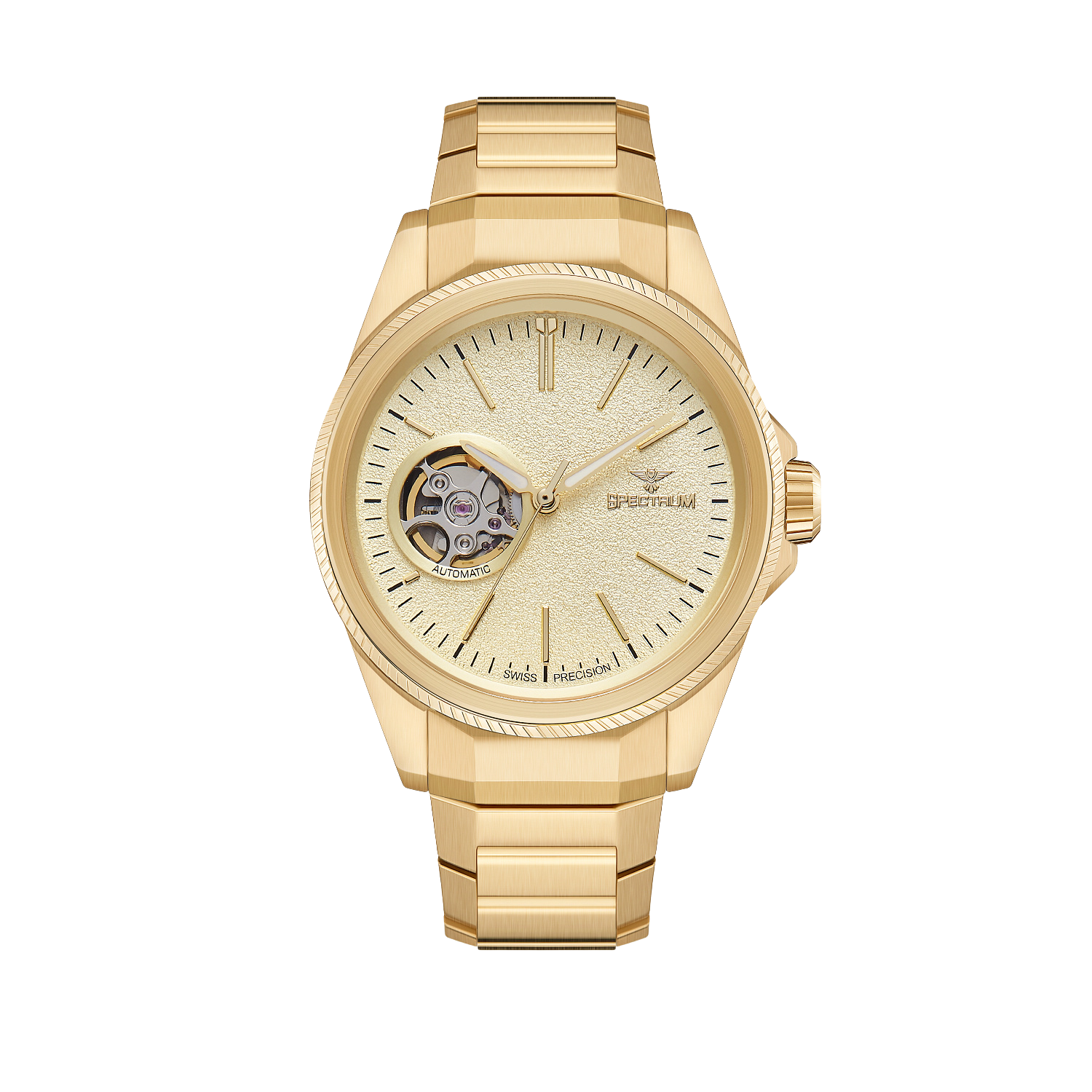 Men's Silver Watch S17085M|This clean, light-blue dial chronograph]] is a perfect example of such a tool—durable, legible, and completely focused on its function. It's an instrument, not a jewel. Its job is to measure the moments that matter in your creative process.
Your choice should reflect your work. A developer timing A/B tests or a UX designer measuring user task completion might prefer a minimal dial to reduce cognitive load. A woodworker might prioritize a tough case and crystal that can withstand dust and the occasional knock. For those with an interest in aviation, specific design cues become important, which is why there's a whole category of specialized [[product: Men's Silver Watch S17064M|watches for pilots]]. Your watch should serve your domain.
Before you choose, ask yourself a few direct questions:
- What is the primary task I will be timing, and for how long?
- Does my work environment demand high durability and shock resistance?
- Do I prefer the soul of a mechanical engine or the precision of a quartz tool?
- What aesthetic speaks to my personal style—a utilitarian tool or a more refined design? Maybe [[product:
 Men's Gold Watch S17062M|a gold-tone execution]] is right for when you present your final build.
The right chronograph becomes more than a watch. It's a physical reminder of the discipline required to turn an idea into reality. The deliberate actions—start, stop, reset—mirror the iterative nature of your own work. It’s a functional extension of the process: measure, refine, repeat. It does not demand your attention with vibrations or notifications. It is simply there, ready when you are, a silent testament to the focused hours that lead to a breakthrough. It’s the antithesis of the smartwatch, a tool for deep work in a shallow world.
About the author
Spectrum Editorial
The Spectrum Watches editorial desk
The Spectrum editorial desk — fact-checked, persona-mapped, and written for people who measure life in moments.
