
Mechanical vs smartwatch — which should I buy?
The choice between a mechanical watch and a smartwatch is not about features, but about your philosophy of time and your relationship with attention.
Spectrum Editorial · 7 min read · 93 views

You should buy a mechanical watch for focused work and timeless style, and a smartwatch for data-driven health tracking and digital convenience; the best solution for many is owning one of each for different contexts.
Imagine the scenari- A Tuesday morning dedicated to chipping away at a manuscript or analyzing a complex data set. The laptop is in focus mode, the phone is in another room. But your wrist buzzes. It’s a headline alert, a calendar nudge for a meeting two hours from now, a reminder to stand up. The fragile thread of concentration snaps. The smartwatch, a marvel of connectivity, has just become a vector for the very distractions you sought to escape.
This is the central conflict for the modern professional. We crave the utility of technology but suffer from its incessant demands on our attention. The decision between a traditional mechanical or analog timepiece and a smartwatch is not merely about aesthetics or features. It's an active choice about the kind of day you want to have, the kind of focus you want to cultivate, and the signals you send to yourself and others about how you value your time.
The Case for the Analog Watch: A Tool for Focus
A traditional analog watch—whether a complex mechanical automatic or a precise quartz model—does one thing perfectly: it tells the time. It is a closed system, a self-contained instrument that performs its function without needing to connect to a satellite, a server, or a smartphone. Its value is not in what it adds to your digital life, but in what it intentionally subtracts: noise.
Choosing to wear an analog watch is a declaration of intent. It signifies that for this period, your focus is singular. You are present in the room, in the conversation, in the task at hand. There is no phantom limb vibration, no screen lighting up with low-priority information disguised as urgent. This commitment to undistracted presence is a mindset shared by many a Truth-Seeker, who understands that deep insights come from sustained thought, not fractured attention.
The appeal also lies in its permanence. A well-made mechanical watch is a feat of micro-engineering, a collection of gears, springs, and jewels working in harmony. It doesn’t receive software updates because its operating system is the laws of physics. It won't be rendered obsolete by a new charging standard or a discontinued app. It can be serviced, repaired, and worn for decades—a reliable partner rather than a disposable gadget. This is an object designed to measure moments, but built to last lifetimes.
The Smartwatch Proposition: A Dashboard for Life
To dismiss the smartwatch would be a failure of analysis. It is a genuinely useful device that has fundamentally changed many people's relationship with their health and communication. Its ability to track heart rate, blood oxygen, sleep cycles, and daily activity provides a rich dataset for personal wellness. For the athlete, it’s a coach on the wrist, delivering GPS mapping, pace alerts, and performance metrics in real time.
Beyond fitness, it’s a hub of convenience. Screening calls without pulling out your phone, glancing at messages during a meeting, tapping to pay for a coffee, or navigating a new city with haptic feedback—these are real efficiencies. The smartwatch serves as a dashboard for your connected life, consolidating disparate streams of information into a single, accessible interface. It's an extension of your digital self.
However, this seamless integration is also its primary drawback. The wrist is intimate real estate, and placing a notification center there guarantees a constant low-level cognitive load. Forums and tech reviews often frame the debate as a zero-sum game, forcing a choice between luddite purity and cyborg efficiency. The reality, as lived by millions, is far more nuanced. The smartwatch’s greatest strength—its connection to everything—is also its most significant liability for anyone trying to disconnect.
The Tradeoff Matrix: Where Each Watch Wins
Instead of a binary choice, a more practical approach is to see each watch as a specialized tool. You wouldn't use a scalpel for chopping wood. The decision hinges on the context and the task at hand. Here is a clear-eyed breakdown of where each platform excels:
- Deep Work, Reading, & Strategic Thinking: The analog watch is the clear winner. It provides the time without any risk of digital interruption, preserving the focused mental state required for challenging work.
- Formal & Ceremonial Occasions: A traditional watch offers timeless style and elegance that a tech gadget cannot replicate. Whether in a boardroom or at a wedding, a refined dress watch communicates a sense of occasion and permanence.
- Exercise & Health Monitoring: The smartwatch is unmatched. Its suite of sensors provides actionable data for training, recovery, and general health awareness that is simply outside the scope of an analog piece.
- Longevity & Durability: A quality mechanical watch, especially a piece like a robust diver's watch, is built to withstand pressure and last for generations with proper care. Smartwatches have a limited lifespan due to battery degradation and software obsolescence, typically lasting only a few years.
- Daily Errands & Quick-Syncs: The smartwatch shines here. The convenience of wrist-based payments, notifications, and quick replies makes it a powerful tool for navigating a busy, multi-tasking day.
The Two-Watch Solution: A Tool for Every Version of You
The most effective strategy isn't to declare a winner, but to build a system. The 'two-watch solution' is not a sign of indecision; it's a deliberate approach to managing attention and choosing the right tool for your intention. It’s an acknowledgment that you are not one person, but many. “Who are you today?” is a question of context.
Your day might begin with a smartwatch for a morning run and logging sleep data. But when you sit down at your desk to write, you swap it for an analog piece like [[product: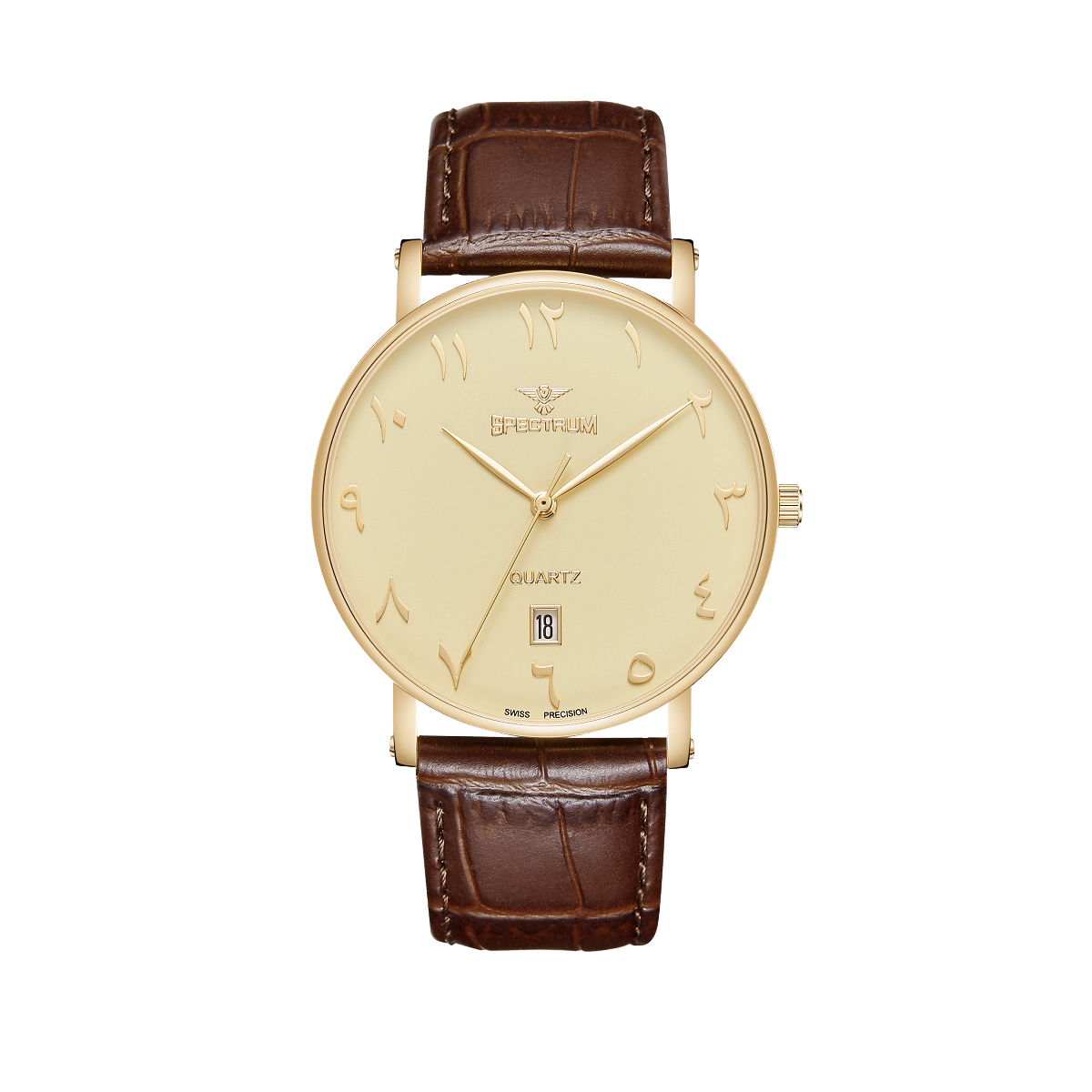 Men's Black Watch S17097M|this classically styled chronograph]]. The simple act of fastening the leather strap becomes a ritual, a signal to your brain that it’s time for focused work. You wear it to dinner with friends, leaving the digital leash behind to be fully present in the conversation. The smartwatch goes back on for the weekend errands, but the analog returns for Sunday evening reading.
This isn't about owning more things; it’s about owning your time. It’s about creating deliberate friction to protect your most valuable resource: your attention. By matching your watch to your mindset, you move from being a passive recipient of information to an active architect of your focus. You decide when the digital world can reach you, and when it cannot.
The choice isn't mechanical versus smart. It's about defining what each moment is for. One watch helps you connect with the world's data; the other helps you connect with yourself. For a life of depth and action, you will likely find you need them both.
About the author
Spectrum Editorial
The Spectrum Watches editorial desk
The Spectrum editorial desk — fact-checked, persona-mapped, and written for people who measure life in moments.
Wear the story