
The Analog Philosophy: What Does Analog Mean in Watches?
Analog isn't a limitation; it's a deliberate choice to engage with the mechanics of time, craft, and unwavering focus in a world of digital noise.
Spectrum Editorial · 7 min read · 43 views
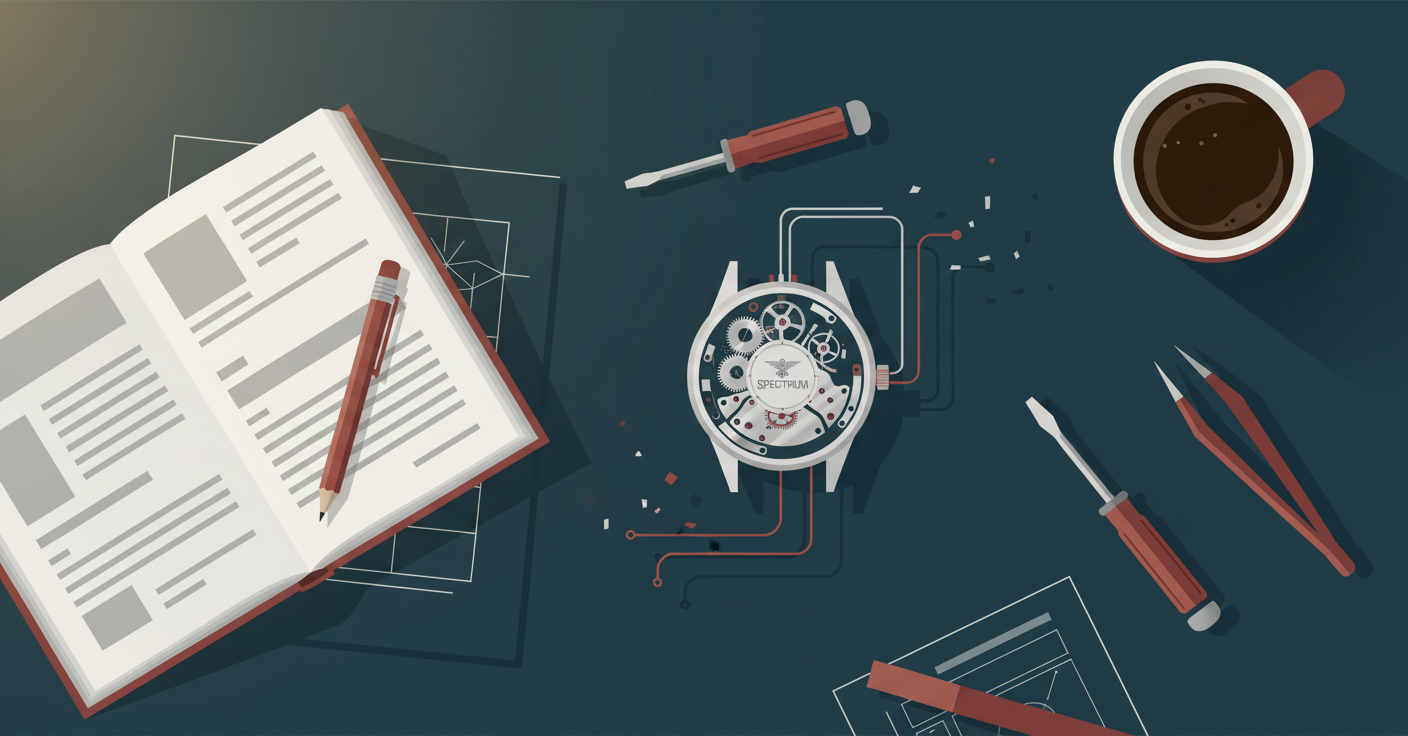
The hum of the server rack is a constant companion. Your third coffee has gone cold, untouched for the last hour. You are three thousand words into a manuscript, a legal brief, a diagnostic report—a structure of logic built line by line, and it feels both monumental and miles from completion. In these moments of deep concentration, time warps. It stretches, it compresses. What you need is a measure, not a messenger. You need a tool that respects your focus, not one that demands it.
This is the modern dilemma. We are surrounded by devices that promise to connect us, but their primary function is interruption. A notification for a sale, an update from an app you barely use, a breaking news alert about a crisis a thousand miles away. Each one is a small tax on your attention, pulling you from the difficult, rewarding work of building something new. So when we talk about a watch, the question isn't just about technology. It's about philosophy. It's about deciding what has permission to occupy your time, and your wrist.
So, What Does Analog Mean in Watches?
At its core, the answer is simple. An analog watch is a timepiece that displays time using a physical dial with moving hands. A pointer for the hours, a pointer for the minutes, and often, a third for the seconds. It represents time spatially. You can see where you are in the hour, the arc of time already passed, and the portion yet to come. It’s an intuitive, visual, continuous representation of a day's most finite resource.
This stands in direct contrast to two other forms of time-telling. A digital watch shows you the time as static numerals on an LCD or LED screen. A smartwatch uses a screen to do that and much more, acting as a satellite for your smartphone. It syncs, it notifies, it tracks your heart rate, your steps, your sleep. It is a data collection device.
An analog watch does none of those things. It does not pair with your phone. It has no screen, no apps, no GPS. Its function is singular: to measure the passage of time with mechanical or quartz-driven precision. To call it “low-tech” is to miss the point entirely. It is “single-tech.” It is a purpose-built instrument designed for one job, and it executes that job without compromise or distraction. This isn’t a nostalgic retreat from modernity. It's a strategic advance toward intentionality.
The Builder's Mindset and the Analog Discipline
To build anything of consequence—a startup, a piece of software, a clinical thesis, a restored engine—is to engage in a battle against distraction. The first version is never the final version. The initial hypothesis requires testing, the first prototype demands refinement, the first draft needs a ruthless edit. This iterative process is a cycle of deep focus and critical evaluation. It happens in the quiet hours when the rest of the world is asleep or distracted.
An analog watch is the perfect companion for this discipline. It is a silent witness to the work. It makes no demands. It offers a single, unambiguous piece of information, allowing you to stay submerged in your task. There is no risk of a text message pulling you out of a complex thought, no temptation of a social media feed breaking a fragile chain of logic. The steady, silent sweep of the second hand on [[product: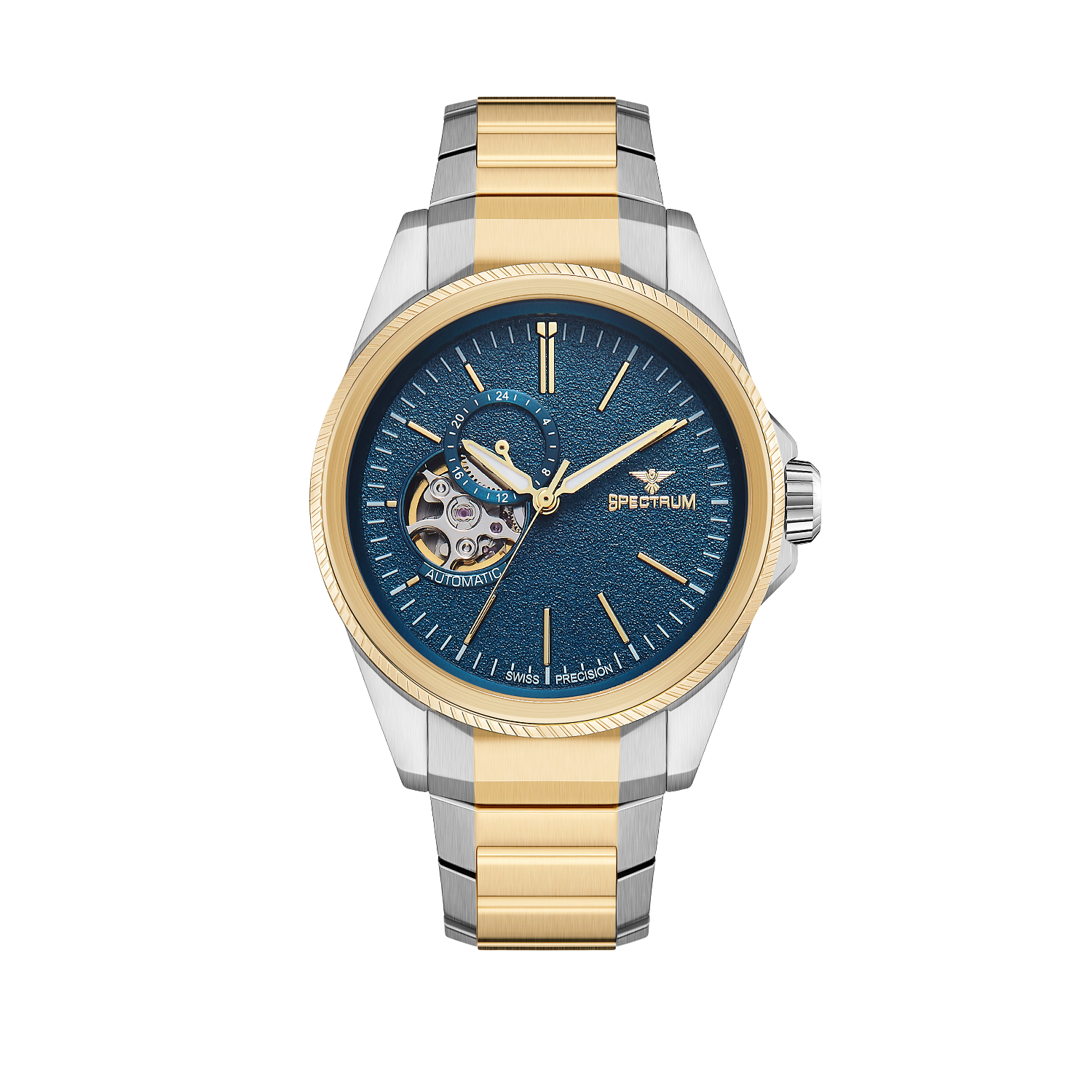 Men's Two Tone Gold Watch S17086M-|this two-tone automatic timepiece]] is not a notification; it's the quiet pulse of your own focused effort, a physical reminder that the work is moving forward, one second at a time.
This is the environment of the creator, the researcher, the thinker. It's an environment where the quality of your attention determines the quality of your output. In this context, a device that actively filters out the digital noise isn't a limitation. It’s a superpower. It’s a deliberate choice to build a sanctuary of focus, and your watch is its gatekeeper.
Craft Recognizes Craft: From Movement to Masterpiece
When you spend your days building, you develop an innate appreciation for things that are well-built. You understand the hidden complexities, the hundreds of small decisions that lead to a final product that feels effortless and correct. This is the bridge between the maker and the watchmaker. The same principles of integrity, precision, and purpose apply.
Whether it's the intricate dance of gears in a mechanical movement or the steadfast reliability of a high-precision quartz oscillator, an analog watch is a marvel of contained engineering. There are two primary types of analog movements:
- Quartz: Powered by a battery, a quartz movement uses a tiny, vibrating quartz crystal to provide an extremely accurate time base. They are robust, reliable, and require minimal maintenance. They represent the pinnacle of accessible precision.
- Mechanical: Powered by a wound spring, a mechanical movement is a complex, miniature engine composed of hundreds of tiny, interacting parts. In an automatic movement, a weighted rotor winds the mainspring through the natural motion of your wrist. They are a testament to centuries of horological craft.
This appreciation for the mechanism is something you see across the entire landscape of watches. It's why enthusiasts will debate the merits of a workhorse movement like the Seiko NH35 found in countless microbrands, versus the iconic ETA 2824. It’s why the rugged simplicity of a military-issued field watch like the Hamilton Khaki Field can command as much respect as the legendary engineering of an Omega Speedmaster. It’s a philosophy of substance over spectacle, shared by a humble tool watch or a dedicated instrument like [[product: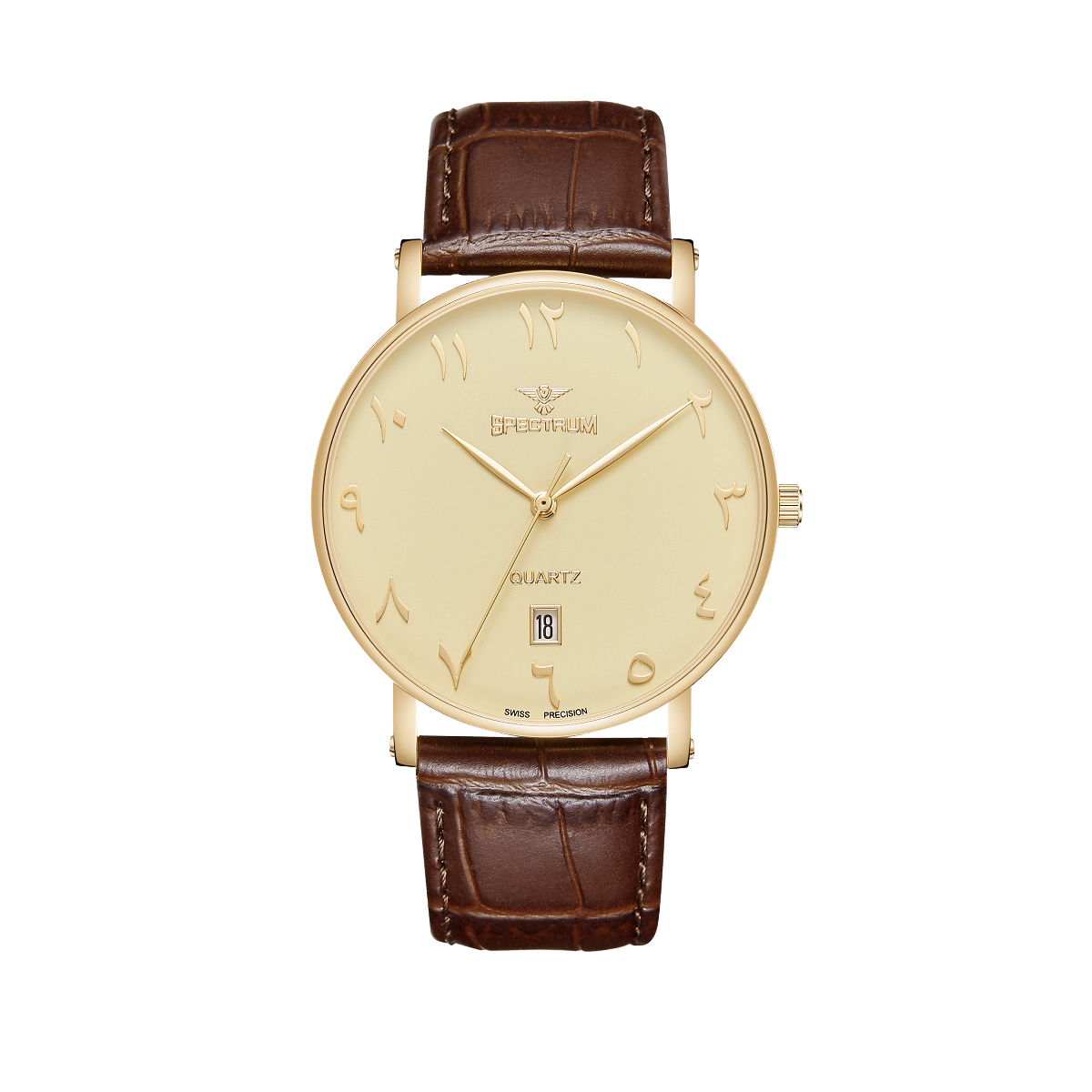 Men's Black Watch S17097M|this black-dial pilot's watch]]. The unifying thread is a respect for the object's integrity and its fitness for purpose.
Choosing Your Analog Companion
Ultimately, choosing an analog watch in a digital world is a statement of intent. It says you value focus. It says you appreciate craft. It says you are the master of your own time, not a servant to a stream of incoming data. The question is not whether an analog watch can do what a smartwatch does—it cannot, and it does not try to. The real question is whether you need your watch to do those things in the first place.
Who are you today? Are you the analyst who needs to stay in a state of flow for hours? The artist refining a single brushstroke? The leader who needs to be present and undistracted in a critical meeting? Your tools should support your mission. This is the core belief of The Truth-Seeker, the individual who looks past the hype to find the underlying substance.
An analog watch doesn't track your past or predict your future. It keeps pace, elegantly and reliably, with your present. It is a steady anchor in a volatile world, a quiet declaration of how you choose to live and work. The rest is up to you. What will you build with the time you reclaim?
About the author
Spectrum Editorial
The Spectrum Watches editorial desk
The Spectrum editorial desk — fact-checked, persona-mapped, and written for people who measure life in moments.
Wear the story