
Why wear an analogue watch in 2026
In an age of constant notifications, an analogue watch offers a single-purpose tool for managing time without sacrificing your attention or presence.
Spectrum Editorial · 8 min read · 2 views
You should wear an analogue watch in 2026 to reclaim your focus, reduce cognitive load, and own a durable tool that serves a single, essential purpose.
It’s Tuesday morning. The desk is covered in clinical summaries or the dense pages of a journal article that needs your full attention. The light is good. The coffee is hot. Your phone, placed screen-down, represents a minefield of potential distractions—emails from administration, group chat chatter, breaking news alerts. Your wrist buzzes. It’s a notification that your screen time was down last week. The irony is sharp. The interruption, however small, has broken the delicate thread of concentration. You've been pulled from the complex task at hand to process a piece of trivial, unrequested data.
This is the modern tax on focus. We have surrounded ourselves with devices that promise efficiency but deliver a constant stream of cognitive friction. The analogue watch offers a powerful alternative. It performs one function, and it performs it perfectly. It returns the wrist to its original purpose: a place for a tool that serves you, not a portal that serves a thousand other demands for your time.
The Cost of a Glance
The most significant argument against a screen-based timepiece is the cognitive trap of the glance. When you look at a smartwatch or phone to check the time, you are not just seeing the hour. You are also seeing notification badges, weather updates, a stock ticker, or the subject line of an email. Your brain is forced to process this peripheral information, whether you want to or not.
This phenomenon is known as attention residue. Even if you resist the urge to tap on a notification, a part of your working memory is now occupied by it. Your mind is no longer fully dedicated to your primary task. That quick glance to see if you’re late for a meeting now has you wondering about the sender of that email or the context of that news alert. The tool has become a distraction.
An analogue watch is the antidote. A glance at its dial provides a single, clean data point: the time. There is no feed, no secondary menu, no rabbit hole of digital information to fall into. The exchange is honest and immediate. You ask a question—what time is it?—and you receive only the answer. This screen-free interaction allows your focus to remain unbroken, preserving the deep concentration required for meaningful work.
It is a quiet rebellion. In a world that wants to capture every spare second of your attention, choosing a single-purpose device is an active measure to protect your most valuable resource. It draws a clear line between being connected and being available. It restores a sense of agency over your own focus.
Time as a Tool, Not a Feed
A mechanical watch is a tool you operate, not a service that operates on you. The experience of ownership is tactile and intentional. Winding the crown, you feel the mainspring tighten—a physical transfer of energy that will power the intricate dance of gears and levers for the next day and a half. Setting the time involves a direct, physical manipulation of the hands. It is a small, grounding ritual.
This relationship is fundamentally different from that of a device you simply charge. A smartwatch is a passive receiver of data and power. An automatic watch is an active participant, powered by the motion of your own body. The transparent caseback on many mechanicals reveals this reality: a miniature, self-sustaining engine on your wrist. It is a celebration of physics and engineering, not software.
Consider [[product: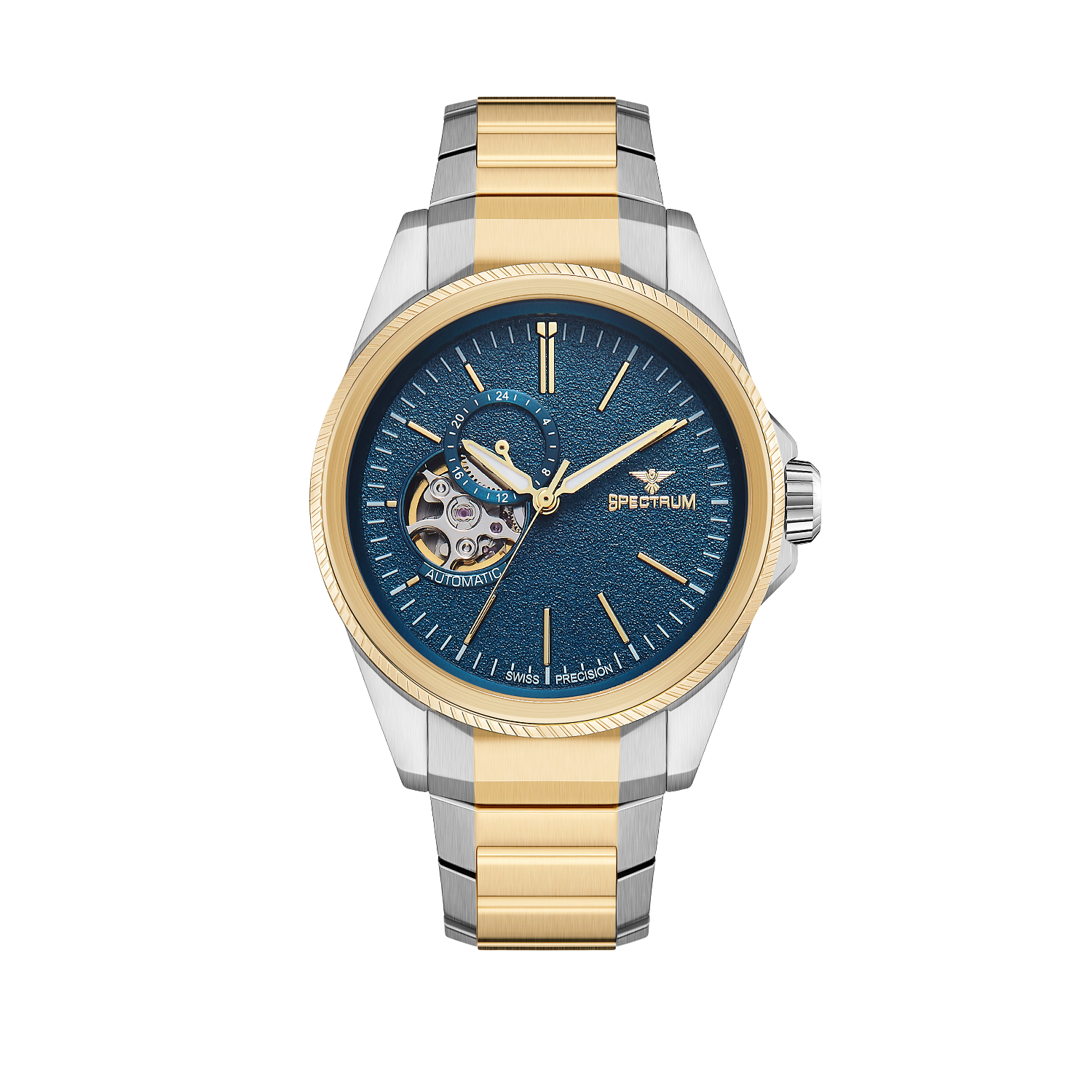 Men's Two Tone Gold Watch S17086M-|this two-tone automatic piece]]. It offers the time and the date. Nothing more. Its value is not in its features, but in its lack of them. The sweep of the second hand is smooth, a continuous and fluid measure of passing moments, unlike the stark tick of a digital display. It provides an analogue representation of time's flow, a more intuitive and less jarring way to perceive the minutes passing. You are not just reading a number; you are seeing a spatial relationship on a dial, a physical representation of where you are in the hour.
This tangible quality reinforces the watch's status as a tool. It is built for a job. It is not an entertainment device, a fitness coach, or a messaging client. It is a specialized instrument for understanding and managing your day with clarity.
The End of Notification Anxiety
The constant expectation of a digital tap or buzz creates a low-grade, persistent state of anxiety. We have been conditioned to react instantly. Every vibration is a potential urgency, a call to action that pulls us from the present moment. This is particularly corrosive for someone like The Truth-Seeker, who understands that value is created in moments of quiet reflection and deep listening, not frantic reaction.
Removing notifications from your wrist is a surprisingly profound change. A meeting becomes a focused conversation. A walk becomes an exercise in observation. A dinner becomes about the person across the table. The phantom limb sensation of a buzzing wrist disappears, replaced by a sense of calm and presence.
An analogue watch is a silent partner. It makes no demands. It simply reports. This silence creates space for what matters. The benefits are immediate and tangible:
- Uninterrupted Conversations: You can give people your full, undivided attention, building stronger personal and professional relationships.
- Enhanced Situational Awareness: Without a screen pulling your gaze, you become more aware of your physical surroundings and the subtle cues of the environment.
- Improved Focus on Tasks: Deep work becomes possible when you eliminate the primary source of micro-interruptions.
- Reduced Mental Clutter: By filtering out a constant stream of non-essential data, you free up mental bandwidth for more important thoughts.
This isn't about rejecting technology; it's about curating it. It is about choosing the right tool for the job. Whether it's an automatic or a simple quartz model like [[product: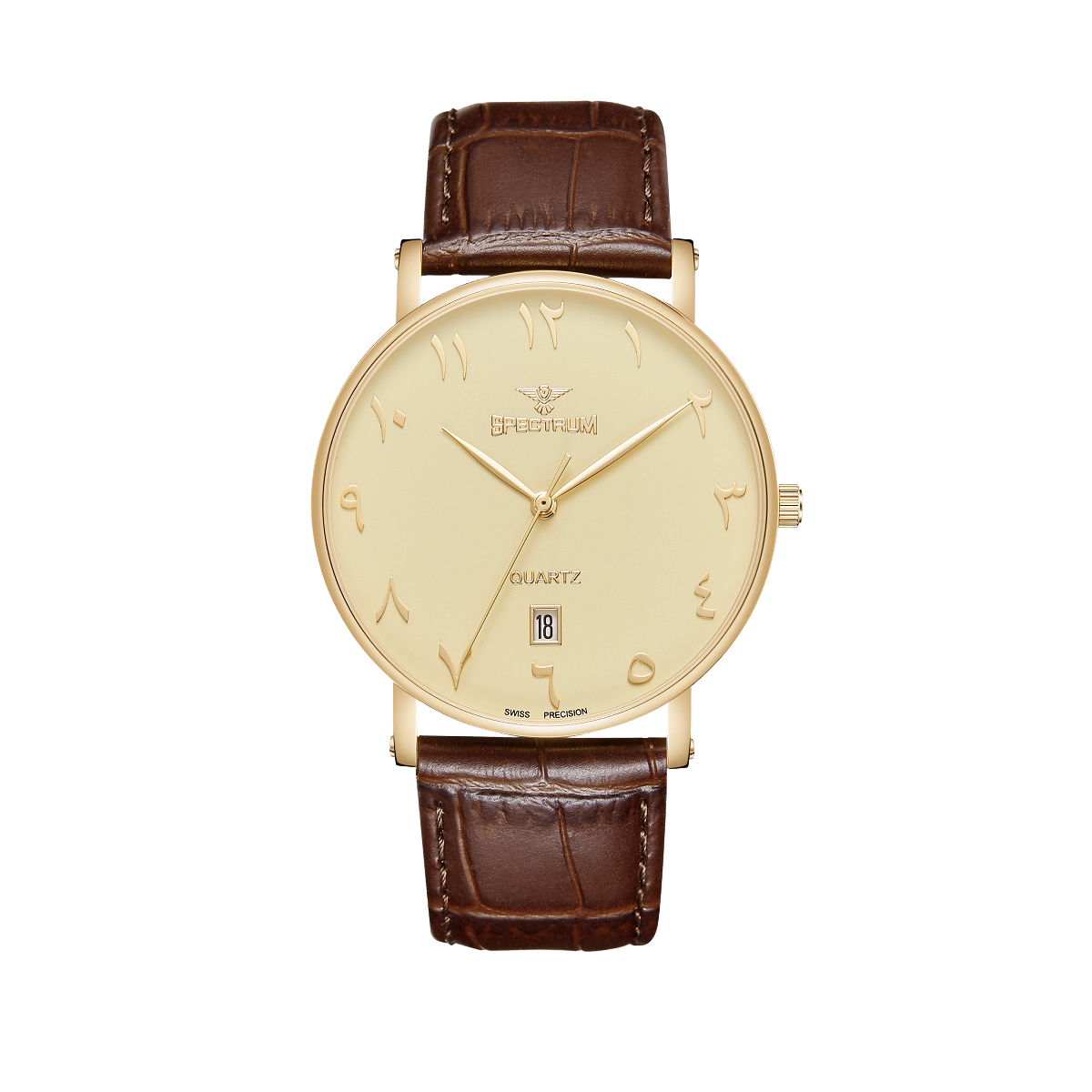 Men's Black Watch S17097M|this minimalist black-dial watch]], the result is the same: a quiet, reliable companion in a noisy world.
Durability Over Planned Obsolescence
Think about the devices you have owned over the last decade. How many old phones, tablets, or fitness trackers sit in a drawer, their batteries dead, their software no longer supported? The culture of consumer electronics is one of planned obsolescence. Devices are designed to be replaced every few years, creating a cycle of waste and repurchase.
A well-made analogue watch stands in direct opposition to this model. A mechanical watch purchased today will, with minimal care, function perfectly in 2056 and beyond. It is an asset built to last for generations, not just until the next software update. Its value does not degrade as technology evolves; if anything, its timelessness becomes more pronounced.
This is a different model of ownership. There are no batteries to replace every 18 months, no charging cables to lose, no operating systems that will cease to be supported. A mechanical watch requires a service every three to five years—the equivalent of an oil change for a classic car. It is a system designed to be maintained, not discarded. Even a robust tool like a functional chronograph, with its complex internal mechanics, is built on principles of repairability.
This commitment to longevity is a deliberate choice. It reflects a preference for enduring quality over fleeting novelty. For the person who buys things to keep them, an analogue watch is not just a purchase; it is an investment in a piece of personal history. It will mark the time for your biggest professional milestones and your quietest personal moments, becoming a part of your story.
Your Time, Your Terms
Ultimately, wearing an analogue watch in 2026 is a statement of intent. It signals that you value your time and attention enough to protect them. It shows a deliberate choice to engage with technology on your own terms, adopting the tools that serve your goals and setting aside those that do not.
It is about moving from a reactive to an intentional state. Instead of being pulled through your day by a stream of digital alerts, you are equipped with a simple, elegant tool to navigate it with purpose. You decide when to engage, when to focus, and when to simply be present. The analogue watch is not a retreat from the modern world, but a better way to operate within it.
This conscious decision-making is why a traditional timepiece endures. Its purpose is singular and essential. For this reason, it remains one of the most personal and thoughtful gifts for the discerning individual you can give—a tool that gives back the invaluable resource of undivided attention. It is a small piece of machinery that helps you live a larger, more focused life. Who are you today?
About the author
Spectrum Editorial
The Spectrum Watches editorial desk
The Spectrum editorial desk — fact-checked, persona-mapped, and written for people who measure life in moments.
Wear the story