
analogue watch vs smartwatch for focus
For deep focus, an analogue watch is superior to a smartwatch because it removes the cognitive cost of constant notifications and context switching.
Spectrum Editorial · 7 min read · 1 view

For tasks requiring deep focus, an analogue watch is a more effective tool than a smartwatch because it serves its function without demanding your attention.
It’s Tuesday morning. The first quiet hour you’ve had all week. On your desk, a stack of journals awaits your review, their spines still stiff. The coffee is hot. This is the time you have ringfenced for actual, uninterrupted thought—the kind of work that can’t be done in five-minute sprints between meetings. But on your wrist, a silent vibration. It’s nothing important, a news headline or a social media reply. It doesn’t matter. The thread of your concentration is already broken. The cost of that single, fleeting distraction is another ten minutes spent trying to get back into a state of flow. This is the core of the debate for any serious professional: not which device is more capable, but which is more conducive to the work that matters.
The Attention Economy on Your Wrist
A smartwatch is not a neutral tool. It is a delivery mechanism for the attention economy, miniaturized and strapped to your body. Its fundamental purpose is to keep you connected to a stream of information, alerts, and demands. Each notification, however filtered or subtle, is a bid for your cognitive resources. Researchers refer to this as context switching, the process of disengaging from one task to attend to another. Every time you glance at a notification, your brain pays a tax. Even the decision to ignore it requires mental energy, a micro-moment of executive function that chips away at your primary focus.
This constant digital tether creates a low-grade, persistent anxiety. You become conditioned to expect interruption. The phantom vibration on a quiet wrist is a known phenomenon for a reason. Your mind remains on standby, anticipating the next ping. This state is the enemy of deep work. It’s impossible to descend into the complex layers of a problem when a part of your brain is always listening for a digital summons. A smartwatch, for all its utility in tracking steps or screening calls, places a screen between you and the present moment.
Reclaiming Texture in Your Time
Now, imagine that same Tuesday morning. The same desk, the same stack of journals. The only technology on your person is an analogue watch. It performs one function with elegant precision: it tells you the time. There is no screen to light up, no buzz to break your concentration. The passage of time is marked not by a blinking integer but by the steady, physical sweep of a second hand across the dial.
This is a fundamentally different relationship with time. It becomes a resource you manage, not a stream of events that manages you. You can glance at your wrist to gauge the hour without being pulled into a vortex of digital demands. The watch becomes a silent partner in your work, framing the block of time you’ve dedicated to the task. It allows the world to fall away. [[product: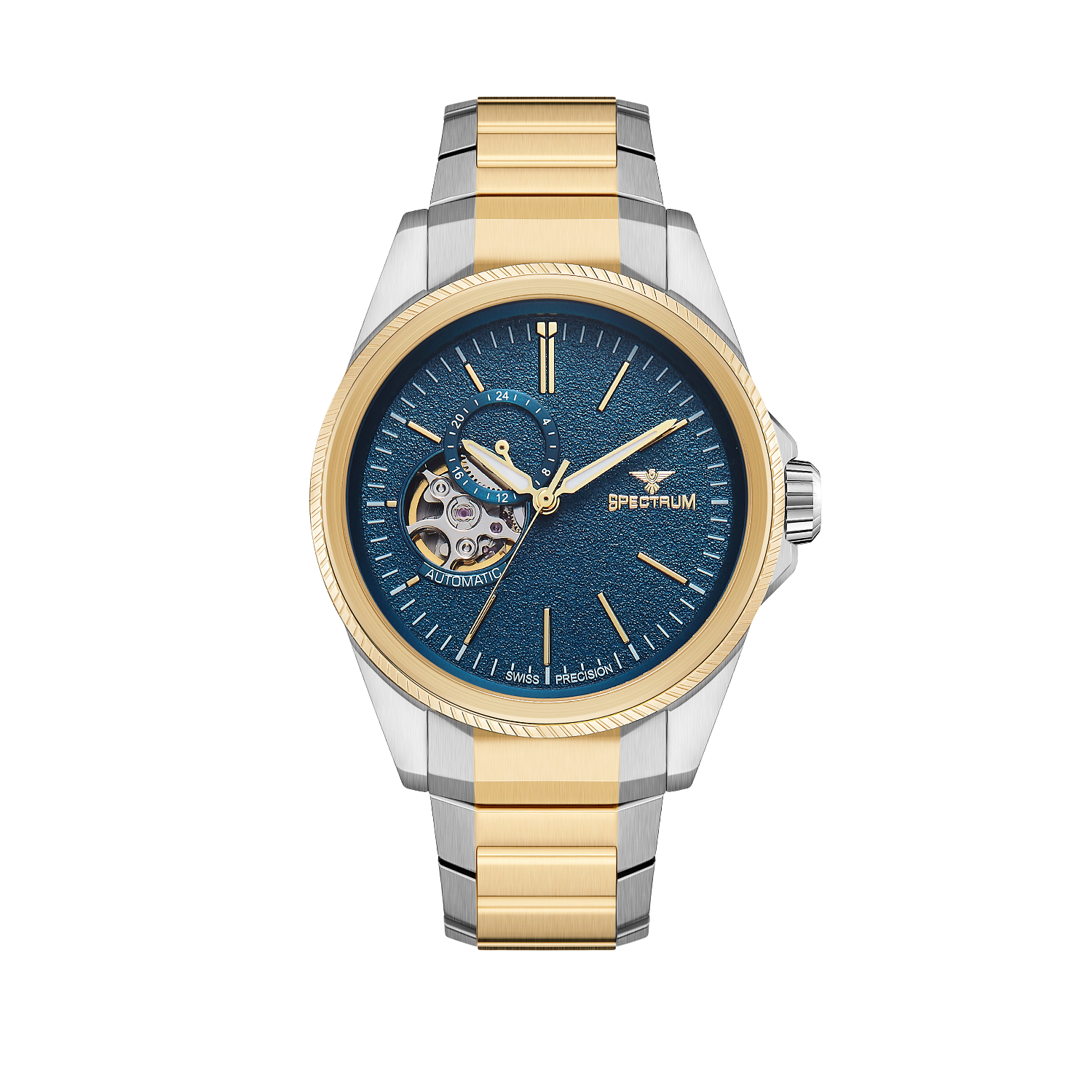 Men's Two Tone Gold Watch S17086M-|This two-tone automatic timepiece]] operates on a mechanical movement, its energy derived from your own, a physical reminder of the intentionality required for focused effort. It doesn't ask for anything. It simply serves. The experience is not about disconnecting from the world, but about connecting more deeply with the task at hand.
An Honest Ledger
Making a deliberate choice between these two types of devices requires an honest assessment of what you gain and what you give up. It’s not a judgment on technology, but a strategic decision about your personal and professional goals. The best tool depends entirely on the job you need it to do. For many, choosing a watch is a deeply personal decision, which is why they are some of the most meaningful gifts one can select.
Let’s be clear about the trade-offs:
- With a smartwatch, you gain constant connectivity, health and fitness metrics, and the convenience of wrist-based notifications and apps. You give up a measure of mental quiet, the ability to fully disconnect, and you subject your focus to the constant threat of interruption.
- With an analogue watch, you gain a single-purpose tool that enhances focus, a durable object of craftsmanship, and a tangible boundary against digital intrusion. You give up the data streams and conveniences of a connected device. Choosing [[product:
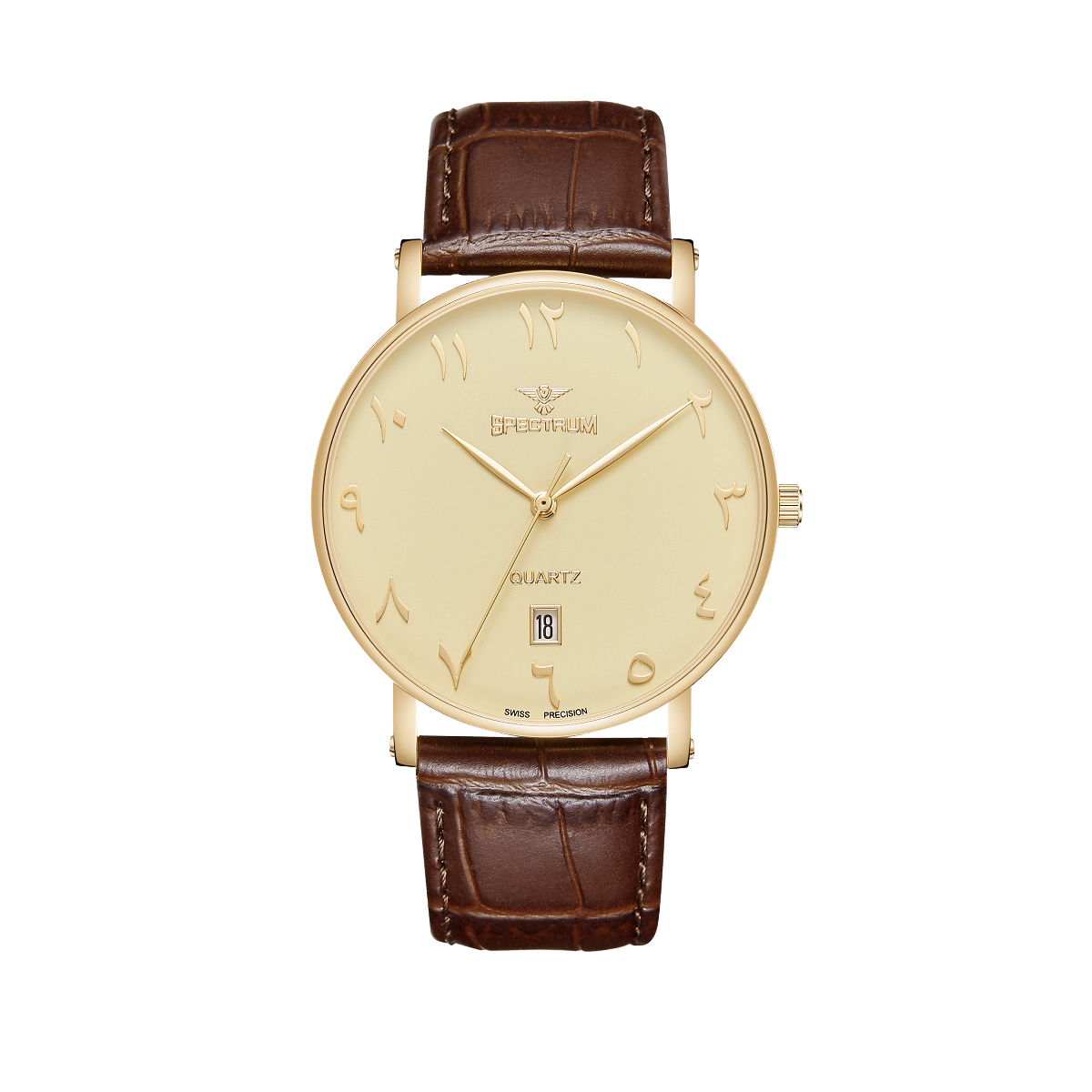 Men's Black Watch S17097M|a classic black-dial watch]] is a statement about what you prioritize during your working hours.
There is no right or wrong answer, only an answer that aligns with your immediate needs. The question is not which watch is “better,” but which watch helps you be who you need to be at a given moment.
A Tool for Your Intention
Opting for an analogue watch in an age of hyper-connectivity is a power move. It’s a conscious decision to prioritize depth over breadth, signal over noise. It demonstrates an understanding that true productivity doesn't come from multitasking, but from sustained, single-minded attention. It’s a choice that aligns perfectly with the mindset of The Truth-Seeker, the individual who knows that insight is found in the quiet spaces, in listening and observing without distraction.
Your time is a finite, non-renewable resource. How you choose to measure it reflects what you value. A smartwatch measures your time in data points and notifications. An analogue watch measures it in hours, minutes, and seconds—the raw material of your life and work. It trusts you to fill them with meaning. It's not a step backward from technology; it's a strategic deployment of it. You are choosing the right tool for the right job. Today, the job is to think. And for that, you need silence.
About the author
Spectrum Editorial
The Spectrum Watches editorial desk
The Spectrum editorial desk — fact-checked, persona-mapped, and written for people who measure life in moments.
Wear the story