
Is wearing a watch better than checking your phone?
For tasks requiring deep focus, a watch is better than a phone because it eliminates the high cognitive cost of digital distractions and context switching.
Spectrum Editorial · 8 min read
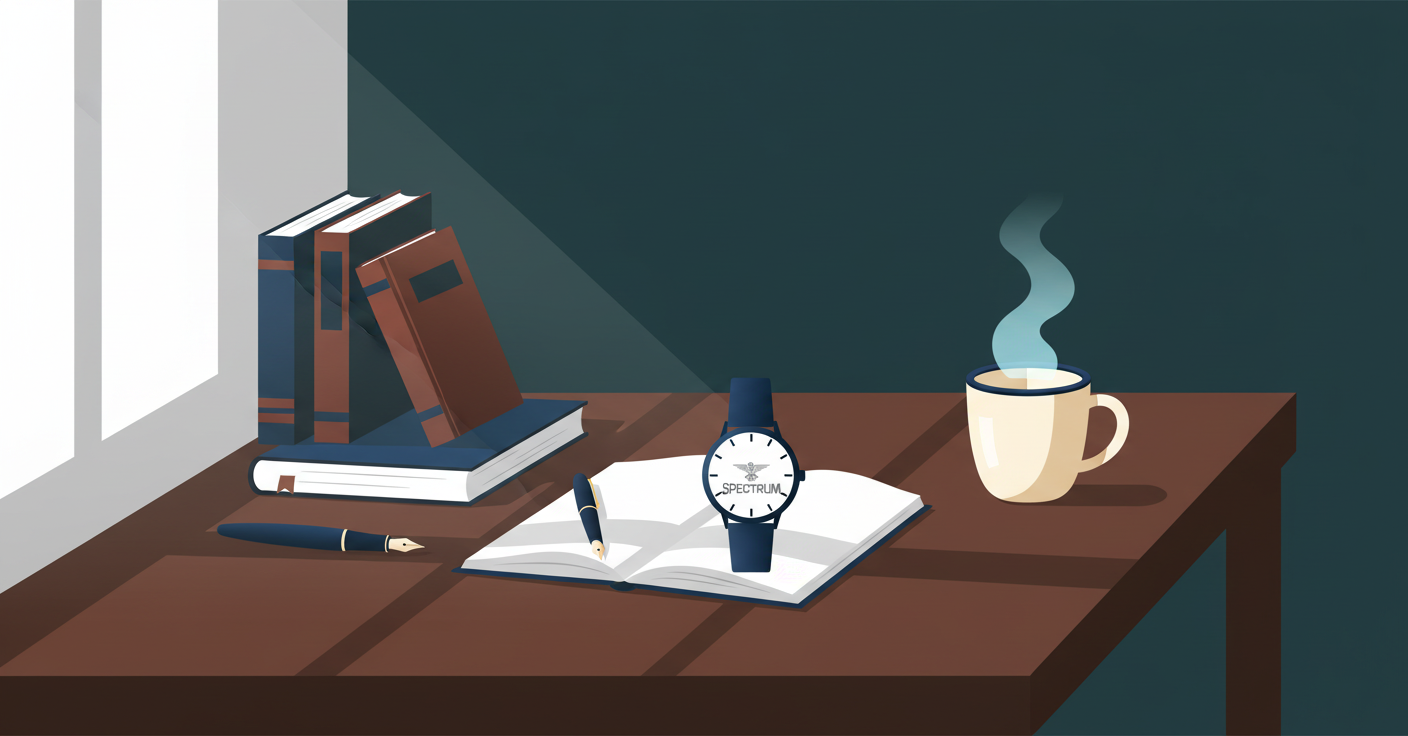
Yes, for tasks requiring deep focus, wearing a watch is better than checking your phone because it eliminates the high cognitive cost of context switching.
It’s Tuesday morning. The first hour of protected time you’ve had all week. On the desk is a draft that needs shaping, a dataset that needs interrogation, or a stack of journals that hold a critical insight. The coffee is cooling. The house is quiet. There is only the work. But a question surfaces, a quiet negotiation with the day: is it 9:15 or 9:45? Do I have an hour left, or thirty minutes? The instinct is to reach for your phone. And that is where the negotiation is lost.
That simple act—reaching for a phone to check the time—is a Trojan horse. Your brain, now anticipating the device, prepares for a different mode of operation. Even if you resist the glowing icons on the lock screen, a cognitive toll has been paid. Your focus has been fractured. The quiet room is suddenly crowded with the ghosts of a hundred possible notifications. The alternative is a tool that does one thing perfectly, a tool that serves your intention rather than trying to capture it.
The Attention Tax of a Single Glance
Neuroscience has a term for the phenomenon that occurs after you switch your attention, even for a moment: attention residue. When you glance at your phone, your mind doesn't just register the time. It processes the layout of the lock screen, the number on the email badge, the headline of a news alert. A part of your cognitive bandwidth remains stuck on what you just saw, reducing your capacity to perform the primary task.
Think of your phone as a digital billboard you carry in your pocket. Its goal is to capture and hold your attention. Every app, every notification, every algorithm is designed to pull you in and keep you there. Checking the time is simply the entry fee for an attentional casino where the house always wins. The cost isn't measured in dollars, but in the currency of deep thought—a far more valuable and finite resource.
A traditional analog watch operates on a completely different principle. It is an instrument of service, not of capture. A glance at the wrist is a closed loop. You ask a question—what time is it?—and you receive a single, unambiguous answer. There is no residue. There is no rabbit hole. Your focus, the most valuable asset for any knowledge worker, clinician, or creator, remains undivided. The boundary around your work holds firm.
Redefining the Ritual
For those who build their days around blocks of focused effort, the tools you allow into your workspace define the quality of that work. It becomes a ritual. The specific heft of a favorite pen. The particular light from a lamp angled just so. The aroma of a specific coffee brew. These objects are not incidental; they are functional elements of a carefully constructed environment designed for clarity.
An analog watch fits seamlessly into this environment. It's not another screen demanding your input. It's a piece of quiet machinery, a physical anchor to the present moment. The steady, sweeping motion of a second hand on a dial provides a sense of time's passage that is fundamentally different from the frantic blinking of a digital clock. It’s a calmer, more human measure of the minutes you are dedicating to your craft. For instance, [[product: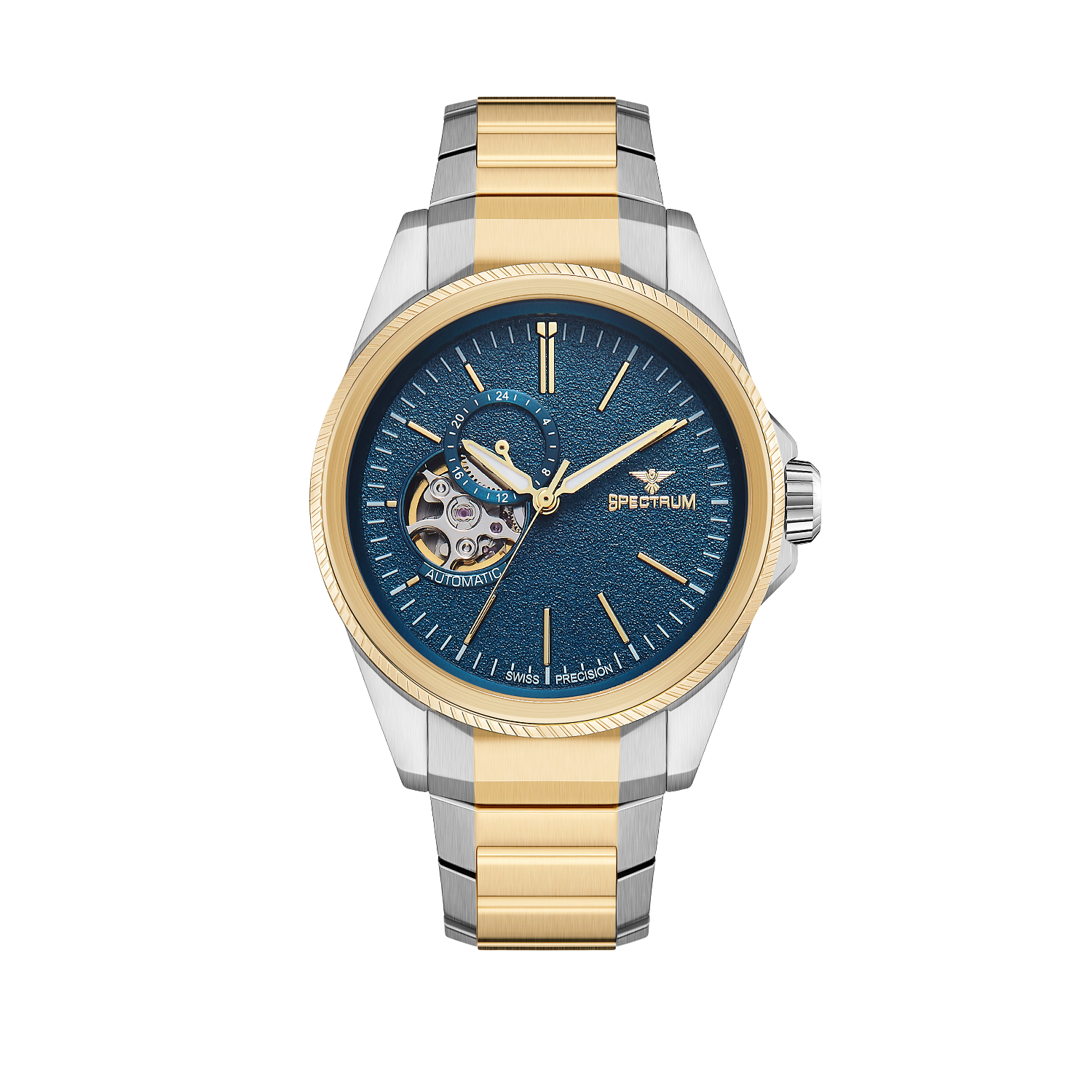 Men's Two Tone Gold Watch S17086M-|this two-tone automatic timepiece]] is not a device that interrupts; it's an object that belongs, marking time without demanding attention.
This deliberate choice of tools is the signature of a Truth-Seeker. It's an approach rooted in the understanding that to find signal, you must first eliminate noise. Creating the proper conditions for insight isn't a luxury; it’s a prerequisite. It’s about building a space, both physically and mentally, where the important work can happen without friction and without the constant, low-grade anxiety of digital interruption. An analog watch is a key part of that architecture.
Where the Phone Still Wins
To be clear, this is not an argument for technological nihilism. The smartphone is a marvel of engineering, a pocket-sized supercomputer with undeniable utility. There are specific scenarios where its multifaceted nature is not a weakness but a strength, and where a watch is simply the wrong tool for the job.
Navigating a new city with multi-stop directions, coordinating a group of people arriving from different locations, or managing a complex series of overlapping timers while cooking a holiday meal—these are tasks where the integrated power of a phone is superior. It’s built for complex, dynamic, data-rich problems. While a dedicated timepiece like [[product: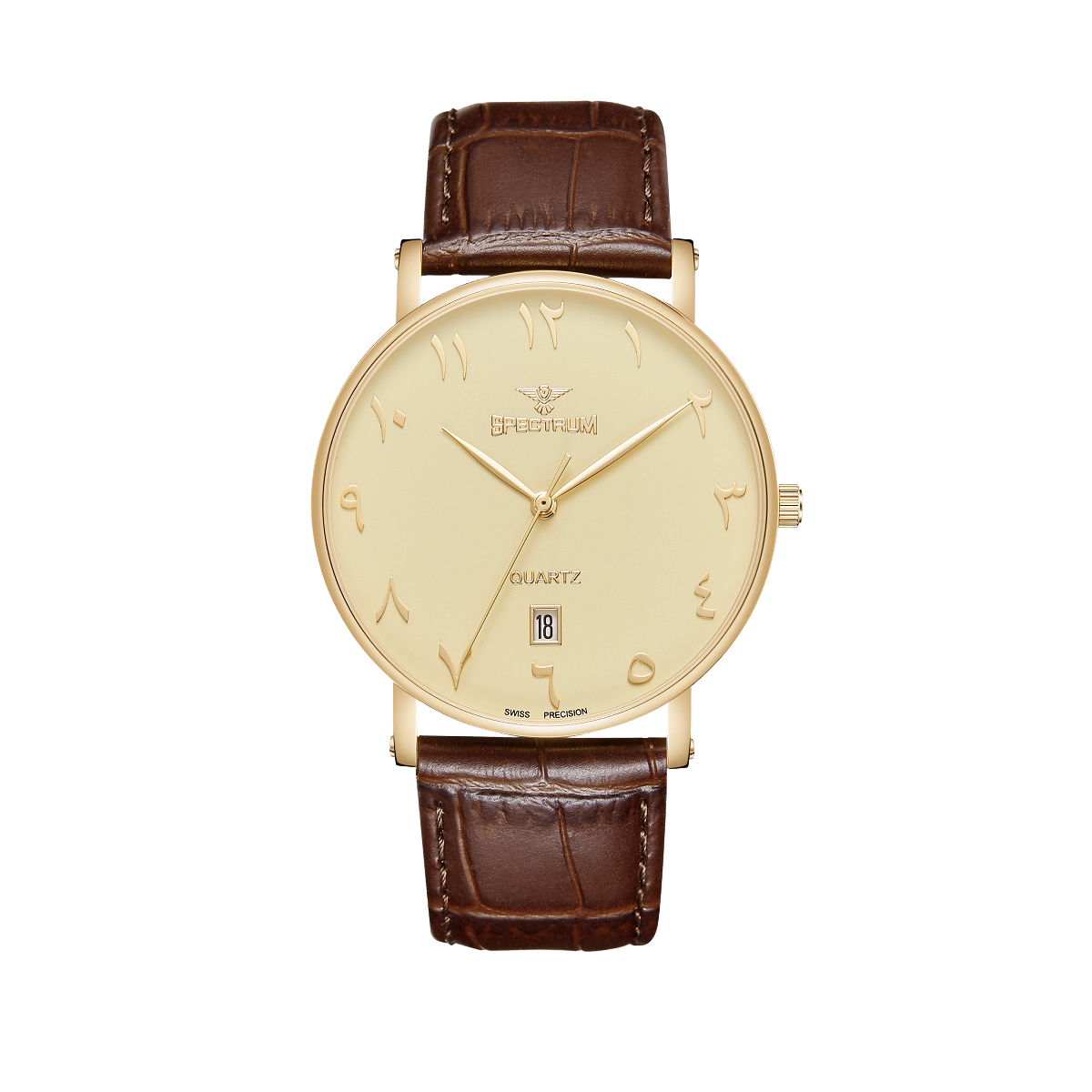 Men's Black Watch S17097M|this black-dial chronograph]] can handle basic elapsed timing with its built-in stopwatch, it cannot manage the layered complexity a phone can.
The strategic choice, then, is not to abandon one for the other. It is to be a conscious operator of your own tools. It’s about asking: what is the nature of this task? Does it require deep, singular focus, or does it require networked, multifaceted data streams? For the former, the watch is your ally. For the latter, the phone is indispensable. The failure is not in using the phone, but in using it by default for every question, especially the simple ones.
Beyond the Individual: The Social Signal
Our choice of tools doesn’t just affect our own focus; it sends a powerful signal to those around us. In a meeting, a this piece conversation, or at a dinner table, pulling out a phone communicates a divided presence. It suggests that the person in front of you is competing for your attention with a world of digital possibilities. It erects a small, transparent wall between you and the moment. Even if you are just checking the time, that is not the message received. The act itself is interpreted as a potential departure from the shared conversation.
You can find endless Reddit threads and etiquette forums debating this very point, but the human-centric consensus is clear: a quick glance at a watch is almost always seen as more respectful. It signals that you are managing your commitments, that you value both the other person's time and your own. It's a gesture of presence and respect, an acknowledgment that you are there, with them, while also being mindful of the structure of the day.
This social grace is one of the most underrated aspects of wearing a watch. It allows you to navigate the temporal demands of the modern world without sacrificing the quality of your human interactions. This is also why a finely crafted watch is often considered one of the most thoughtful gifts you can give a person whose time and presence you value. It's a statement about the importance of how we spend our minutes and who we spend them with.
Ultimately, the decision to wear a watch is a declaration of intent. It’s a small but significant act of rebellion against the attention economy. It's about drawing a line and deciding, for this hour, for this conversation, for this piece of work, that your focus is not for sale.
When you choose an analog watch, you are making a conscious decision about how you want to experience time. Here are the key advantages in the context of focused work and life:
- Zero Cognitive Overhead: A watch performs a single function, telling the time, which protects your mental bandwidth for more complex thoughts.
- Discreet Time-Telling: You can check the time without breaking social flow, appearing rude, or derailing your own train of thought.
- Intentionality as a Practice: The physical act of choosing and wearing an analog tool is a daily reinforcement of your commitment to focus.
- Durability and Craft: A well-made watch is an object designed for a lifetime of use, not a disposable device with a planned two-year obsolescence cycle.
About the author
Spectrum Editorial
The Spectrum Watches editorial desk
The Spectrum editorial desk — fact-checked, persona-mapped, and written for people who measure life in moments.
Wear the story