
Karva Chauth Watch for the Quiet Contemplative Gift
Discover why an analog timepiece offers the ultimate tool for stillness, grounding daily meditation and intentional gifting beyond festival noise.
Spectrum Editorial · 6 min read

It is 5:45 AM on a Wednesday in South Delhi, the morning immediately following Karva Chauth. The house is completely still. The terrace outside smells of early winter air and spent marigolds, while the moon that drew everyone to the roof twelve hours earlier has slipped below the horizon. On the kitchen counter sits a pour-over dripper, dripping hot water steadily over ground beans into a ceramic mug.
For someone who spends their working life synthesizing clinical data or grading post-graduate essays, this specific hour is non-negotiable territory. It is not an hour for social celebration or checking group messages about the previous night's festivities. It is the twenty-minute margin where the day is either claimed or conceded. Reaching for a smartphone to set a twenty-minute meditation timer is an immediate tactical mistake. The glass illuminates, a lock-screen badge announces three overnight emails from colleagues in London, and the neurological quiet dissolves before the sitting even begins.
This is why stillness requires physical instruments that refuse to negotiate with your attention. Selecting a meaningful object during the autumn festive window often turns into an exercise in surviving commercial volume. Between the retail roar of Diwali preparations and the ornate public spectacle of Karva Chauth, the quietest individuals in our lives get handed objects designed for display rather than utility. For the thinker who values quiet composure over social performance, an analog instrument offers something far rarer: an uncompromised boundary.
A Karva Chauth Watch for the Quiet Contemplative Gift
When searching for a karva chauth watch for the quiet contemplative gift, the immediate challenge is cutting through decorative excess. The standard retail offering in Bengaluru or Mumbai malls leans aggressively toward crystal-encrusted bracelets and high-gloss accessories that live in velvet boxes for 360 days a year. That approach mistakes visibility for value. A genuine contemplative does not want an ornament that demands an audience; they want an object that honors their daily rhythm.
Consider the aesthetic profile of someone who leans naturally toward Truth-Seeker instincts. They are comfortable with silence, selective about speech, and deeply skeptical of ephemeral trends. They prefer objects with clean architectural weight that survive decades of daily rotation. When choosing among intentional gifts during the Indian festive calendar, giving an analog watch represents a counter-cultural gesture. You are not handing them another screen that nags, pings, or demands a software patch. You are handing them a mechanical boundary.
For the partner who gravitates toward balanced proportions and timeless metalwork, [[product: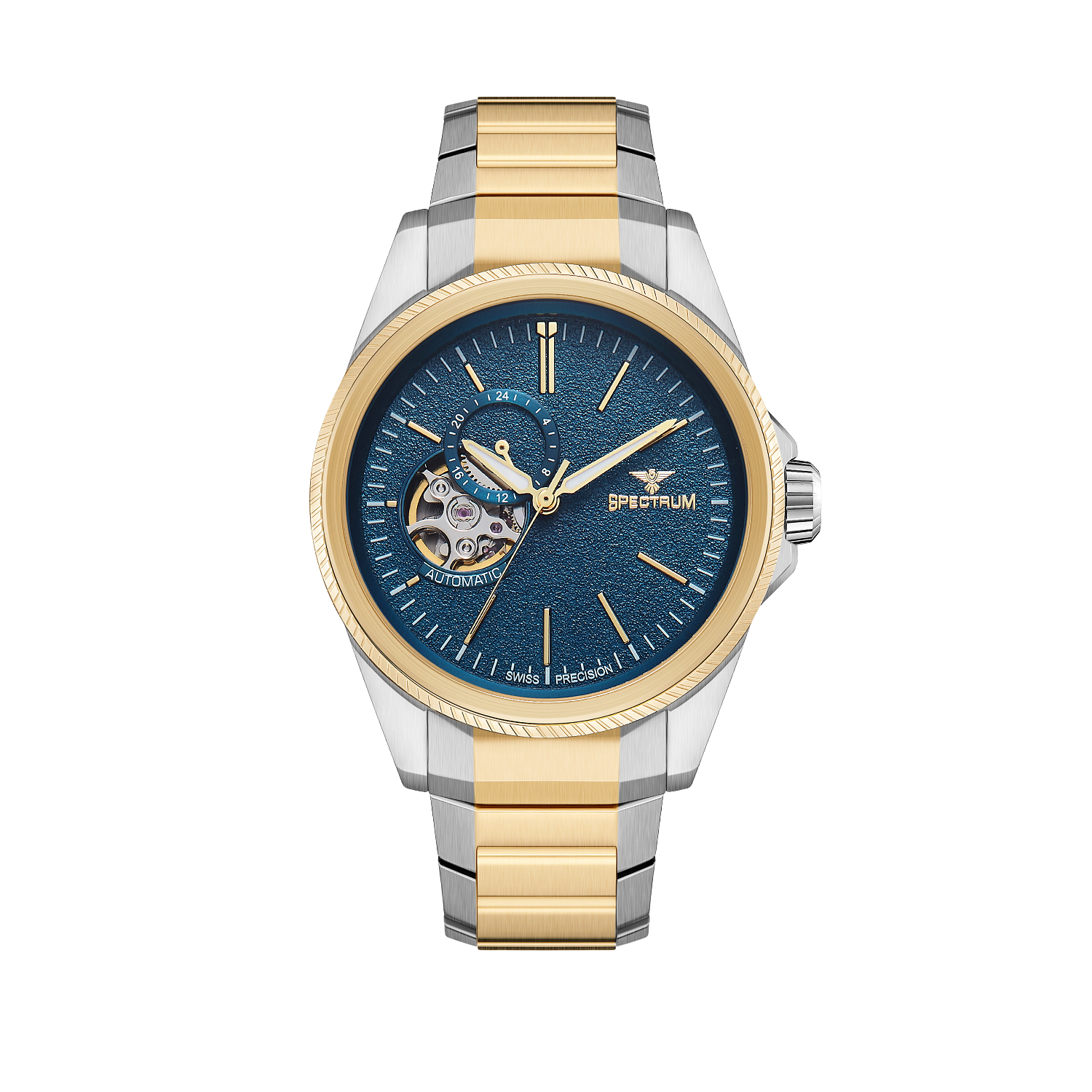 Men's Two Tone Gold Watch S17086M-|this two-tone gold timepiece]] provides exactly that balance. The brushed steel case tempered by warm gold accents carries an unmistakable structural authority without slipping into garish ostentation. Its dial layout is legible at a glance in low pre-dawn light, offering clarity without visual noise. It looks entirely at home rested on an oak study desk next to a notebook, serving as an anchor for focused work.
For those who prefer a darker, monochromatic instrument for their morning discipline, [[product: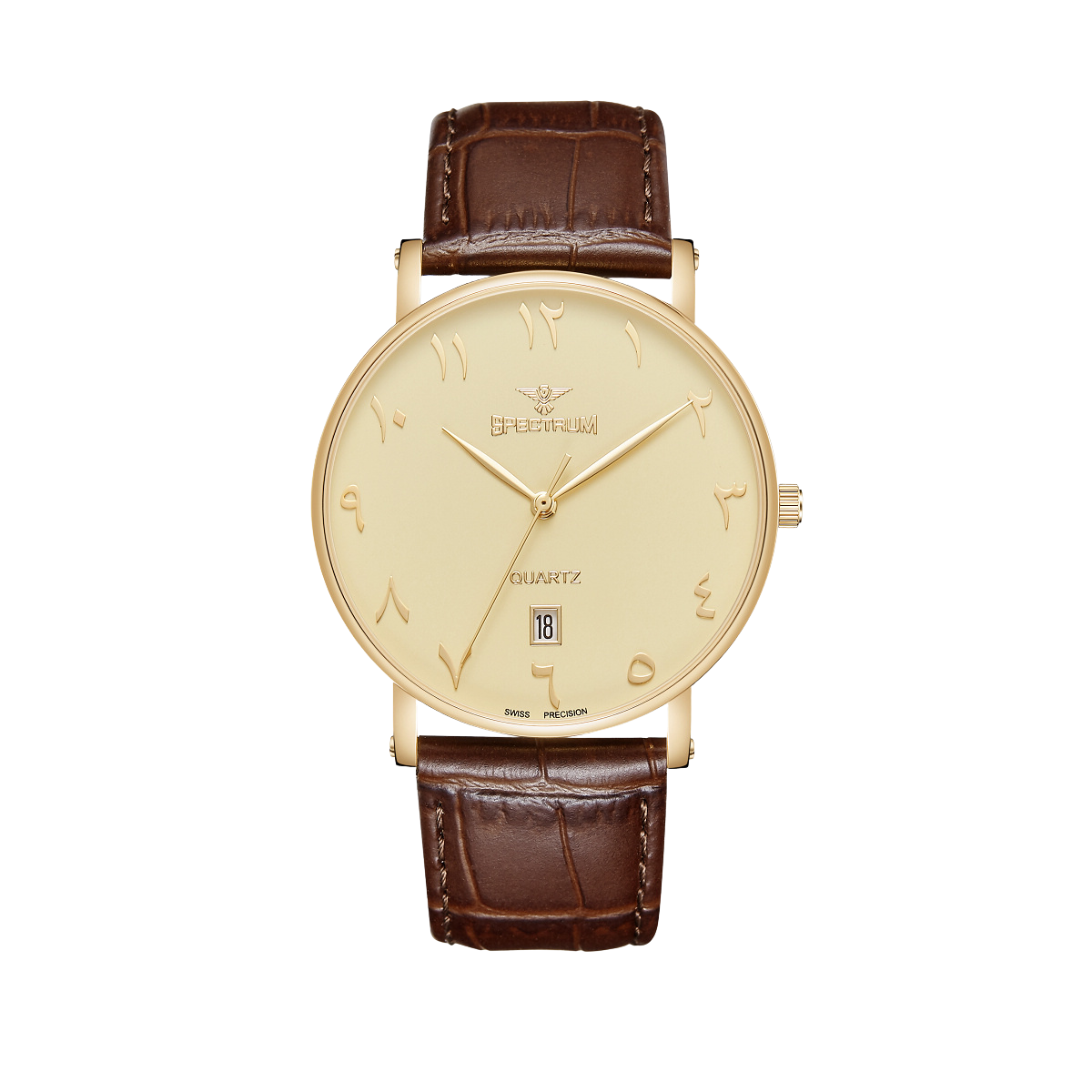 Men's Black Watch S17097M|this black dial leather reference]] strips away even more distraction. The supple strap wears close to the wrist during seated stillness, while the high-contrast markers ensure that a single downward glance provides orientation without breaking your physical posture.
The Attentional Sit: Mechanism Over Miracles
To understand why an analog watch belongs in a contemplative morning ritual, one must examine the neurological machinery of focused attention. The practice of open-monitoring sitting—often grouped loosely under breathwork or seated meditation—is routinely derailed by wellness mysticism. Let us strip away the snake oil and examine the observable mechanics.
When an individual sits upright in silence for twenty minutes, several distinct neurological shifts occur:
- The default mode network (DMN), responsible for self-referential rumination, biographical anxiety, and forward planning, demonstrates measurably reduced metabolic activity.
- Sustained attention on respiratory sensations engages the dorsolateral prefrontal cortex, strengthening top-down attentional control.
- Controlled exhalations stimulate the vagus nerve, increasing heart rate variability (HRV) and signaling the autonomic nervous system to down-regulate sympathetic arousal.
- Cortisol production slows as sensory input drops below the threshold required to trigger reactive alertness.
None of these physiological benefits require incense, binaural audio apps, or a digital wearable tracking your biometrics. In fact, introducing a connected device into the equation systematically undermines the neurobiology of the practice. When you strap on a smartwatch to time an attentional session, your brain remains subtly primed for external disruption. The skin beneath a haptic sensor retains an anticipatory micro-tension, anticipating the buzz of an incoming alert. That latent vigilance keeps the sympathetic nervous system partially activated.
An analog timepiece eliminates that cognitive tax entirely. It possesses no antennas, no operating system, and no notification pipeline. It cannot buzz. It cannot ring. It simply sweeps a physical hand through space at sixty beats per minute. By glancing at the position of the minute hand against a fixed index, you set your temporal anchor. You close your eyes, breathe through the diaphragm, and inhabit the physiological stillness until the allotted arc of the dial is complete.
Protocol: Constructing the Screen-Free Margin
Making this protocol stick requires strict operational friction. If you rely on willpower at 6:00 AM, the smartphone will win eight mornings out of ten. The nervous system in early wakefulness defaults to passive consumption because processing blue light and algorithmic feeds requires zero executive energy.
First, establish the physical perimeter the night before. Place your phone outside the bedroom entirely—ideally in an adjacent hallway or study. Leave your watch on the bedside table alongside a glass of water. When your morning alarm sounds, your hand touches brushed steel and mineral glass, not a gorilla-glass display emitting four hundred nits of blue spectrum light.
Second, pair the sit with a fixed domestic anchor. In an urban Indian apartment, this might be the moment between putting the kettle on the stove and the morning delivery arriving at the door. Seat yourself on a straight-backed chair with feet flat on the floor. Note the position of the minute hand on the dial—for instance, aligned at the twenty-minute marker past the hour. Your objective is simply to observe the natural respiratory cycle until that hand sweeps to the bottom of the dial.
Third, prepare for attentional drift. After four or five minutes, the mind invariably launches into tactical logistics: preparing for a morning clinic, negotiating traffic along Bengaluru's Outer Ring Road, or planning family logistics for the upcoming Dhanteras weekend. When this friction occurs, do not abandon the bench. Acknowledge the intrusive thought as an involuntary neurological output, return your awareness to the rise and fall of the ribcage, and let the seconds pass undisturbed.
When the twenty minutes elapse, you do not check your biometric readiness score or share your streak on social media. You simply open your eyes, register the new position of the hands on your wrist, and step into the day with your attentional sovereignty intact.
Analog Permanence: The Anti-Obsolescence Choice
In the modern watch market, choosing an honest mechanical or quartz timepiece requires filtering through substantial commercial posturing. On one end of the counter sits the DW / MVMT tier: aggressively marketed lifestyle labels that rely on disposable quartz calibers wrapped in ultra-thin alloy cases, designed primarily to catch the eye in curated social media squares. On the other end sit heritage Swiss imports whose retail price tags have inflated past rational utility into the realm of speculative luxury.
Spectrum occupies a fundamentally different position. Designed in Dubai since 1990, our watches are built directly for real-world wear without wholesale markups or corporate middlemen. While fashion labels redesign their catalogues every quarter to chase disposable micro-trends, Spectrum develops persona-led platforms backed by robust solid-link bracelets, precision-machined stainless steel cases, and a comprehensive two-year international warranty. We build analog instruments for individuals who intend to wear the same watch to morning consultations, family holiday tables, and quiet writing desks for the next fifteen years.
A gift given in the wake of Karva Chauth should reflect that exact longevity. When the public spectacle of the holiday fades and the winter cadence of November takes over, the objects that remain on our wrists should not be gadgets destined for an electronic waste drawer in thirty-six months. They should be permanent physical companions that tell you the time, preserve your quiet, and ask for nothing else in return.
About the author
Spectrum Editorial
The Spectrum Watches editorial desk
The Spectrum editorial desk — fact-checked, persona-mapped, and written for people who measure life in moments.
Wear the story