TAG Heuer Connected Vs. Analog: A Timeless Comparison
The cup is always hotter than expected at that hour. The first sip arrives too quickly, then the coffee settles into that slow middle state where it’s no longer sharp, just present, giving off a li…
Spectrum Editorial · 15 min read · 46 views

The cup is always hotter than expected at that hour. The first sip arrives too quickly, then the coffee settles into that slow middle state where it’s no longer sharp, just present, giving off a little warmth above the saucer while the city softens around it.
Outside, the road keeps moving. Not loudly. Just enough to remind us that Dubai rarely goes fully still. A taxi glides past in a ribbon of reflected light. Someone at the next table checks a screen, then turns it face down. A chair shifts against tile. Ice thins in a glass.
We notice how late cafés make time feel less strict. The hour is visible, but it doesn’t press. It hangs there with the steam, with the last receipts of the night, with the quiet habit of ordering one more coffee even when home isn’t far. Some nights have that shape. They don’t ask for a decision. They only ask that we remain in them a little longer.
By then, the day is neither finished nor active. It’s in between. Clothes look slightly more lived in. Sleeves are pushed back. A wrist rests beside a phone, beside keys, beside nothing dramatic at all. In the city, a great deal of life happens in these minor arrangements. We keep returning to them, the way we return to old stories, or to a familiar line from two green dials and one wild christmas night, not because anything urgent is there, but because the feeling remains.
The Last Coffee Before Midnight

Near midnight, small things become clearer.
The spoon left in the cup. The folded receipt. The way light from a passing car catches the edge of a sleeve and disappears. We’ve always thought the city looks most honest then. Not in the loud hours, when every place is trying to be seen, but later, when the performance drops and only routine remains.
A late café in Dubai holds a few familiar figures. The one still opening a laptop, though the day has already made its point. The one waiting for a ride and checking the street every few minutes. The one who seems in no hurry at all, turning a glass slowly between both hands as if the evening might extend because they haven’t stood up yet.
The hour after plans
This is the hour after messages slow down.
The table is no longer a workstation, but it still carries traces of one. Earbuds, notebook, charger, a key card from an office tower that now stands dark except for a few lit rectangles. The body is tired, though not unhappy. The mind keeps moving in little loops, replaying a sentence, an appointment, the look of tomorrow’s shirt draped over a chair at home.
> Some nights don’t end. They loosen.
We’ve seen how the same city can feel different depending on what’s on the wrist. Not as status. Not as statement. More like atmosphere. One object keeps pace with the stream of updates. Another marks the passage and asks for nothing in return.
A city that keeps count
Dubai is full of clocks we don’t look at. Elevator displays. Metro signs. Oven lights in empty kitchens. The glowing dashboard while waiting at a signal on Al Wasl Road. Time is everywhere, but not every version of it feels the same.
That’s what lingers in a late café. The sense that the hour can be measured in more than one way. By alerts, by goals, by distance covered. Or by the cooling of coffee, the lowering of voices, and the walk back to the car.
Two Ways of Watching the Hours
Early in the article, it helps to place the two companions side by side.
| Aspect | tag heuer connected | Analog watch | | --- | --- | --- | | Relationship to time | Active, updating, responsive | Quiet, steady, continuous | | Daily habit | Charging, syncing, checking | Wearing, winding or setting, forgetting | | Presence on the wrist | Screen-led and informational | Object-led and restrained | | Best fit | Data-rich days, sport, notifications | Outfit continuity, long wear, silence | | Sense of ownership | Part device, part watch | Part accessory, part keepsake |
The difference often begins before breakfast.
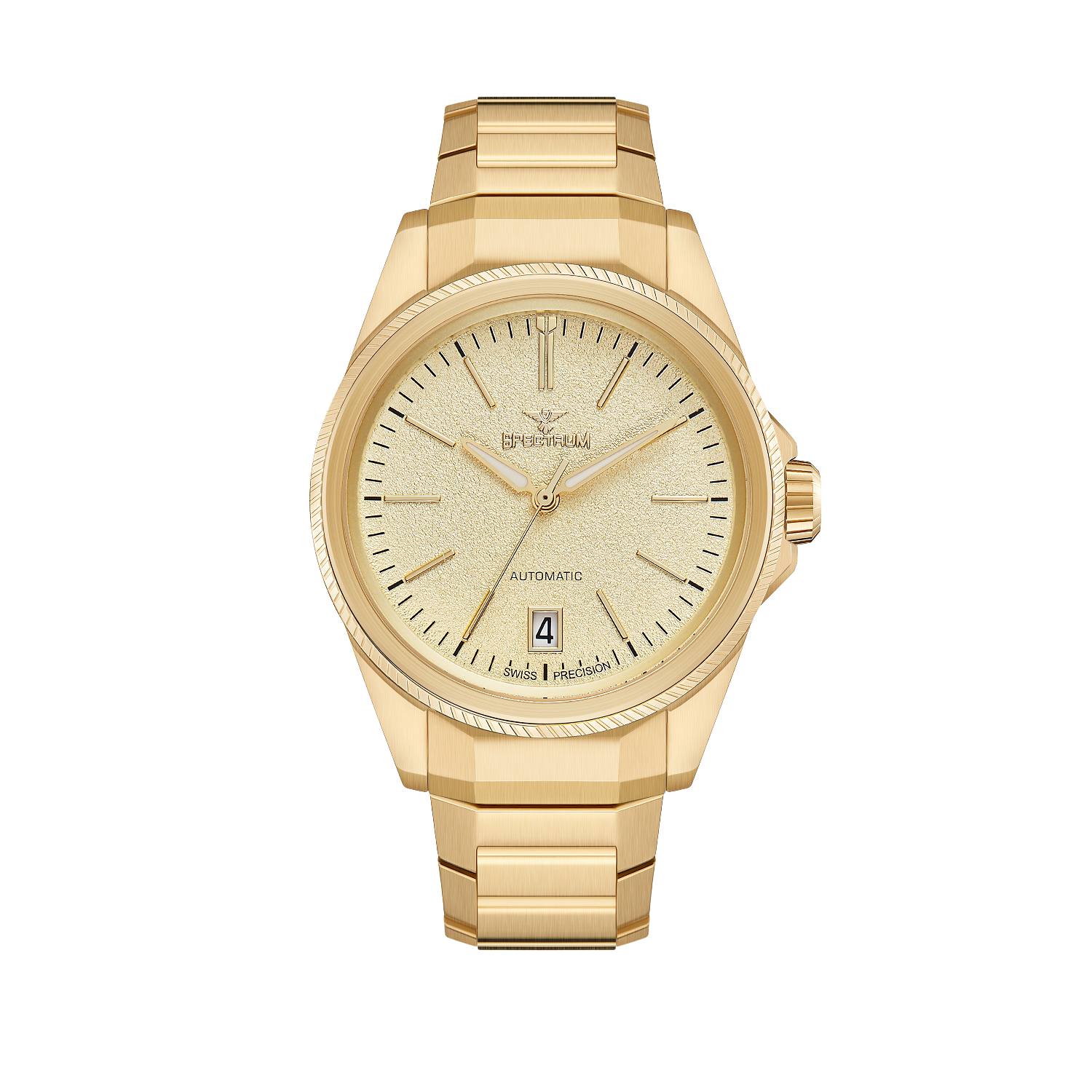
One wrist wakes into the day already connected to messages, movement, weather, rings to close, routes to follow. The other wakes into something older. Hands on a dial. A date window, perhaps. No request to pair, no request to update, no sense that the object must keep proving itself before the day can start.
The connected hour
The tag heuer connected belongs to the first way of living with time. The line began in 2015, when TAG Heuer entered wearable technology in partnership with Google and Intel. Then-CEO Jean-Claude Biver described it as “Silicon Valley meets Switzerland”, which remains one of the clearest summaries of what the watch is trying to hold together: luxury watch language and digital life in the same case. By 2025, the collection had evolved further, and retailer data from Ahmed Seddiqi & Sons in Dubai showed strong local adoption, especially around golf features, as noted in this TAG Heuer Connected history and review.
That history matters because the watch never pretended to be only one thing. It wasn’t trying to imitate a simple quartz piece. It was trying to bring the architecture of a Swiss watch into a category shaped by software.
For some people, that’s exactly right. They want time to arrive with context.
The steady hour
The other philosophy is less interested in context.
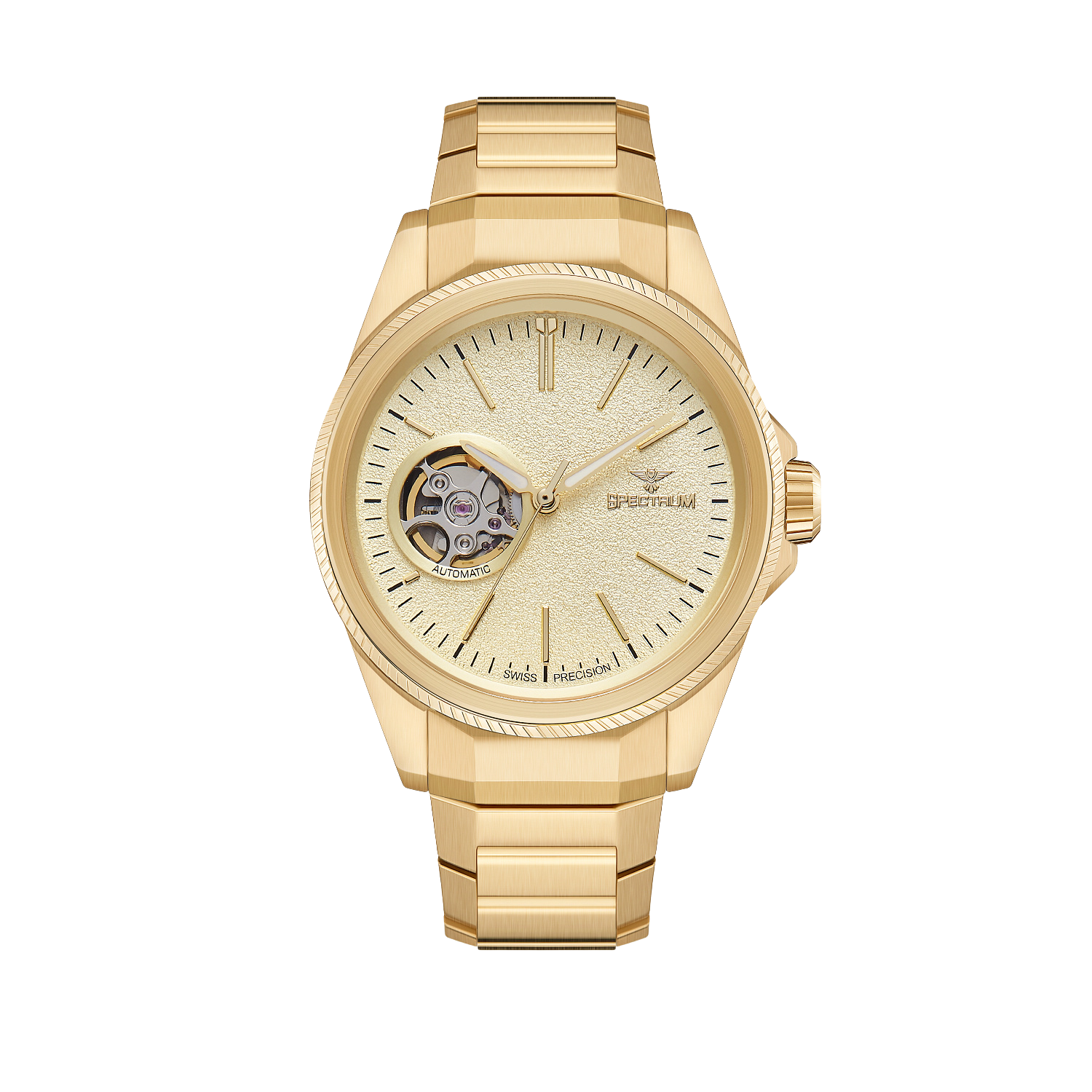
An analog watch doesn’t explain the day back to us. It doesn’t tell us how far we walked home from the office or whether our heart moved calmly through a meeting. It offers less, and in that restraint it sometimes gives more. We glance, we know the hour, we return to the room.
There’s a reason many of us keep circling back to watch stories in the archive. Watches aren’t only instruments. They become habits. The watch worn with the same black shirt on Thursday evenings. The one left by the door and put on half-awake. The one that belongs to a certain season of our life and still carries it faintly.
> A small distinction: one watch reports on the day. The other simply accompanies it.
Neither approach is wrong. That’s what makes the comparison more interesting than a review. It isn’t really about which object wins. It’s about which version of time feels more like your own.
Two kinds of reassurance
The connected watch reassures through information.
The analog watch reassures through continuity.
In Dubai, where a single day can hold a morning walk, a long office stretch, a family dinner, and a late coffee under tower lights, both ideas make sense. Some days invite metrics. Others ask only for a familiar weight on the wrist and the soft certainty that not everything needs to speak.
Notifications on the Wrist or a Glance at the Time
The day starts differently depending on what the watch thinks its job is.
With a connected watch, the wrist becomes a second threshold for the world. A buzz during the lift ride. A message preview while waiting for coffee. A fitness summary before the first proper conversation of the morning. The watch isn’t just there to mark the hour. It keeps presenting the day back to us in fragments.

A day that answers back
The TAG Heuer Connected Calibre E5 leans fully into that role. It offers advanced fitness metrics including real-time heart rate variability and blood oxygen levels, then turns that information into daily and weekly trends. In the pool, it automatically detects laps and strokes. On the course, it provides views and scoring for over 40,000 courses, a capability linked to its 8% market share among tracked smartwatches in Dubai’s fitness centres, according to the TAG Heuer magazine piece on sport data and the Connected line’s fitness features: sport data and TAG Heuer Connected metrics.
That kind of watch suits a particular scene.
A run before sunrise near the canal. A swim logged before work. A lunchtime round of golf where the wrist becomes part caddie, part scorecard, part map. The watch is useful because it keeps translating motion into information. For someone who wants a record of the day, that’s not a small thing.
The silent alternative
An analog watch handles the same Tuesday differently.
There’s a meeting in DIFC. Someone checks the time while a glass door closes. Later, there’s a walk from the car park in the heat, then a stop for groceries, then a late dinner that runs a little longer than expected. The watch remains silent through all of it. No tally. No nudge. No summary waiting in the evening.
That silence has its own texture. It leaves more room for the day to pass without commentary.
> We sometimes forget that simplicity is also a user experience.
For readers who live comfortably inside digital systems, there’s a wider world of training and tracking tools worth understanding. Resources on apps for smartwatches like the Apple Watch show how significantly sport, coaching, and wrist-based data now overlap. The TAG Heuer Connected sits in that broader culture, even if it wears a more formal case.
What each glance means
The most ordinary gesture reveals the whole difference.
A connected watch glance often becomes a check-in. The hour, yes, but also steps, pulse, weather, a message. The screen invites more than one answer. An analog watch glance remains singular. It tells time, then gives the moment back.
- Connected glance: useful when the day is built around movement, reminders, and response.
- Analog glance: useful when the day already contains enough information.
- Shared ground: both live on the wrist, close to habit, close to identity, close to the sleeve we pull down after looking.
By evening, neither choice feels abstract. One has spoken often. The other has hardly spoken at all.
Objects That Stay and Systems That Update
Some possessions ask for care in a familiar way. A polishing cloth. A strap change. A service after years, not weeks. Others ask for care as part of an ongoing system. Charge tonight. Update tomorrow. Replace something later because the software moved on.
That difference becomes more visible over time than on the first day of ownership.

The hidden calendar of ownership
The TAG Heuer Connected sits in the luxury space, but it still lives under the practical rules of smartwatch ownership. Reviews often praise its build, yet they rarely stay long with the long view. One cited discussion of the model places the watch at $2,550 and notes that ownership over 3 to 5 years is rarely examined closely, including battery degradation common to Wear OS devices and battery replacement that is typically $200 to $400, along with the larger risk of software obsolescence. That tension is outlined in this Esquire piece on the TAG Heuer Connected and long-term costs.
Those aren’t dramatic details. They’re domestic ones.
A charger left near the bed. A second charger bought for the office. The slight awareness, after a while, that the watch belongs not only to you but to a support system of batteries, updates, and compatibility. It may still be beautifully made. It may still feel satisfying on the wrist. But its lifespan is tied to technology in a way a simple analog watch often isn’t.
Charging as ritual
For some people, charging is no burden. It slides easily into the routine.
Others begin looking for ways to be gentler with batteries in general. Advice such as stop charging at 80 percent to double your battery's lifespan speaks to a wider modern habit. We now maintain not just objects, but charge cycles.
> Ownership changes when care becomes technical.
An analog watch usually belongs to another rhythm. It may need a battery change if it’s quartz. It may need servicing if it’s mechanical. But these events feel occasional, not nightly. The watch can disappear into daily life for long stretches, then return for maintenance without ever feeling obsolete.
That’s part of why repair still matters. A watch that can be looked after remains in the story longer. The language of repair services comes from that older idea that keeping an object going is a form of respect, not inconvenience.
A short film sits well here, because moving images catch the contrast better than specifications do.
Apple Watch vs Garmin After 1 Year: I Was Wrong! - YouTube
Tap to unmute
Apple Watch vs Garmin After 1 Year: I Was Wrong! Pete Matheson
Pete Matheson305K subscribers
Waste, memory, and replacement
The sustainability question surfaces.
A watch made to age with the wearer fits one set of values. A watch shaped by software support and battery life fits another. Neither category is morally pure, and that isn’t the point. The point is that the relationship differs. One object is closer to appliance logic. The other is closer to inheritance, even in modest form.
We tend to remember this when drawers start filling with cables. Or when a simple watch worn for years still looks right with the same weekend shirt.
Outfits for the Day and for the Years
The watch rarely enters a room alone. It arrives with a cuff, a shoe, a bag, a way of standing. That’s why the difference between connected and analog isn’t only technical. It’s visual, social, almost theatrical in a quiet way.

In motion and in tailoring
The TAG Heuer Connected Calibre E5 uses premium materials like stainless steel and ceramic to mimic the feel of a luxury chronograph, which explains why it can move from activewear to a sharper office look without seeming out of place. Yet the same hands-on impressions that praise the hardware also note a disconnect in the software side, with severely restricted watch face customisation and documented heart rate accuracy concerns. That tension is described in these hands-on impressions of the TAG Heuer Connected Calibre E5.
We can see that tension in dress, too.
A morning run along the Dubai Canal. Technical fabric, trainers, a water bottle, a watch that looks prepared to measure effort. By afternoon, the same wrist is at a desk with a collared shirt, and the watch still works because its case borrows from the grammar of classic sports chronographs. It wants to look established, even when its screen remains digital.
The quieter companion
An analog watch tends to disappear more elegantly into varied outfits.
With a simple stainless steel case, it can sit under a blazer sleeve at dinner, then appear the next day with a white T-shirt and loose trousers, then again at a family gathering beside traditional desi clothing without feeling as if it has brought an entire operating system along. It doesn’t need to signal capability. It only needs to belong.
That versatility is often less dramatic than smartwatch styling, but it lasts longer in memory.
- With tailoring: an analog watch usually reads as part of the line of the outfit.
- With casual clothes: it can feel almost accidental, in a good way.
- With occasion wear: it stays respectful, especially when the rest of the look already carries enough detail.
There’s also pleasure in changing the mood of a watch through small things. A different strap. A softer leather tone. A steel bracelet returned to after months away. Objects gathered under accessories often matter not because they transform the watch completely, but because they let the same watch keep up with different versions of the self.
> Clothes change faster than character. The right watch keeps pace with both.
The connected watch can certainly be styled well. It often is. But an analog watch usually asks less from the outfit around it, and for many people that’s exactly why it keeps getting chosen.
Choosing a Rhythm for Your Days
Some choices are really choices about tempo.
The tag heuer connected calibre e5 is technically formidable. It offers dual-band GNSS and a 326 ppi AMOLED display, with stronger positional accuracy in difficult urban settings. At the same time, GPS-heavy use still limits battery life to 3 to 4 hours, a practical constraint noted in this Stuff review of the TAG Heuer Connected Calibre E5. That tells us almost everything about the category in one breath. Precision and dependence. Capability and upkeep.
One rhythm, then another
There are days when a connected watch makes perfect sense.
Travel days. Training days. Days built from wayfinding, tracking, managing, responding. In those hours, the wrist becomes a dashboard, and that can feel reassuring. The city is fast, and the watch stays fast with it.
Then there is the other rhythm. Less measurable, but no less real.
It’s the rhythm of repetition done without fuss. The watch by the door. The one that works with a work shirt, with denim, with dinner, with a quiet Friday afternoon. The one that doesn’t need to become the centre of the day in order to remain part of it.
What stays close
We’ve always been drawn to objects that support continuity rather than interrupt it.
That’s why ideas like rotation instead of accumulation, and care instead of replacement, continue to feel current even when they aren’t new. There’s a kind of steadiness in building a small personal world around things that can return again and again. The old language of timekeeping still has room for modern life. It doesn’t need to compete with software to remain useful.
A thoughtful note on time mastery sits near this feeling. Not mastery as optimisation. More as familiarity. Knowing what belongs in your days, and what you’d rather leave outside them.
> The better watch is often the one that matches the mood of your life, not the maximum of its specifications.
The choice doesn’t have to be final. Some people will keep both worlds nearby. Still, the contrast remains clear. One watch keeps adding layers to the hour. The other lets the hour arrive on its own.
The Morning Commute Begins Again
By morning, the city has reset without really resetting at all.
On the metro platform, people stand in their usual diagonals. Someone balances a coffee and a phone in one hand. Someone smooths a sleeve before the train comes in. The light is brighter now, less forgiving than the café light from the night before. Still, the same small details return. The cuff. The wrist. The glance.
We like this hour because it never pretends to be new. It continues.
The choice between a connected watch and an analog one doesn’t resolve itself overnight. The runner may want data before work. The designer may want silence by noon. The founder may charge one watch on Sunday and wear another all week. Most lives aren’t consistent enough for pure categories, and perhaps that’s the point.
The train arrives. Doors open. Screens brighten. A few people look at their wrists, each for their own reason, then step forward together.
Spectrum makes watches for people who want time to feel lived with, not managed. If your days lean towards steadiness, outfits repeated with small changes, and objects worth keeping in rotation, you can spend time with the collection at Spectrum.
About the author
Spectrum Editorial
The Spectrum Watches editorial desk
The Spectrum editorial desk — fact-checked, persona-mapped, and written for people who measure life in moments.