
What Does Analogue Mean on a Watch? An Off-Screen Ritual
Discover what analogue means on a watch and why physical hands offer the sharpest antidote to modern digital notification fatigue.
Spectrum Editorial · 7 min read · 1 view
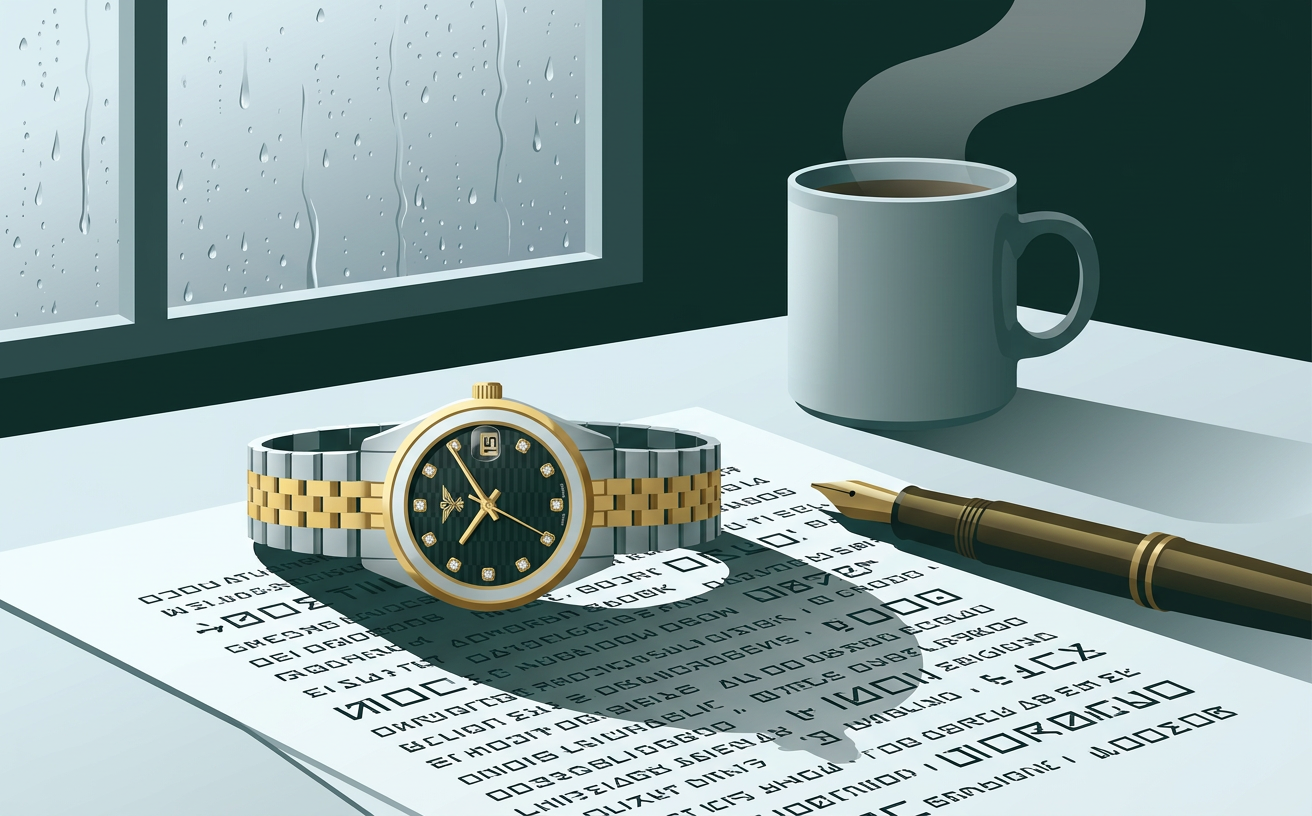
It is 6:15 on a Tuesday morning. The apartment radiator clanks twice before settling into a low, iron hum. Outside, rain coats the pavement, softening the city traffic into distant white noise while black coffee drips through unbleached paper into a ceramic mug. On your desk sits an annotated draft of a clinical study, twenty-four pages of dense methodology waiting for careful margin notes. In this quiet hour before clinic rounds and department emails, your phone sits face-down on a bookshelf three rooms away. When you glance down at your wrist to budget your remaining reading time, you are answering a foundational mechanical question: what does analogue mean on a watch?
To understand what analogue means in horology is to understand how we navigate duration. At its core, an analogue watch displays time continuously through physical hands rotating around a fixed circular dial. Unlike a digital display that reduces the present moment to isolated numerical digits, an analogue face presents time as geometry, dividing twelve hours into three hundred and sixty degrees of visible space. You do not simply register an abstract number like 06:18; you see eighteen minutes past the hour as an angle, observing both where the hour began and how much space remains before the hand climbs toward seven.
What Does Analogue Mean on a Watch? Mechanics, Dials, and Movement
When horology enthusiasts ask what does analogue mean on a watch, they are distinguishing physical kinematics from electronic pixel rendering. On an analogue dial, three concentric shafts extend through the center pinion, driving the hour hand, minute hand, and sweeping seconds hand across marked indices. Beneath the dial, a battery-powered quartz crystal vibrates at precisely 32,768 hertz when charged by a microcell, sending regulated electronic pulses through an integrated stepping motor that turns physical gears. That train of miniature wheels advances the hands with exact, predictable increments, housed securely inside a solid stainless steel case.
Digital watches, by contrast, emerged in the 1970s using liquid crystal displays or light-emitting diodes to project numeric characters. In recent years, smart devices replaced those simple digital readouts with backlit miniature computer monitors capable of push alerts, biometric tracking, and software updates. An analogue quartz watch deliberately rejects that entire architecture. It houses no radios, no backlights, and no operating systems. Its entire function is dedicated to physical hands tracing a path over stamped metal indices, shielded beneath mineral glass.
To see this architectural distinction in practice, consider the essential components that define an authentic analogue dial:
- The Chapter Ring and Indices: The perimeter markers—whether applied batons, printed Roman numerals, or geometric plots—that map twenty-four hours of planetary rotation into twelve readable sectors.
- The Physical Handset: Stamped brass or steel pointers balanced to traverse the dial plane with minimal friction, creating visual contrast against the dial background.
- The Gear Train: A sequence of interlocking wheels translating motor pulses into mechanical rotation at fixed gear ratios of 60:1 and 12:1.
- The Crown and Stem: A manual winding stem at three o'clock that mechanically disengages the gear train, allowing you to physically set the hands to an absolute reference point.
Editorial outlets like Hodinkee, Worn & Wound, and Fratello often dissect iconic analogue references—from the field-ready simplicity of a Hamilton Khaki Field to the tool-watch utility of an SKX007, a classic Marlin, or an Omega Speedmaster. Those pieces command attention because their dials communicate mission-critical information without software mediation. A dependable steel analogue watch operates on that exact same visual philosophy: crisp indices, clean hand clearance, and zero digital noise.
The Geometry of Spatial Time Versus Digital Interruption
For the Truth-Seeker, who spends long hours dissecting dense texts, evaluating patient records, or drafting monographs, time is not an alert. It is an envelope within which deep thought happens. Digital time is punitive; it flashes exact digits that trigger cognitive urgency. Seeing "06:47" on a lock screen forces your brain to calculate mental arithmetic while simultaneously exposing you to waiting inbox badges and headline banners.
Analogue time operates spatially. When you check your wrist during a forty-minute writing session, your eye takes in the spatial arc between the minute hand and the half-hour index in less than a quarter of a second. You absorb your temporal location without engaging the analytical parts of your brain that process written numbers. You do not pull your attention out of the paragraph you are reading. The glance is instantaneous, somatic, and completely private.
Furthermore, wearing an analogue watch ends the toxic reflex known as the "checking loop." Everyone with a pocket device knows the pattern: you pick up your phone to verify the time, notice three app notifications, tap an email preview, and lose fifteen minutes of unbroken concentration. An analogue timepiece creates a closed circuit. You look at your wrist, register the angle of the hands, and return your eyes to the paper in front of you. Time stays where it belongs—as a reference frame, not an attention trap.
Consider how this plays out when wearing a balanced piece like this [[product: Stainless Steel WOMEN's Gold Watch|two-tone gold and black steel watch]]. With its deep black dial anchored by gold-tone stainless steel accents, the contrast between hands and indices is sharp and immediate. Measuring thirty-six millimeters across with a slim profile under nine millimeters, it slides beneath a wool cardigan cuff without snagging. At an accessible price under two hundred dollars, it delivers the quiet poise of plated steel and reliable quartz accuracy, proving that serious horological intent does not require an investment-tier budget.
The Tactile Discipline of the Analog Morning
There is a sensory weight to real materials that glass touchscreens cannot replicate. A milled stainless steel case, cold against your skin when you clasp it at sunrise, quickly warms to body temperature. The subtle resistance of the knurled crown when adjusting for daylight saving time provides direct mechanical feedback. The tiny click of a solid deployant clasp snapping shut over your wrist marks the psychological boundary between waking drift and deliberate morning work.
Compare that tactile satisfaction with the daily ritual demanded by connected wrist devices. Smart monitors demand nightly charging docks, magnetic cables, weekly firmware patches, and constant permission prompts. They vibrate against your ulna when someone comments on an internal team chat, treating your body as an endpoint for corporate communication. They demand attention; an analogue quartz watch offers silence.
When you wear an analogue timepiece, its battery operates silently for two to three years inside its threaded caseback. It does not care where your phone is located. It functions perfectly forty miles outside cell range on a coastal trail, inside a basement archive with two-foot concrete walls, or at a reading desk under an incandescent lamp. That reliability fosters a rare sense of independence. You are wearing a self-contained instrument engineered around a single physical law.
For those who prefer a darker, understated aesthetic on natural hide, pairing your morning desk work with a [[product: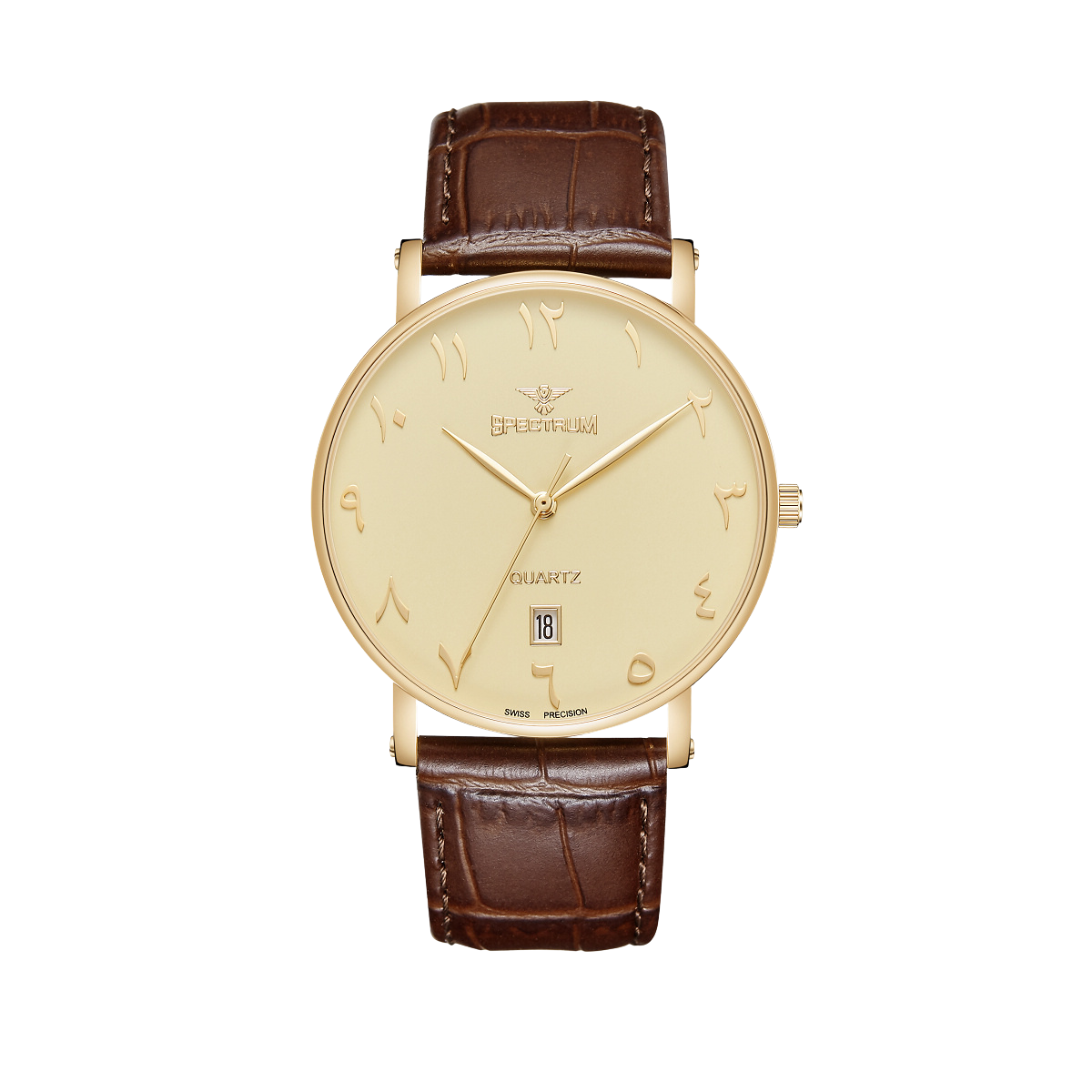 Men's Black Watch S17097M|classic dark-dial leather watch]] yields the same quiet focus. The textured leather strap patinates over years of desk work, while the clean three-hand dial preserves your visual field from unnecessary adornment.
Why Analogue Is the Modern Anti-Screen Rebellion
Choosing an analogue watch today is not an act of nostalgia. It is an intentional boundary. In an economy engineered to capture and monetize human attention, refusing to carry an interactive display on your wrist is a tactical decision. You are declaring that your pulse, your daily pace, and your personal minutes are not telemetry data to be collected, analyzed, or nudged by an algorithm.
Watch collectors who frequent Teddy Baldassarre or A Blog to Watch often debate the merits of a Tudor Black Bay versus a vintage Submariner. Yet the underlying impulse driving modern watch appreciation is universal across price points: people crave objects that do one thing with enduring competence. When you explore the broader analogue watch collection, that functional clarity is the common denominator across every steel case and three-hand dial.
A quality analogue watch does not measure your calories, rank your sleep cycles, or chide you for sitting down with a book. It preserves your sovereignty over your hours. It keeps faith with an engineering heritage that stretches back through centuries of maritime chronometers and railway pocket watches, refined into durable, modern quartz calibers that require virtually zero maintenance.
When your coffee cup is empty and the clock hands reach 7:15, your morning ritual concludes on your own terms. You close your notebook, cap your fountain pen, and gather your lecture notes. You have spent sixty minutes thinking deeply without a single glowing pixel fracturing your concentration. Your analogue watch guided you through that hour with quiet precision—its polished steel hands ticking steadily forward, marking real time in a world obsessed with virtual noise.
About the author
Spectrum Editorial
The Spectrum Watches editorial desk
The Spectrum editorial desk — fact-checked, persona-mapped, and written for people who measure life in moments.
Wear the story